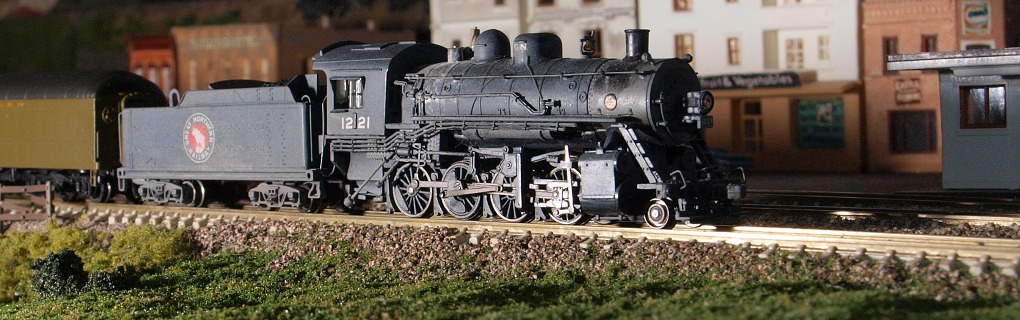
Adirondack Railway Preservation Society has acquired another historic locomotive for the growing fleet of Alco diesels operated by New York’s Adirondack Railroad. Former Louisville & Nashville FA-2 No. 309 will soon depart SMS Rail Services in New Jersey for its new home in Utica, N.Y., where it will join the railroad’s seasonal passenger excursions over the former New York Central Adirondack Division to Old Forge and Tupper Lake — one of the longest tourist railroad routes in the country at 108 miles.
Although the locomotive is not original to NYC, it spent decades in commuter service on Long Island (as LIRR 602) as a cab-control car and HEP generator before being sold to a private owner and moved to New Jersey. There, SMS, ALDAC Controls, and numerous volunteers completed extensive work to return its Alco 244 prime mover to operation. Adirondack Railroad expects to finish the remaining work and place the locomotive in service by late 2026, wearing a fresh rendition of the railroad’s gray-and-green paint scheme. “ARPS thanks previous owner Bobb Losse for this tremendous opportunity to preserve this historic locomotive and return it to regular service,” said Adirondack Railway Preservation Society President Luke Irvine.
The Adirondack Railroad roster already includes an impressive collection of Alco and Montreal Locomotive Works power, including C-424s, two former New York Central RS-3s, RS-18us, and three former New York Central C-430s.
—Otto M. Vondrak
The post Adirondack Railroad adds Alco FA-2 to Fleet appeared first on Railfan & Railroad Magazine.
Temperature-controlled warehousing and logistics company Lineage Inc. has broken ground on its 19th Texas-based facility. Slated to begin operations in late 2027, it will be part of the Prime Pointe Park, a Union Pacific (UP) Focus Site adjacent to the Class I railroad’s Dallas Intermodal Terminal.
The new cold storage facility in Hutchins will support the needs of food and beverage producers, retailers, and distributors, and feature advanced automation, including Lineage’s proprietary LinOS warehouse execution system, the Novi, Mich.-based company reported Nov. 18.
“Dallas has long been a key market for Lineage, serving as a critical connecting point between food producers and the global food supply chain,” Lineage Chief Commercial Officer Tim Smith said. “The groundbreaking of our newest automated facility underscores our commitment to improving and expanding capabilities for our customers, utilizing advanced technologies to reimagine how the cold chain operates and feeds the world.”
The recent groundbreaking was celebrated alongside officials from the City of Hutchins and representatives from Prime Pointe Park and UP.
“The groundbreaking for this new cold storage facility marks an exciting day for our community,” Hutchins Mayor Mario Vasquez said. “It demonstrates that we are committed to attracting top-tier businesses and supporting supply chains that enhance our regional economy.”
“We’re excited to welcome Lineage, a long-time partner of UP, to Prime Pointe, one of our premier Focus Sites,” said Kenny Rocker, Executive Vice President–Marketing and Sales for UP. “Focus Sites like this make it easier and faster for businesses to connect to our 23-state network and tap into the efficiencies of rail.” The railroad has 42 such “shovel ready” sites.
“Lineage’s expansive network of rail-served cold storage facilities enables us to deliver dependable, scalable solutions for transporting perishable goods,” added Trent Vencil, Manager–Sales for UP. “By leveraging our existing fleets of refrigerated boxcars, we provide customers with a cost-effective, sustainable alternative to traditional freight—reducing emissions and preserving product quality from origin to destination.”
Lineage’s cold-storage footprint with UP includes more than 40 rail-served sites across the Heartland, Texas, California, and the Pacific Northwest, according to the railroad, which noted that its boxcars and “GPS-monitored and temperature-controlled reefer fleet“ is complemented by Lineage’s private fleet of more than 2,800 refrigerated and insulated boxcars.
Further Reading:The post Lineage Holds Groundbreaking for UP-Served Texas Facility appeared first on Railway Age.
“With six weeks to go, we are within reach of the 10 million container unit-mark for the year,” Port of Los Angeles Executive Director Gene Seroka said at a media briefing (see video below). “If we reach that milestone, it would be the third time in our history and something no other Western Hemisphere port has achieved even once. That kind of performance is powered by the skill and dedication of our waterfront workforce along with the terminal operators who keep this port running safely and efficiently every day.
Seroka says he expects cargo to “soften in November and December compared to last year, when shippers were already bringing in cargo ahead of schedule as a hedge against tariffs. Today, retail and manufacturing inventories are well-stocked, so there’s less need for replenishment.”
Joining Seroka for the briefing was Jennifer Barrera, President and CEO of the California Chamber of Commerce. Barrera discussed the impact of tariffs, the state’s business climate and regulatory reform efforts.
October 2025 loaded imports at the Port came in at 429,283 TEUs, 7% less than last year. Loaded exports landed at 123,768 TEUs, 1% more than 2024. The Port handled 295,380 empty container units, 8% less than last year.
Current and historical cargo data, including fiscal year-end totals, are available here.
The post Port of Los Angeles: ‘Solid’ October Volume appeared first on Railway Age.
The National Transportation Safety Board (NTSB) on Nov. 18 said that a single loose wire on the 984-foot-long containership Dali caused an electrical blackout that led to the giant vessel veering and contacting the nearby Francis Scott Key Bridge in Baltimore, which then collapsed, killing six highway workers.
At the Nov. 18 public meeting at NTSB headquarters, investigators said the loose wire in the ship’s electrical system caused a breaker to unexpectedly open—beginning a sequence of events that led to two vessel blackouts and a loss of both propulsion and steering near the 2.37-mile-long Key Bridge on March 26, 2024.
Investigators found that wire-label banding prevented the wire from being fully inserted into a terminal block spring-clamp gate, causing an inadequate connection.
Illustration showing how placement of wire-label banding affects the way wires are seated in their terminal blocks. (Courtesy of NTSB) AFTER THE BLACKOUTAfter the initial blackout, the Dali’s heading began swinging to starboard toward Pier 17 of the Key Bridge. Investigators found that the pilots and the bridge team attempted to change the vessel’s trajectory, but the vessel’s loss of propulsion so close to the bridge rendered their actions ineffective. A substantial portion of the bridge subsequently collapsed into the river, and portions of the pier, deck and truss spans collapsed onto the vessel’s bow and forward-most container bays.
A seven-person road maintenance crew and one inspector were on the bridge when the vessel struck. Six of the highway workers died. The NTSB found that the quick actions of the Dali pilots, shoreside dispatchers and the Maryland Transportation Authority to stop bridge traffic prevented greater loss of life.
“Our investigators routinely accomplish the impossible, and this investigation is no different,” NTSB Chairwoman Jennifer Homendy said. “The Dali, at almost 1,000 feet, is as long as the Eiffel Tower is high, with miles of wiring and thousands of electrical connections. Finding this single wire was like hunting for a loose rivet on the Eiffel Tower.”
“THIS WAS PREVENTABLE““But like all of the accidents we investigate, this was preventable,” Homendy said. “Implementing NTSB recommendations in this investigation will prevent similar tragedies in the future.”
(Courtesy of NTSB)Contributing to the collapse of the Key Bridge and the loss of life was the lack of countermeasures to reduce the bridge’s vulnerability to collapse due to impact by ocean-going vessels, which have only grown larger since the Key Bridge’s opening in 1977.
When the Japan-flagged containership Blue Nagoya contacted the Key Bridge after losing propulsion in 1980, the 390-foot-long vessel caused only minor damage. The Dali, however, is ten times the size of the Blue Nagoya.
As part of the investigation, the NTSB in March released an initial report on the vulnerability of bridges nationwide to large vessel strikes. The report found that the Maryland Transportation Authority—and many other owners of bridges spanning navigable waterways used by ocean-going vessels—were likely unaware of the potential risk that a vessel collision could pose to their structures. This was despite longstanding guidance from the American Association of State Highway and Transportation Officials recommending that bridge owners perform these assessments.
The NTSB sent letters to 30 bridge owners identified in the report, urging them to evaluate their bridges and, if needed, develop plans to reduce risks. All recipients have since responded, and the status of each recommendation is available on the NTSB’s website.
As a result of the investigation, the NTSB issued new safety recommendations to the U.S. Coast Guard; U.S/Federal Highway Administration; the American Association of State Highway and Transportation Officials; ClassNK; the American National Standards Institute; the American National Standards Institute Accredited Standards Committee on Safety in Construction and Demolitions Operations A10; HD Hyundai Heavy Industries; Synergy Marine Pte. Ltd; and WAGO Corporation, the electrical component manufacturer; and multiple bridge owners across the U.S.
Download a Full NTSB Synopsis of Actions Taken Nov. 18, Including the Probable Cause, Findings and Recommendations: Board Summary Contact of Containership Dali with Francis Scott Key BridgeDownloadThe post NTSB: Single Loose Wire Caused Dali Blackouts That Led to Key Bridge Disaster appeared first on Railway Age.
Formed with these initiatives in mind, RSI’s Quality Assurance Committee (QAC) is a collaborative of quality leaders representing car owners, fleet managers, repair and reconditioning facilities, and car and component manufacturers.
Recently elected, QAC Chair Sanjay Varma (Progress Rail Freight Car Services VP of Quality) and QAC Vice Chair Gary Alderson (AllTranstek, LLC, Manager of Quality Processes) aim to revitalize the committee and make an active impact towards the industry’s quality standards.
Gearing up for the 38th Annual Association of American Railroads (AAR) Quality Assurance Industry Conference, taking place February 17-19, 2026, in St. Petersburg, FL, we sat down with the chair and vice chair to talk about their initiatives going into 2026 and what they have in store for the conference.
What does it mean to each of you to step into leadership roles within the Quality Assurance Committee (QAC)?
Sanjay Varma (SV): Over the past few months, the RSI QAC has seen limited activity. With support from RSI Senior Director, Regulatory & Industry Affairs, Carrie Wall; Gary Alderson; and a team of committed members, I’m genuinely excited about the opportunity to revitalize the team and help us actively contribute to driving industry quality standards, particularly through the AAR regulatory bodies. My involvement with the AAR QAC spans many years, during which I’ve had the privilege of working alongside some very committed RSI QAC members. Their depth of knowledge and industry experience has always impressed me, and I’ve always valued the perspectives they bring. It’s truly an honor to be leading the RSI QAC, and I look forward to collaborating with the team as we strengthen our impact on quality standards across the industry.
Gary Alderson (GA): I’ve been involved with the QAC since 2017, and I have seen growth through volunteerism from people of different backgrounds who lend their knowledge to provide improvement. This helps me realize that I need to stay involved and be inspired by others to grow the QAC.
How do you plan to support and collaborate with the Technical Advisory Groups (TAGs) to ensure continuity and progress in areas like AAR M-1003, education, and the QAC Newsletter?
SV: As you already know, the RSI QAC actively collaborates with the AAR QAC during the periodic updates to the M-1003 standard providing valuable input and feedback. Looking ahead, I am committed to continuing this tradition and further strengthening our contributions. Additionally, if we can secure the necessary budget and training resources, we could explore enhancing the Education TAG’s industry outreach through offering educational classes, particularly on risk-based quality management tools, expanding opportunities for learning and professional development within our industry.
GA: I hope to continue the QAC Newsletter by staying involved as the Chair, along with the Co-chair, Alfredo Ricardo, and the folks who have provided their help over the last eight years. We will miss Donna Jacobi and Bob Wolbert who have donated their time to provide articles and editing of the newsletter. I have helped with the Education TAG in the past and plan to continue, and I’ll help Sanjay Varma provide his support of the TAG’s by providing him with input and feedback.
The QAC plays a vital role in developing best practices and educating the industry. What new initiatives or improvements are you hoping to introduce in 2026 to further this mission?
GA: Change Management is one area I hope we can provide education for, which would help the RSI members reach the goal of meeting the M-1003 requirement in their QA programs. In addition, education needs to improve when new areas such as Change Management are introduced, and I am hopeful Sanjay and I can guide the QAC to provide education and training to the RSI members. I am also a proponent of eliminating prescriptive procedures and allowing for performance-based procedures and processes.
How do you envision the QAC’s role at the upcoming AAR QAC Conference, and what message do you hope to convey to attendees about the committee’s direction?
SV: Over the years, our Education TAG has closely collaborated with the AAR QAC, presenting quality-related educational topics and workshops at the Annual AAR Quality Assurance Industry Conference. These sessions are consistently well-received and highly regarded by conference attendees. For the upcoming conference in February, our Education TAG will be presenting two workshops. It would be great to have many RSI members in attendance in St. Petersburg, FL. Besides being an opportunity for learning, this conference is also a great avenue for professional development through networking with our industry quality professionals.
GA: The RSI QAC always strives to collaborate with the AAR QAC, especially during the AAR Quality Assurance Industry Conference. Each year our dedicated members provide presentations and workshops that are educational and hands-on. The workshops started several years ago when I asked Don Guillen if the RSI could provide them in addition to the presentations. The first workshop was on how to write your QA manual, which I presented, and it lasted about two hours. The workshops have since expanded to one day (Thursday), and the AAR Auditors have the opportunity to attend the workshops.
What would you say to RSI members and industry stakeholders who may be uncertain about the committee’s future, and how can they get involved to help shape it?
SV: The members of the RSI committees provide invaluable front-line insights and candid feedback on driving industry standards. We have many dedicated members committed to sharing ideas, mentoring others, and helping ensure quality remains central to our industry. Volunteering on one of our committees or technical advisory groups would offer professional development and learning opportunities to newer professionals, while actively contributing to future initiatives and supporting RSI’s continued success.
GA: The RSI QAC is only as good as the people who volunteer for it. Everyone is busy, and everyone has plenty of work to do for their regular job, but we need your help so we can have a voice and work as the liaison between the AAR committees and the industry.
Interested in joining the QAC’s mission? Contact Carrie Wall (cwall@rsiweb.org) for more information.
The post Ensuring Quality Across the Industry: An Interview with the QAC Chair and Vice Chair appeared first on Railway Age.
Union Pacific Executive Vice President and Chief Information Officer Rahul Jalali told reporters on a media day business train that UP-NS computer systems integration will go smoothly if the merger is approved.
One of the key topics around the proposed merger of Union Pacific and Norfolk Southern, should the transaction be approved, is the possibility of outages and hiccups when the computer systems of the two railroads are integrated. Observers point to the major merger-related service meltdowns in the 1990s and the recent challenges on CPKC when the Canadian Pacific and Kansas City Southern computer systems were integrated.
Union Pacific CIO Rahul Jalali said that the main challenges around systems integration include the training of end-users and change management procedures. “It’s not the technology itself that is the tough part,” he said during a briefing aboard the Union Pacific business train. “We’ve really developed a playbook around this precision implementation, as well as a very good model of change management, what’s required, how do you train the people, how do technology and business work hand in glove together, both in the field and at the home office level.”
Successful systems implementation and integration are careful marriages of workflow and technology. The design and implementation plans must include strong training and change management. “I know a thing or two about integrations and the mistakes that are made in integrations,” Jalali said. “Change management is probably the No. 1 reason why companies or processes get in trouble.”
Jalali has the experience to back up his claim. During his career, which included 23 years involved in technology implementation at Walmart International, with his last position as corporate vice president in the technology division, and five years at UP, he has been involved in 14 systems integration cutovers. Jalali said that he and his team have already been meeting with Norfolk Southern to evaluate its systems, and have had meetings with customers to understand how they use their own systems to meet their requirements for a UP+NS integrated system.
Jalali also pointed to the successful implementation of a new system on UP called NetControl, which runs on the Cloud, and supports multiple functions on the railroad. UP CEO Jim Vena echoed Jalali’s remarks, saying, “We have a big job to do. It’s not the first job to do the tech cutover because it’s more important to do the base fundamental operating plan first, because that’s where the benefit is for the customers. And that’s how we can grow the business faster.”
The post UP’s Jalali: No Hiccups With NS IT Integration appeared first on Railway Age.
18 U.S. Senators—evenly split between Republicans and Democrats—from agricultural-producer states sent a letter to the Surface Transportation Board urging “a rigorous and comprehensive evaluation” of the proposed Union Pacific-Norfolk Southern “not just for its potential short-term efficiencies, but for its ability to demonstrate clear and tangible long-term improvements in competition.” STB responded, saying, “Because this is a pending matter, we cannot comment further; however, please be assured that, should an application be filed, the Board will conduct a thorough and fair review of the evidence and argument and consider whether the transaction serves the public interest, consistent with applicable law.”
The STB Office of Chief Counsel Counsel entered the letter from the Senators—Republicans John Hoeven (N. Dak.), Tim Sheehy (Mont.), Bill Cassidy (La.), Steve Daines (Mont.), Roger Marshall (Kan.), M. Michael Rounds (D. Dak.), Roger Wicker (Miss.), Jim Banks (Ind.) and Joni Ernst (Iowa); and Democrats Amy Klobuchar (Minn.), Martin Heinrich (N. Mex.), Tina Smith (Minn.), Raphael Warnock (Ga.), Patty Murray (Wash.), Ruben Gallego (Ariz.), Tammy Baldwin (Wisc), Tammy Duckworth (Ill.), , and Dick Durbin (Ill.)—into the public record Nov. 13, 2025:
“We write regarding the recently proposed merger between the Union Pacific and Norfolk Southern and to encourage the Surface Transportation Board to subject this proposed merger to a rigorous and comprehensive evaluation not just for its potential short-term efficiencies, but for its ability to demonstrate clear and tangible long-term improvements in competition.
“As you know, the STB’s post-2001 ‘Major Rail Consolidation Procedures’ were adopted specifically to place heightened emphasis on whether Class I railroad mergers enhance, rather than merely preserve, competition, and to ensure that any potential anticompetitive effects or other harms are outweighed by substantive and demonstrable gains to the public interest. The proposed UP/NS merger will be the first to come before the Board under these rules, and it is essential that you establish a strong precedent and apply these heightened standards in the way they were intended.
“In conducting its review, we strongly encourage the STB to take into consideration the impact the proposed merger, if approved, may have on our nation’s agricultural producers, and on the STBs mandate to preserve long-term competition and ensure efficient, economically viable rail service.
“Impact on Agricultural Supply ChainsU.S. farmers, ranchers, and producers are facing historic market losses as they strive to provide the highest quality, lowest-cost food supply in the world. They depend on reliable and competitive rail service to move their agricultural products to markets both domestic and international. Our producers already face limited competitive options for rail service. Further consolidation could compound these challenges by reducing routing flexibility, constraining network fluidity, increasing market power, and limiting access for both producers and processors. As part of its review of the proposed merger, the STB should take into account the long-term implications for the movement of agricultural products across the domestic rail network, including potential impacts on shipping costs and market access.
“Preserving Long-Term Competition“Since the passage of the Staggers Rail Act of 1980, which largely deregulated freight railroads, the number of Class I carriers in the U.S. has dropped from over 30 to just six. Today, four of those carriers control more than 90 % of U.S. rail freight. Already highly consolidated, the current landscape of railroads as it exists today represents a fragile equilibrium with two in the west, two in the east, and two through the middle.
“As the STB reviews the proposed merger, it is important to consider how additional consolidation could alter this equilibrium. In particular, the Board should examine potential impacts on key freight corridors, where fewer alternatives for shippers could reduce competitive pressure on rates and service. Over time, such dynamics risk embedding higher costs, diminished service quality, and less innovation across the network. These conditions, once entrenched, are difficult to reverse and may discourage future market entrants. The STB’s post-2001 merger rules are designed precisely to guard against this outcome, requiring that mergers demonstrably strengthen competition rather than simply accelerate consolidation.
“Efficient, and Economically Viable Rail Service“Historical precedent highlights what is at stake. The 1996 Union Pacific–Southern Pacific merger triggered widespread service breakdowns and safety lapses. Integration challenges led to nine worker fatalities, a Federal Railroad Administration finding of a ‘fundamental breakdown’ in safety practices, and freight disruptions lasting more than a year and a half—delays that cost the broader economy an estimated $4 billion.
“If approved, a combined UP/NS would handle more than 40 % of all U.S. freight rail traffic. The Board should weigh the risks of a similar disruption given the proposed scale: a transcontinental system spanning 50,000 route miles across 43 states. Service interruptions of this magnitude could have severe consequences, especially for agricultural producers. Time-sensitive shipments during harvest could be delayed or spoiled, export windows could be missed, and access to global markets could be sharply reduced.
“We thank you for your careful consideration of this merger application, and its impact on domestic agricultural production, as well as the STB’s mandate to enhance long-term competition. We look forward to working with you to ensure the STB continues to promote an efficient, competitive, and economically viable freight rail network that serves the public interest.”
STB RESPONDSThe STB—Chair Patrick Fuchs, Vice Chair Michelle Schultz and Member Karen Hedlund—responded Nov. 14 with a letter (also on the public record):
“Thank you for your recent letter regarding the proposed merger of Union Pacific and Norfolk Southern. We appreciate hearing your views on the proposed transaction, the potential impacts on the nation’s agricultural supply chain, your concern for the preservation of long-term competition, and the need to ensure efficient, economically viable rail service. We want to assure you that, should a merger application be filed, the Surface Transportation Board will conduct a rigorous and comprehensive review of the transaction as required by law.
“As you know, on July 30, 2025, UP and NS submitted to the STB a notice of intent to file an application for Board approval of a proposed merger that would result in the combination of UP and NS, both Class I railroads. This notice, required under the Board’s merger regulations at 49 C.F.R. part 1180, initiates the regulatory review process for a proposed major merger between two Class I railroads. In their notice, UP and NS state that they intend to file their application on or before Jan. 29, 2026. Following the notice, the Board ordered the two railroads to submit substantial information in advance of the filing of an application. Among other things, the Board ordered applicants to submit 100% traffic tapes for six previous years, timetables, track charts, geospatial information system maps, joint facility information, and summary information concerning interchange commitments—agreements that limit or may limit interchange with connecting carriers. This information will help facilitate a thorough, rigorous, and efficient review of an application, if filed. By decision served on Sept. 26, 2025, the Board requested public comment on a proposed procedural schedule.
“Because this is a pending matter, we cannot comment further; however, please be assured that, should an application be filed, the Board will conduct a thorough and fair review of the evidence and argument and consider whether the transaction serves the public interest, consistent with applicable law. The Board’s review will include a rigorous examination of potential competitive effects, economic efficiencies, service effects, environmental impacts, and other critical considerations, including safety integration planning. The Board’s review process will also include opportunities for public participation and comment. A copy of your letter and this reply has been placed in the public docket. If you or your staff have any questions, please contact Ms. Janie Sheng, Director of the Board’s Office of Public Assistance, Governmental Affairs, and Compliance, at 202-245-0238.”
The post Ag-State Senators to STB: Be ‘Rigorous’ and ‘Comprehensive’ appeared first on Railway Age.
NC By Train in October experienced its highest ridership month in 35 years of service, the North Carolina Department of Transportation (NCDOT) reported Nov. 17. The state-supported Amtrak intercity passenger rail service carried 74,400 riders, nearly 10% more than in October 2024.
NC By Train has so far seen a 4% increase in ridership in 2025, with 608,300 passengers carried between January and October 2025 compared with 584,600 during the same period last year, according to NCDOT. It is on track to break its 2024 record of more than 720,000 riders. In 2023, it carried 641,000 riders, and in 2022, 522,000 riders.
“The service’s popularity continues to grow as more people learn how easy and stress-free it is to use, the affordability of tickets, and other benefits of traveling by train,” NCDOT said. “Increased availability of daily trip options [on the Piedmont and Carolinian] introduced in July 2023, special trains and stops to iconic N.C. events, and increased collaboration with partners on projects like the Ale Trail by Rail have all contributed to the ridership growth.”
“We’re thrilled to see passenger rail ridership continue to grow across North Carolina as more people experience the convenience and benefits of train travel,” NCDOT Rail Division Director Jason Orthner noted. “Whether you are traveling for business, sporting events, school, to visit family or just for fun, NC By Train is a comfortable, affordable, and stress-free way to get to your destination.”
WMATA / COGToday, the Metro & @MWCOG Boards endorsed recommendations from the #DMVMoves Task Force to provide $460M to modernize our system, deliver safer and more reliable service, and transform regional transit. Here’s why it matters: https://t.co/ukylmeOLII pic.twitter.com/nghuE12p3b
— Metro Forward (@wmata) November 17, 2025The boards of WMATA and COG on Nov. 17 “jointly endorsed recommendations from the DMVMoves Task Force and called on regional leaders to advance funding solutions to support Metro’s long-term modernization and strengthen coordination among the region’s 14 transit operators [in Washington, D.C., Maryland, and Virginia], including Metro, MARC, Virginia Railway Express, and local bus systems,” according to WMATA, which has a network of six rapid transit lines, 98 stations, 125 bus routes, and a door-to-door paratransit service.
The recommendations, WMATA said, outline a “unified regional vision for a modern, seamless, and world-class transit network that supports economic growth, efficiency, and safe, reliable access across the National Capital Region.” A key proposal includes $460 million in new annual capital funding for Metro, beginning in Fiscal Year 2028, according to WMATA. This investment, it said, would allow Metro to reinvest in and modernize its rail and bus system.
The DMVMoves Task Force recommended that the funding “should be unencumbered and grow by 3% annually to ensure the system’s long-term financial stability,” according to WMATA. If secured, the funding would ensure:
The Task Force also recommended a set of actions to make transit more efficient and easier to use across the regional network of Metro, commuter rail (MARC and VRE), and local buses. “These actions include implementing bus priority projects along high-priority corridors to improve bus speeds and reliability for riders and lower long-term operating costs, integrating fare policies, such as consistent discounts for low-income riders and free fares for children, and improving customer information, like standard bus stop designs,” WMATA said.
DMVMoves was created in May 2024 by the boards WMATA and COG “to create a unified vision and sustainable funding model for the region’s transit network.” This regional effort, WMATA said, was led by a task force of officials appointed by COG and WMATA and chaired by COG Board Vice Chair and DC Councilmember Charles Allen and WMATA Board Vice Chair Paul Smedberg. It was also supported by two advisory groups representing government and community partners, chaired by Fairfax County Executive Bryan Hill and Greater Washington Board of Trade President and CEO Jack McDougle respectively.
“This is a pivotal moment for our region,” WMATA General Manager and CEO Randy Clarke said Nov. 17. “A reliable and well-funded Metro system is essential to our region’s economic vitality. These recommendations provide a roadmap to modernize our transportation network, deliver safer and more reliable service, and ensure Metro continues to connect people to opportunities for generations to come.”
“The DMVMoves plan is a major milestone for our region, but it isn’t an end point,” COG Executive Director Clark Mercer added. “Our region has produced some great plans in the past whose goals were not fully achieved. This time, COG, WMATA, and our partners have outlined the path forward to ensure these recommendations are implemented and that we hold ourselves accountable to delivering our shared vision for world-class transit.”
With the joint endorsement, regional advocacy is slated to “seek the enactment of funding legislation by the DC Council and the Maryland and Virginia state legislatures,” according to WMATA.
Further Reading:“MBTA commuter rail riders passing through South Station will soon be introduced to a new fare collection system,” according to MassLive.com.
The transit agency in August reported that it would begin installing 40 Commuter Rail fare gates around the South Station concourse in September. According to a Nov. 14 MassLive.com report, the gates will be operational in December.
“Similar to the MBTA’s subway lines, riders will need to scan a ticket to access the platforms,” the media outlet said. “However, unlike on the subway, they will also need to scan their ticket to exit. Commuter rail fare gates will also not accept tap-to-pay from a credit or debit card, phone or watch, as the subway and buses do.”
Commuter Rail fare gates were first installed MBTA’s North Station in 2022. The goal: to “improve fare collection, replace platform ticket checks, and create a more consistent fare-paying experience for passengers across transit modes,” according to the transit agency.
“[T]ransit officials [last year] said they estimated that 25% of fares are not collected on commuter rail trains operating out of South Station,” MassLive.com reported. “The T estimated in 2019 that it was losing $10 million to $20 million in revenue from uncollected commuter rail fares, or between 4% and 8% of potential revenue. The industry standard is 3%, ‘in even the most airtight, gated systems,’ the agency said.”
MBTA is slated to add fare gates to Ruggles Station in winter 2025/2026 and to Back Bay Station in early 2026.
Further Reading:Early next year, six cameras will be installed on board each of Rail Runner Express’ 22 bilevels, according to KOAT 7 in Albuquerque. The goal is to boost security, it noted, and they will be monitored in real time.
“The decision was made several months ago to put onboard cameras on the train,” Rail Runner Communications Manager Augusta Meyers told the media outlet. “A lot of commuter rail[roads] across the country and other transit systems have onboard cameras, and we feel, for the safety of our passengers, that’s the most important thing. This gives us that extra measure of assurance and security to make sure passengers are safe.”
Rio Metro Regional Transit District operates the nearly 20-year-old, 100-mile commuter rail service between Santa Fe and Belen, N.Mex. Bombardier Transportation (now Alstom) supplied the commuter railcars.
The post Transit Briefs: NC by Train, WMATA/COG, MBTA, Rail Runner Express appeared first on Railway Age.
Port NOLA on Nov. 14, during the 2025 State of the Port Address, announced that it “continues to deliver strong momentum” across its diverse lines of business, including containerized cargo, breakbulk, rail, industrial real estate and cruise.
This year’s program, hosted by the International Freight Forwarders and Customs Brokers Association of New Orleans (IFFCBANO), also featured an engaging “Waterside Chat” with Port NOLA President and CEO and New Orleans Public Belt (NOPB) CEO Beth Branch, Norfolk Southern (NS) Executive Vice President and COO John Orr, and Ports America President and CEO Matt Leech. Panelists discussed how Port NOLA’s multimodal connectivity, infrastructure expansion and partnerships are fueling growth.
Port leadership also announced the release of a new Economic Impact Report conducted by Martin Associates and completed in August 2025. It emphasizes the Port’s vital contribution to state and national prosperity.
“The Port of New Orleans is truly an economic engine not just for Louisiana, but for the entire country. With a unique transportation system of rail, barge, and truck connections, Port NOLA links America’s heartland to the world. That reach translates into billions of dollars in economic impact and supports hundreds of thousands of good-paying jobs,” said John C. Martin, PhD, Owner of Martin Associates. “Here in Louisiana, the Port is a major driver of our economy and a cornerstone of our workforce. Continued investment in port infrastructure isn’t just smart, it’s essential to keeping this momentum strong for our state and for the nation.”
According to the report (download below), in 2024, marine cargo activity within the New Orleans Port District supported $101.5 billion of total economic value to the U.S. economy, including $31.5 billion in Louisiana which is approximately 8.3% of the state’s GDP. Additionally, cargo activity moving through Port NOLA marine terminals supported 342,150 jobs in the nation. That includes 122,386 total jobs in Louisiana alone. The report is searchable by U.S. and State legislative districts, showing the specific economic impact in each one.
The Port also underscored its bold progress in developing the Louisiana International Terminal (LIT), a transformative infrastructure project that will redefine global trade through Louisiana.
The new container terminal, the Port says, “represents the cornerstone of Port NOLA’s long-term vision to expand capacity, strengthen supply chain resilience, and position Louisiana as a leading Gulf gateway for international commerce.”
Branch spoke of “resilience, innovation, and strategic progress” throughout her address, reflecting on the port’s cargo, rail, and cruise operations.
“New Orleans was born of the river, and our future will rise from it too,” said Branch. “From breakbulk and container cargo to a record 1.2 million cruise passenger movements last year, Port NOLA continues to drive opportunity for Louisiana families, businesses, and communities. The Louisiana International Terminal will ensure that legacy endures connecting our river, rail, and road systems like never before and redefining how global trade flows through our state.”
Branch highlighted $49 million in breakbulk infrastructure investments, as well as strong partnerships with Ports America, and Terminal Investment Limited (MSC). She also commended the Harbor Police Department for its leadership in public safety, especially in preparation for Super Bowl LIX, through enhanced security measures and technology upgrades.
Port of New Orleans Board Chairman Michael Thomas praised the Port’s leadership and collaborative partnerships driving Louisiana’s competitive edge on the global stage.
“The story we are writing together is one of unity, bold investment, and vision,” said Thomas. “Through the LIT, the new St. Bernard Transportation Corridor, and the Cooperative Endeavor Agreement uniting five Lower Mississippi River ports, we are positioning Louisiana as the premier gateway for global trade in the 21st century.”
Thomas said the LIT developed in partnership with Terminal Investment Limited and Ports America will create more than 18,000 jobs, generate more than $1 billion in new state and local tax revenue, “and represents one of the most significant federal investments in U.S. port infrastructure history.”
“Together, we form the largest port complex in the world,” Thomas added. “By speaking with one powerful voice, Louisiana’s ports are not just gateways of trade, they are engines of transformation for our state, our region, and our people.”
Port_NOLA_Economic_Impact_Report_2024Download Port of SavannahThe Port of Savannah recently announced that it handled 4.8 million Twenty-Foot Equivalent Units (TEUs) in calendar year 2025 through October, up 183,250 TEUs or 4%. Monthly volumes in October totaled 452,934 TEUs, a decrease of 8.4% or 41,325 TEUs compared to October 2024.
Colonels Island Terminal at the Port of Brunswick handled 72,234 units of autos and heavy equipment in October, up 3,700 units or 5.4% compared to the same month last year. For calendar year 2025 through October, the Port of Brunswick handled 689,662 units of autos and heavy equipment, down 67,750 units or 9%.
(GPA)“We’ve been impacted by the trade downturn, so we look forward to seeing more trade deals come together and we’re hopeful the market bounces back in the new year,” said Georgia Ports President and CEO Griff Lynch.
Northeast Georgia is a high-growth manufacturing and logistics corridor for heavy equipment, forest products, food and poultry/protein exporters with a large amount of international cargo moving. The area is currently served by a five-hour truck route to/from the Port of Savannah.
Located 50 miles from Atlanta, Georgia Ports Authority’s (GPA) $127 million Blue Ridge Connector inland rail facility is nearing completion. “We’re making strong progress and remain on track for a Spring 2026 opening,” Lynch added.
The facility will be served by rail from the Port of Savannah, creating an improved supply chain into Northeast Georgia’s regional population of more than two million people. The facility will help keep trucks out of Atlanta and decongest all the community roadways affected by this corridor while spurring further economic development.
“Our Blue Ridge Connector service will create new opportunities for Georgia’s commerce to flow smoother and attract more jobs and prosperity to the Peach State. This is an example of how we support Governor Kemp and our State Legislature’s goal to make it easy to do business in Georgia,” said GPA Board Chairman Alec Poitevint.
In the first year of operation, the rail service, GPA says, will eliminate 52,000 truck trips through Atlanta and is expected to grow exponentially as more volume is added. In the future, this volume could rise to 400,000 truck trips based on demand GPA envisions. This shift to rail will also reduce CO2 emissions by 90% or 22,510 metric tons, compared to an all-truck route in the first year of operation, GPA noted.
To reduce the facility’s impact to local residents in Gainesville, Ga., GPA contributed $4.8 million to Hall County road improvement projects eliminating an at-grade rail crossing, rerouting White Sulphur Road and resurfacing Cagle Road. The new White Sulphur Road alignment south of the inland terminal ensures free access for emergency vehicles and avoids traffic disruption from trains that local residents had experienced in the past. The new alignment and resurfacing of Cagle Road also offers an improved alternative for residents. Both projects were completed in late Summer 2025.
Once the facility opens, NS doublestack trains will offer daily service Monday-Friday.
Port EvergladesPort Everglades’ 2024 Master/Vision Plan Update, which was approved Nov. 13 by the Broward County Board of County Commissioners, “outlines more than $3 billion in long-term investments to enhance the Port’s capacity, efficiency and sustainability over the next 20 years.”
(Port Everglades)The update (download below) was developed over two years in concert with Port staff, stakeholders and the public. Updates are conducted to identify global industry trends and capital improvements necessary to support the continued growth of the Port’s diversified business lines of cruise, cargo and energy.
“The Master/Vision Plan focuses on reinforcing our Port’s evolution to meet the needs of our business partners, in collaboration with our community, to maintain our position as a strong economic engine,” said Port Everglades CEO and Port Director Joseph Morris. “On behalf of our Port staff who worked tirelessly on the update, I thank the Broward County Board of County Commissioners for their support of our plan for the next five, 10 and 20 years of growth.”
Among the projects identified in the Master/Vision Plan Update are functional improvements, such as the Bulkhead Replacement Project currently under way, and investments that address market trends like the redevelopment of cruise terminals to accommodate the next generation of cruise guests and larger cruise ships.
AECOM, a global design and engineering company specializing in infrastructure with offices in Fort Lauderdale, led the update effort.
The previous Master/Vision Plan Update was approved by the County Commission in June 2020 and included projects through 2038. One of those infrastructure projects is the Southport Turning Notch Extension, which added five new berths and six Super Post-Panamax ship-to-shore cranes. That project is expected to nearly double throughput of containerized cargo through 2038.
PEV_RPT_2024_MVP_Element_3_FINAL_ADA_0b243576-de41-4868-bfb5-acca1f387ef5DownloadThe post Intermodal Briefs: Port NOLA, Port of Savannah, Port Everglades appeared first on Railway Age.
Port NOLA on Nov. 17 announced the appointment of Morten Møller Jensen to its executive leadership team as COO. In this role, Jensen will oversee all port operations, with direct responsibility for the day-to-day management and successful delivery of the Louisiana International Terminal (LIT), a transformative infrastructure project for the state and region.
With more than four decades of global experience in shipping, logistics, and port management, Jensen brings an extensive track record of operational excellence, strategic leadership, and international expertise.
“Morten’s deep experience in both operations and international business development makes him exceptionally qualified to help guide Port NOLA through this critical chapter in our history,” said Beth Branch, Port NOLA President & CEO and New Orleans Public Belt (NOPB) CEO. “As we advance the LIT, his leadership and global perspective will be invaluable in strengthening Louisiana’s role as a premier gateway for global trade.”
Jensen has held senior executive roles across the world, including serving as Chief Executive Officer of MEDLOG USA, CEO of MSC’s Mexico & Central America region. He also held Managing Director positions with MSC in Sweden and Paraguay, as well as with Maersk in Pakistan and Afghanistan. Earlier in his career, he was Chief Operating Officer at Norden in Denmark and Managing Director for APM Terminals Southern Africa.
Most recently, Jensen served as Terminal Investment Director at Terminal Investment Ltd. (TiL) in Geneva, where he oversaw major global terminal investments and drove strategic business development. TiL is one of Port NOLA’s operating and financial partners in the LIT. Jensen’s direct knowledge of the project and the partnership will bring unique value to its successful realization, the port noted.
“Morten led complex, large-scale port and logistics projects across Europe, Africa, Asia, and the Americas,” Branch said. “With a proven record of building public-private partnerships, securing strategic investments, and delivering projects efficiently and on budget, he is well positioned to help advance Port NOLA’s mission.”
Throughout his career, Jensen has demonstrated a commitment to collaborative leadership and global connectivity.
“It’s an honor to join Port NOLA during this pivotal chapter,” Jensen said. “The LIT will be a catalyst for expanding Louisiana’s leadership in international commerce. I’m eager to work alongside the Port’s exceptional team and partners to bring this vital project to life.”
Jones DesLauriersJones DesLauriers, a Toronto, Canada-based independent brokerage and a founding Navacord Broker Partner, on Nov. 17 announced the appointment of Kyle Johnson as Partner & Rail, Logistics and Risk Management Leader within the firm’s Complex Risk division. This appointment, Jones DesLauriers, says, “reflects the firm’s ongoing commitment to building specialized capabilities for clients facing complex operational and supply chain exposures.”
Johnson will lead strategies and advisory services for clients navigating intricate rail, logistics, transportation, and energy sector risk challenges, “ensuring tailored solutions for organizations with sophisticated and evolving risk profiles.”
“We are thrilled to welcome Kyle to the Complex Risk team,” says Imran Pira, Managing Partner, Head of Complex Risk. “Kyle brings deep expertise in rail, logistics and risk management, combining industry insight with strategic advisory skills. His appointment strengthens our ability to provide clients with innovative, high-quality solutions that address both operational and financial risk in complex environments.”
Johnson joins Jones DesLauriers with more than 15 years of experience in risk management, with a focus on the transportation and energy sectors. He has led complex insurance and risk management programs across North America and played a key role in major mergers and acquisitions that achieved significant cost synergies. Recognized for his strategic insight and collaborative leadership, Johnson was the recipient of a CEO Award of Excellence in 2019 for his contributions to advancing cost control initiatives while at CPKC. His depth of technical expertise and integrated approach to risk management will further strengthen Jones DesLauriers’ Complex Risk capabilities, according to the company.
The appointment of Kyle Johnson, the firm says, “underscores Jones DesLauriers’ commitment to expanding its Complex Risk platform, reinforcing the firm’s strategy to attract specialized talent and deliver innovative solutions for clients facing intricate and high-stakes operational challenges.”
As one of the GTA’s largest independent brokerages, Jones DesLauriers says it “continues to lead the market across transportation, construction, hospitality, real estate, and forestry sectors,” with more than 350 professionals and more than $750 million in premiums placed.
Backed by the strength of Navacord, the firm maintains a strong presence across the GTA, Ottawa, and Quebec, while expanding its Complex Risk offering to address the evolving needs of sophisticated clients.
The post People News: Port NOLA, Jones DesLauriers Insurance Management Inc. appeared first on Railway Age.
The new location, the company says, “reflects the evolving needs of Booz Allen’s business, which requires flexible spaces that can enable and accelerate the company’s advanced technology capabilities.”
“We continue to invest in an innovative, optimized Booz Allen. Our new headquarters will provide our people, partners, and customers with upgraded resources to build the technologies that support national missions while rightsizing our facilities footprint,” said Booz Allen Chief Operating Officer Kristine Martin Anderson.
Interior build-out in the recently completed building is scheduled to begin in Summer 2026, with the new space expected to open in Fall 2027.
“Booz Allen’s workforce strategy is centered on optimizing resources to help our highly technical workforce unlock innovation, today and into the future,” said Booz Allen Chief Administrative Officer Jen Wagner.
The new headquarters will include both 1870 Reston Row Plaza and multiple floors of 1800 Reston Row Plaza. The combined leases cover more than 310,000 square feet, a to-be-built enclosed bridge that will connect the seventh floors of the two buildings, and expansion options. Booz Allen’s office at 8283 Greensboro Drive in McLean, Va., will be decommissioned in 2028.
The two LEED Silver, Trophy-office towers are situated in The Row at Reston Station, the second of five planned phases of Comstock’s award-winning Reston Station development. The buildings were designed by HKS Architects, with interior common spaces designed by Michael Graves Architecture.
Booz Allen joins a dynamic roster of leading global and national companies already located at Reston Station. Its workforce, Comstock says, will benefit from a modern, walkable neighborhood filled with cafés, restaurants, fitness and wellness providers, retail, and on-site services (see map below).
neighborhood-map-staticDownload“Booz Allen has been a top employer and business leader in the Washington metro area for decades. The Row at Reston Station reflects the best of Northern Virginia’s economy, tech talent, and modern conveniences, and we are honored to welcome Booz Allen as part of our community,” said Comstock Chief Operating Officer Tim Steffan.
“We are extremely proud that Booz Allen has chosen Reston Station for its global headquarters,” said Comstock CEO Chris Clemente. “Comstock is focused on creating extraordinary places where people can live, work, gather, and connect. Booz Allen’s decision reinforces the strength of that vision and Reston Station’s appeal to leading employers.”
The post Booz Allen to Relocate Global Headquarters to Comstock’s Reston Station Development appeared first on Railway Age.
Nebraska’s Hersey Rail Park, to be served by Union Pacific (UP), has its first tenant, and bids are expected soon for a railcar mover, two transloaders, and a scale, according to local media reports.
With more than 1,500 feet of track, the 300-acre industrial development property is located eight miles west of North Platte (not far from UP’s Bailey Yard), two miles north of Interstate 80, and directly on U.S. Highway 30 (see maps below). In August, it was designated the first UP Focus Site in Nebraska; the railroad has 42 such “shovel ready” sites across its 32,000-mile network.
(Courtesy of North Platte Area Chamber & Development Corporation) (Courtesy of UP)North Platte Area Chamber & Development Corporation is the owner and developer of Hersey Rail Park.
KNOP-TV on Nov. 17 reported that an agreement has been finalized with GRIT Group LLC, the park’s first tenant, and that park equipment purchases have been approved.
“GRIT has a 30-year agreement with the Central Nebraska Public Power and Irrigation District to process and sell sand Central has dredged for 90 years between the Platte River forks and the Tri-County diversion dam east of North Platte,” according to The North Platte Telegraph, which reported that GRIT “would truck processed sand from the river for packaging and shipping from part of the [former] Greenbrier” Rail Services 53,000-square-foot production facility that is located at the park.
The post Hershey Rail Park Project Advances appeared first on Railway Age.
Amtrak closed its Fiscal Year 2025 (FY25, Oct. 1 2024 – Sept. 30, 2025) on Sept. 30 with “record ridership and revenue—marking another year of growth and strong performance, “underscoring the growing demand for Amtrak across the United States,” and “achieved alongside improvements in the customer experience, reinforcing Amtrak’s commitment to quality service as the foundation for future growth.”
Amtrak noted it provided 34.5 million customer trips, “setting all-time records for both ridership and revenue for the second consecutive year” and “through deliberate planning and thoughtful execution, increased network capacity by 4.3% despite the challenges of an aging fleet, and customers responded with a strong demand for quality service, driving revenue that outpaced ridership.”
Amtrak listed its preliminary FY 2025 results:
Throughout FY25, Amtrak said it “focused on running a great railroad, delivering reliable, high-quality service that earned customers’ trust. On-time performance closed the year on a high note with September showing the strongest gains thanks to a strong focus on operational performance, improved infrastructure reliability, and better scheduling. New car wash facilities in Seattle, Boston, New Orleans and Chicago boosted cleanliness, while faster terminal turn times and improved communications enhanced the travel experience. These efforts reflect Amtrak’s commitment to listening to customers and investing in solutions that matter.
“Amtrak experienced unprecedented demand across its network, serving more riders than ever before. This surge was felt across all service lines: the convenience and frequency of the Northeast Corridor continued to drive financial performance, State Supported services such as the Pacific Surfliner, Amtrak Cascades, Borealis, and Empire Service achieved record gains, and Long-Distance routes saw increased capacity and strong ridership on iconic trains like the California Zephyr, Sunset Limited, and Coast Starlight. Amtrak Guest Rewards also surpassed 20 million enrolled members, who now represent over half of all riders.
“To meet the rising demand for train travel, Amtrak expanded its network by introducing new service and expanding options across the country. Amtrak Mardi Gras Service launched between Mobile, Ala. and New Orleans, carrying over 18,000 riders in its first month and restoring Gulf Coast service for the first time in nearly 20 years. Borealis service between the Twin Cities and Chicago carried nearly a quarter million riders in its first full year – fueling a 227% year-over-year surge in corridor ridership since its FY24 launch.
“Fleet modernization accelerated with the launch of NextGen Acela, America’s newest high-speed train, which welcomed more than 60,000 riders in its first month of service. This milestone is part of a broader transformation that includes the shipment of the first Airo trainset from Siemens’ Sacramento facility for testing in Pueblo, Colo., the rollout of new Long-Distance locomotives, and interior upgrades across the Superliner fleet.
“Amtrak invested a record $5.5 billion in FY25 capital projects, a 24% increase over the previous year. This includes $1.1 billion for track, catenary, signal, and structural maintenance, plus progress on major bridge, tunnel and station projects like the Portal North Bridge, Connecticut River Bridge, East River Tunnel, and William H. Gray, III 30th Street Station in Philadelphia. Rail yard upgrades to support the new Airo fleet advanced in Seattle and along the East Coast. Station modernization and Americans with Disabilities Act (ADA) compliance efforts, which included more than $182 million invested in FY25 alone, continued nationwide, making rail travel more accessible to millions.
“Looking ahead, Amtrak will continue rolling out NextGen Acela, debut Airo trains, and continue delivering reliable and customer-focused service. Strong financial performance in FY25 keeps Amtrak’s passenger trains on track to achieve operational profitability by FY28.”
Amtrak went on to tout no fewer than 59 FY25 “accomplishments” in 13 categories:
“Driving Growth Through Service Expansion and Ridership”
“Modernizing the Fleet & Launching New Trains”
“Elevating the Customer Experience”
“Strengthening Service Reliability”
“Accelerating Brand Innovation”
“Powering Progress with Digital Technology”
“Advancing Infrastructure Projects”
“Restoring Bridges & Tunnels for the Future”
“Enhancing Reliability with New Maintenance Facilities”
“Transforming Stations for the Future”
“Expanding Accessibility for All Passengers”
“Delivering a Strong Safety Culture”
“Bolstering Leadership, Talent & People”
“Amtrak’s operational success is not just about moving more people — it’s about moving them better,” said Amtrak President Roger Harris. “These results show what’s possible when we lead with purpose. By prioritizing reliability and the customer experience, we’re laying the foundation for the next generation of passenger rail in America.”
The post For Amtrak, ‘A Year of Records’ appeared first on Railway Age.
More than 34 million passengers climbed aboard Amtrak trains during Fiscal Year 2025, the railroad announced on November 18, a new record for “America’s Railroad” and a 5.1 percent increase over the previous year.
Amtrak also reported an adjusted ticket revenue of $2.7 billion in Fiscal Year 2025, a 10.4 percent increase over 2024, and total operating revenue of $3.9 billion, up 9.1 percent from the previous year. The fiscal year runs from October 1 to September 30.
While Amtrak reports revenue, it still relies on funding from state and federal partners, as do other transportation systems, such as highways and airports. However, this year’s rise in ticket sales has helped reduce the railroad’s annual losses. Amtrak officials praised the increase in revenue and ridership as a significant achievement for the government-supported railroad.
“Amtrak’s operational success is not just about moving more people — it’s about moving them better,” said Amtrak President Roger Harris in a press release. “These results show what’s possible when we lead with purpose. By prioritizing reliability and the customer experience, we’re laying the foundation for the next generation of passenger rail in America.”
Amtrak also released route-specific ridership figures. Ridership on the Northeast Corridor grew by 8.1 percent, while state-supported services increased by 2.4 percent, and long-distance trains rose by 4.2 percent.
—Justin Franz
The post Amtrak Breaks Ridership, Revenue Records appeared first on Railfan & Railroad Magazine.
The late Henry G. Manne, a pioneer in melding the academic disciplines of economics and law through a lens favoring free markets and reduced government regulation, gained international acclaim through creation of the Law and Economics Center at Virginia’s George Mason University. Proving genius doesn’t necessarily skip generations, his son, Geoffrey, founded an International Center for Law and Economics in Portland, Ore., with a similar mission to train law professors and judges in economics, and tutor economists in the law.
Unfortunately, the issue brief is so seriously flawed it should be recalled for revision lest opinion leaders and decision makers to whom it is shopped are given a false impression of the actual state of competition in the U.S. rail sector.
The study’s premise is not a problem. Stout argues that the rail regulatory framework—since the Supreme Court’s 2024 decision (Loper Bright Enterprises v. Raimondo) overturning a 1984 ruling (Chevron USA v. Natural Resources Defense Council)—requires updating. The Loper Bright decision upset a four-decade instruction to federal courts that they give deference to the interpretation that expert federal agencies such as the STB give their enabling statutes. Less expert judges now must perform this task (although both Manne centers are striving to improve their abilities).
In this post-Loper Bright era, says the issue brief, “the STB risks running afoul” of congressional instructions “if it continues to apply outdated legal interpretations and fails to acknowledge modern market forces.” If only the issue brief had stayed within those four corners of concern, such as whether the STB should consider product and geographic competition in determining market dominance, or whether the STB should exclude from economic regulation certain commodities or lines of business as part of its implementation of National Transportation Policy.
Stout then would have produced a most interesting and timely study of the intersection of railroad economics and the law. By wandering into areas with which he is not competent, he flubbed the dub, inviting impeachment of the entire issue brief. The most serious flaws are omission and factual error.
Ignored entirely is the impact on competition of scores of railroad mergers since the industry was partially deregulated in 1980 (Staggers Rail Act)—a law that encouraged the STB and its predecessor Interstate Commerce Commission to approve rail merger applications. Yet the 16-page paper mentions the word “merger” not once, even though the author was aware of a pending Union Pacific-Norfolk Southern merger to create the nation’s first U.S. Atlantic-Pacific transcontinental railroad—the largest rail merger transaction ever. Surely mergers and their impact on competition is a fitting subject for an issue brief discussing “the state of competition in the U.S. rail sector.”
By contrast, the Transportation Research Board, in a 2015 congressionally funded study (“Modernizing Freight Rail Regulation”) devoted 10 pages to rail mergers, finding they contributed significantly to the industry’s shedding of uneconomic capacity, creating substantial cost savings—the efficiency gains shared with shippers through (for a time) lower rates and enhanced service.
The issue brief would have been more credible had it acknowledged the tension between TRB’s findings and captive shipper assertions that rail mergers reduced competition and led to substantial rate increases.
Nor does the issue brief discuss TRB’s recommendation that merger approval authority be shifted to the Justice Department’s Antitrust Division, with STB retaining oversight of merger implementation.
Also omitted is a discussion of trends in rail rates relative to costs, given the issue brief’s assumption of rail industry competitiveness amidst captive shipper assertions to the contrary.
More glaring is the issue brief’s errors of fact. It says the STB “too easily” finds railroad market dominance—a required first hurdle in filing a rate complaint—leading to a conclusion of STB bias in favor of shippers. That shippers have filed only two rail rate complaints in the past decade suggests the bias assertion lacks a factual foundation.
The issue brief also describes railroad revenue adequacy—earning enough to cover total operating costs, including depreciation and obsolescence, plus a competitive return on invested capital—as a floor, not a ceiling. Yet the law—the 1980 Staggers Rail Act and the 1995 ICC Termination Act—instruct rail regulators “to maintain reasonable rates where there is an absence of effective competition and where rail rates provide revenue which exceeds the amount necessary to maintain the rail system and to attract capital.” The 1980 law ordered regulators to give “regard to preventing a carrier with adequate revenues from realizing excessive profits on the traffic involved.”
Straying further into areas with which he is not familiar—his academic and professional background is formidable, commendable and inspiring, but in areas other than railroad economics, regulation and law—Stout says STB attention to carrier revenue adequacy “discourages railroads from pursuing efficiency gains or productivity improvements.”
Yet neither the ICC nor its successor STB has ever capped a rail rate based on a finding of revenue adequacy, even though the STB has found most railroads revenue adequate, Wall Street analysts consider the industry revenue adequate since at least 2010 and no railroad has ever told shareholders it is revenue inadequate.
Notably—even though such a rate cap has never been imposed—the agency’s 1985 Coal Rate Guidelines require one be imposed, with limited exceptions, upon a railroad’s becoming revenue adequate. “Our concept is simply that a railroad not use [demand-based] differential pricing to consistently earn, over time, a return on investment above the cost of capital,” the ICC said in 1985.
If revenue adequacy determinations are, as the issue brief suggests, a sword of Damocles hanging above railroads, they have not discouraged—contrary to Stout’s assumption—pursuit by railroads of efficiency and productivity improvements.
The industry largely self-financed its $15 billion investment in Positive Train Control; it implemented Precision Scheduled Railroading; and it invests substantial sums in research, development and testing of new technology at AAR-owned MxV Rail and ENSCO-operated, USDOT-owned Transportation Technology Center in Colorado. Each of these investments has delivered substantial efficiency and productivity improvements. Nor has a lurking revenue adequacy cap on rail rates discouraged UP’s proposed marriage with NS.
An inconvenient fact for those advocating eradication of economic regulation is that privately owned railroads exist and prosper because the law grants them privileges such as that of eminent domain; preemption from intrusive state, local and even some federal regulation; and significant immunity from antitrust statutes.
With those privileges come regulatory requirements to ensure the privileges do not enable market power abuse. The STB must follow the law, and much of Stout’s arguments bypass that requirement—looking at what he believes should be, rather than what is.
Railway Age Capitol Hill Contributing Editor Frank N. Wilner is a former Assistant Vice President, Policy, at the Association of American Railroads and a White House appointed chief of staff at the Surface Transportation Board. Among his eight books is “Railroads & Economic Regulation (An Insider’s Account,” available from Simmons-Boardman Books, 800-228-9670.
The post Omissions, Errors Flaw Rail Study appeared first on Railway Age.
Raising C$2.25 billion, the IPO in 1995 was the biggest in Canadian history.
Paul Tellier, who was appointed CN President and CEO in 1992, led the railroad through downsizing and financial restructuring, paving the way to privatization. He earned Railway Age’s Railroader of the Year Award in 1997.
(Courtesy of CN)“Founded in 1919, CN was the largest and oldest Crown Corporation in Canada,” CN reported Nov. 17. “The privatization helped propel CN’s transformation into the transportation leader and trade-enabler it is today, powering the economy and North American supply chains from coast to coast to coast.” With a nearly 20,000-mile rail network and related transportation services, CN connects Canada’s Eastern and Western coasts with the U.S. Midwest and the U.S. Gulf Coast, transporting more than 300 million tons of natural resources, manufactured products, and finished goods throughout North America every year.
To mark the privatization anniversary, CN Board Chair Shauneen Bruder, President and CEO Tracy Robinson (Railway Age’s 2024 Railroader of the Year), and senior executives like EVP and Chief Commercial Officer Janet Drysdale rang the Opening Bell at the Toronto Stock Exchange and the Closing Bell at the New York Stock Exchange on Nov. 17.
(Courtesy of CN)“This day 30 years ago, marked a milestone in CN’s transformation into the industry leader we are today,” Tracy Robinson said. “Everyone who contributed to this success can look back with immense pride knowing that that same spirit is what continues to drive us today. The strength of CN lies in our ability to power the economy.”
“I remember the sense of excitement and determination that filled the company when we went public,” noted Cristina Circelli, Vice President Corporate Secretary and General Counsel at CN. “We knew it was a defining moment that would test us in new ways. Looking back now, it’s amazing to see how that moment of change became the catalyst for three decades of growth, innovation, and pride in what CN has become.”
“Times fly,” wrote Jean-Jacques “JJ” Ruest, who retired from CN leadership in 2022, in response to a CN social media post marking the anniversary. “It was quite the ride. Bold, transformative, energizing, striving on chaos at times. The ‘Pig that could not fly’ they said of CN when we joined at the privatization time. Pushing the line of the limits, because the limits where [sic] not physicals, they where [sic] self imposed. We did not know how far we could go, unless you pushed further. Be relentless.” Ruest was named Railway Age’s Railroader of the Year in 2019.
“I remember the excitement around the IPO day and everyone getting a chance to own a piece of the company,” CN reported Russ Perdue as saying; Perdue, who recently retired as Assistant Vice President, Domestic Intermodal, served in 1995 as System Officer, Freight Claims and Damage Prevention, in Mississauga, Ontario. “No one could have imagined what we would become. I had so many memorable moments, met so many wonderful people, and traveled the world for CN. I started out in the Car Department; I could have never dreamt the path or opportunities that CN afforded me. What hasn’t changed is our passion for winning, being the best, and doing the right thing for our customers.”
Further Reading:The post CN Marks 30th Anniversary of its Privatization appeared first on Railway Age.
CN recently reported that Taschereau Yard became its final Greater Montreal Area (GMA) terminal to reach one year “injury free.” In September, Taschereau joined the other three—Rivières-des-Prairies, Coteau, and St. Lambert—which each celebrated the milestone earlier this year.
GMA teams each morning review the previous day’s successes and challenges, sharing lessons learned during safety briefings, according to the Canadian Class I railroad, which noted that monthly safety challenges also keep teams “engaged and motivated, encouraging friendly competition while reinforcing safe work habits across terminals.”
According to CN, a dedicated Health and Safety Committee provides monthly themes addressing potential issues. For example, if slips and falls are a concern, prevention efforts ramp up to ensure the topic is well covered in upcoming months, the railroad reported.
(CN Photograph)“Regular safety summits, attended by both union-represented and management employees, break down barriers and encourage frank conversation,” CN said. “Employees share stories about near-misses so others can learn. Support from the training team in the field provides insight and another layer of collaboration.”
“Safety leadership is something we all share,” GMA General Superintendent François Boucher said. “There’s a real willingness to talk openly about safety at all levels, stay focused, and be transparent about issues. Everyone is invested in working safely together.”
“I’ve been part of many safety programs, and the GMA seems to have tapped into what works,” said Conductor Nelson Beveridge (pictured above, right), who has 52 years of service. “We keep safety at the forefront, follow rules to the letter, and look out for one another so we all go home safely.”
Separately, CN in October broke its all-time record for grain shipped in a single month.
CPKC (Screen Grab from CPKC Video)G3 Canada Limited and Bartlett Grain Company LLC have earned Elevator of the Year awards for the 2024-2025 crop year from CPKC. The awards, granted annually to one Canadian and one U.S. facility, highlight top performance in safety and efficiency among grain industry partners, according to the railroad, which announced the honorees on Nov. 17.
The G3 Canada Limited elevator in Colonsay, Saskatchewan, and the Bartlett Grain Company elevator in Jacksonville, Ill., “demonstrated outstanding achievement in railcar loading processes and safety practices, contributing significantly to efficient grain movement across North America and setting positive examples within the agriculture business community,” CPKC reported. G3 Canada Limited has earned the Grain Elevator of the Year award multiple times, most recently for the 2021-2022 crop year (before Canadian Pacific merged in 2023 with Kansas City Southern to form CPKC); it is the first award for Bartlett Grain Company.
“Receiving this award is a testament to the hard work and dedication shown by these grain facilities,” said Jonathan Wahba, Senior Vice President, Sales and Marketing, Intermodal, Automotive, and Bulk at CPKC. “Their commitment to safety and operational excellence is important to the entire supply chain and agricultural sector.”
“Winning CPKC Elevator of the Year for the fourth time in the past seven years is a powerful recognition of G3’s commitment to transforming grain movement in Canada,” G3 Canada Limited CEO Don Chapman said. “This award reflects the strength of our network, the dedication of our people, and our shared priority with CPKC to operate safely and reliably. We thank CPKC for this acknowledgement and their continued partnership in driving excellence across Canada’s grain supply chain.”
(Screen Grab from CPKC Video)“We are honored to have Jacksonville recognized as a CPKC Elevator of the Year,” Bartlett Grain Company President Joe Griffith said. “I’d like to thank our Jacksonville team and customers for their support and extend our sincere gratitude for the service and partnership with CPKC. Together, our teams have operated safely and efficiently to connect Jacksonville producers with robust end user customer markets.”
Cargill Elva (Canada) and Elbow Lake Co-op Grain (U.S.) received CPKC’s Grain Elevator of the Year awards for the 2023-2024 crop year. Elbow Lake Co-op Grain (U.S.) also won for the 2022-2023 crop year, along with Viterra Weyburn (Canada).
Further Reading:The post Class I Briefs: CN, CPKC appeared first on Railway Age.
Derek Kissick has taken on the newly created role of Chief Commercial Officer at Guardian Rail (formerly Cathcart Rail), a provider of railcar repair, switching, storage, logistics and field services to North American freight railroads.
Kissick has 20 years of industry experience, including senior leadership roles at Caltrax, Cad Railway, Appalachian Railcar Services, and most recently Marmon Rail. He served previously as Chief Operating Officer for Guardian Rail from 2021 to 2024, playing a key role in the diligence and integration efforts for three acquisitions. Kissick will be based at Guardian Rail’s corporate headquarters in Columbus, Ohio.
“We are thrilled to welcome Derek back to Guardian Rail,” said Scott Driggers, who became CEO in October. “His deep understanding of our business and the perspective he brings from diverse leadership assignments in the industry make him the ideal leader to advance our commercial strategy. His return reflects our confidence in his proven leadership and our recognition of the value he brings from two decades of industry experience.”
“I am excited to return to Guardian Rail and join the team with its renewed focus on safety, quality and service,” Kissick said. “I look forward to supporting our commercial efforts and applying innovative ideas and best practices to help Guardian Rail deliver exceptional value for our customers.”
The post Guardian Rail Tabs Kissick as CCO appeared first on Railway Age.
The second segment of the Réseau express métropolitain (REM) officially opened to the public on Nov. 17. Delivered by La Caisse and its wholly owned subsidiary CDPQ Infra, the segment extends the automated urban rail system by 20.5 miles (33 kilometers) and adds 14 stations between downtown Montréal and Deux-Montagnes (see map below).
(Courtesy of REM) (Courtesy of REM)The first segment connecting Brossard on Montreal’s South Shore with Montreal’s Central Station opened in 2023. Following seven years of construction, REM service now stretches nearly 31.1 miles (50 kilometers) and serves a total of 19 stations, according to CDPQ Infra, the project developer. It links the North and South shores to downtown Montréal, with stations on the West Island, and provides direct access to three of Montréal’s four metro lines, as well as the soon-to-be-available Mascouche exo line.
“For the first time, REM users will be able to cross Greater Montréal from Brossard to Deux-Montagnes,” CDPQ Infra reported. “This new route travels through Mount Royal and across three major waterways—the St. Lawrence River, Rivière des Prairies and Rivière des Mille-Îles—and marks a major transformation in public transportation in the metropolitan area.”
(Courtesy of Alstom)When the segments to Anse-à-l’Orme and to Montréal-Trudeau International Airport open in spring 2026 and 2027, respectively, the system will have 26 stations, span 41.6 miles (67 kilometers), and accommodate up to 170,000 riders.
For the REM project, Alstom delivered a complete driverless light metro system, including 212 Metropolis metro cars (106 two-car trainsets), Urbalis GoA4 for driverless operation and communications-based train control, the Urbalis Vision control center system, platform screen doors, onboard Wi-Fi connectivity, and cybersecurity. The supplier has also provided equipment for two depots and two train washing facilities. Pulsar, an Alstom-AtkinsRéalis joint venture, is REM’s 30-year operator and maintainer. Maintenance teams use Alstom’s HealthHub digital platform, which is described as “a predictive maintenance tool that monitors the health of the train fleet and infrastructure in real time, leveraging AI to analyze all data captured across the rail system.” NouvLR is the project builder.
(Courtesy of Alstom)The REM system is the result of a partnership between the government of Canada through the Canada Infrastructure Bank (CIB), La Caisse, CDPQ Infra, REM Inc., the government of Quebec, Aéroports de Montréal, and Hydro-Québec.
The government of Canada invested C$1.28 billion into the system and another C$400 million to directly connect the airport terminal. In July 2025, the CIB announced a C$1 billion loan to Aéroports de Montréal for a new building that will directly connect the airport terminal to the REM network.
Merci à tous ceux et celles qui sont venus découvrir la nouvelle antenne Deux-Montagnes du REM samedi et dimanche. Environ 250 000 déplacements ont été effectués durant le week-end inaugural (le chiffre précis sera connu cette semaine), ce qui témoigne de l’engouement suscité par… pic.twitter.com/Ff8tksU1JZ
— REM – Réseau express métropolitain (@REMgrandmtl) November 17, 2025“We are very proud of the work accomplished by our talented employees, in collaboration with our partners, to commission this new branch of the REM,” Michael Keroullé, President and CEO of Alstom in the Americas, said on Nov. 14, during the Deux-Montagnes segment’s inauguration. “This new section, which offers a state-of-the-art, fully electric, automated, and high-frequency metro system, will transform the lives of thousands of residents of Montreal and its North Shore who travel daily, enabling them to do so efficiently, comfortably, and safely. More specifically, this extension will allow them to cross Mount Royal in less than three minutes—a first! With the REM, Alstom is showcasing its full range of urban technologies, highlighting both its local and global expertise in sustainable and smart mobility.”
L’ouverture de l’antenne Deux-Montagnes, c’est aujourd’hui! Bienvenue à tous les usagers et usagères qui découvrent leurs 14 nouvelles stations.
Les équipes du REM seront sur place toute la fin de semaine pour vous accueillir. Pour tous les détails du programme inaugural:… pic.twitter.com/mucOLzlJaZ
“The REM project and its connection to Montréal-Trudeau International Airport mark a transformative investment in how people move in and around Montréal,” said Steven MacKinnon, Minister of Transport and Leader of the Government in the House of Commons in Canada. “This transit link will ease congestion, strengthen our economy, and make travel smoother, faster, and more sustainable for everyone, from daily commuters to visitors from around the world.”
“The REM is a historic project carried out under exceptional circumstances,” commented Charles Emond, President and CEO of La Caisse. “Yet it was completed at a fraction of the cost and within very tight timelines compared to other transportation projects in North America. Building such a network in seven years, during a pandemic and despite major obstacles, is an extraordinary achievement. It is also a great example of the scope and diversity of projects that La Caisse undertakes in Québec, with a significant impact on the economy while enhancing Québecers’ retirement funds at the same time.”
“We are very excited about this historic moment for the project,” CDPQ Infra President and CEO Jean Marc-Arbaud said. “The addition of the Deux-Montagnes branch is a turning point for the REM, enabling tens of thousands of users to travel around Greater Montréal more quickly and easily. Completing a network that we can all be very proud of is now the focus of our energies.”
“We are proud of our investment in the REM, one of Canada’s most significant transit infrastructure projects,” added CIB CEO Ehren Cory. ”14 new stations along 33 kilometers of additional track will help move more Montrealers across the city, quickly and conveniently. This was the CIB’s first and largest investment and it shows the real impact of our work. It’s just one of over 100 CIB projects currently under construction and development across the country.”
(Courtesy of Alstom)“The past few months have demonstrated our teams’ commitment to strengthening their capabilities to operate a large-scale network and the importance of moving forward step by step,” noted Loïc Cordelle, General Manager of Pulsar. “This approach will allow us to deliver a high-quality experience that meets the expectations of users who will start adopting the REM as of November.”
“This achievement demonstrates our global engineering capabilities and our ability to solve complex challenges in collaboration with our partners,” AtkinsRéalis President and CEO Ian L. Edwards said. “We continue this commitment by contributing to the operations and maintenance of the network, ensuring users enjoy a reliable, seamless, and sustainable transportation experience.”
“Powered by our renewable electricity, this project represents innovation in the service of a sustainable Québec and demonstrates everything we can accomplish when we embrace collective ambition,” added Claudine Bouchard, President and CEO of Hydro-Québec.
Technical teams will continue testing the Anse-à-l’Orme segment until spring, according to CDPQ Infra. This ongoing work will mean the service schedule between Côte-de-Liesse and Deux-Montagnes stations will be modulated, it said. In the morning, service will start at around 5:30 a.m. from Brossard and Deux-Montagnes; in the evening, the last departure toward Deux-Montagnes station from Brossard will be at 8:30 p.m. Service between Brossard and Côte-de-Liesse will continue until the last departure at 1 a.m. on weekdays. According to CDPQ Infra, shuttle buses will be provided by public transportation partners to ensure evening service is provided beyond the Côte-de-Liesse station.
Further Reading:The post Montreal REM Segment 2 Launches appeared first on Railway Age.