The American Steam Railroad Preservation Association needs to raise $15,000 to replace the rod brasses on Reading Company 4-8-4 2100, a vital part of the locomotive’s ongoing restoration.
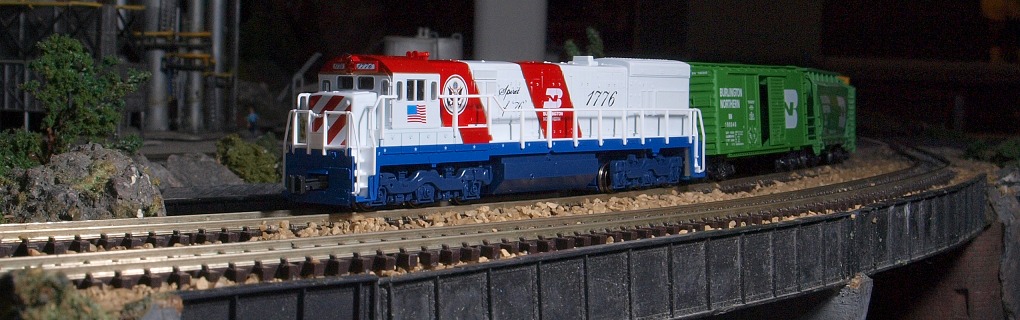
The locomotive has been under restoration in Cleveland for nearly a decade, and volunteers are hopeful it will run in 2026. When it does, it’s expected to wear a red, white, and blue livery inspired by sister engine 2101, which led the American Freedom Train in the 1970s. The 2100 will also be renumbered 250. The locomotive was steamed up for the first time following extensive boiler work in April 2025.
“With 2026 approaching and work on the locomotive’s boiler nearing completion, it is time to shift focus on the running gear,” said volunteer Nick Martin. “This $15,000 goal for the rod brasses is the first of additional goals to come in the Making Moves campaign, and if we continue to meet those goals, 250 could make its first moves under steam as soon as spring of 2026.”
Reading 2100 was built in the railroad’s own shops in September 1945 by essentially expanding an existing Baldwin 2-8-0. The locomotive ran into the 1960s. In 1975, it and its sister locomotive, 2101, were purchased by Ross Rowland. Locomotive 2101 was restored for the American Freedom Train while 2100 served as a parts source. Locomotive 2100 was briefly restored in the 1980s before moving to Ontario and then Washington State, where it briefly ran in the 2000s. In 2015, the locomotive was moved to Ohio to be restored by ASRPA.
Donations can be mailed to the American Steam Railroad Preservation Association, 2800 W. 3rd St, Cleveland, OH 44113, or made online at www.americansteamrailroad.org.
—Justin Franz
The post American Steam Raising Money For 2100 Running Gear appeared first on Railfan & Railroad Magazine.
MTA on Nov. 19 issued the final 2026 operating budget and four-year financial plan (see above), which it said introduced “a new round of operating efficiencies over the next four years that significantly reduce out-year deficits announced in the July Financial Plan by a total of $418 million.” New cost savings of $675 million, it reported, are the primary driver and raise the cumulative total to more than $2 billion in operating savings through 2029.
“The plan shows a continued balanced operating budget for 2026 and reduces the projected deficit for 2027 by approximately half, from $345 million to $160 million, with additional deficit reductions in 2028 and 2029 thanks to a new round of operating efficiencies that the Authority has identified,” MTA said. The plan, it pointed out, forecasts $75 million more in operating efficiencies for 2027; $150 million for 2027; $200 million for 2028; and $250 million for 2029, totaling $675 million in new cost savings. This is in addition to the annual recurring savings of $500 million that MTA said it is “on track to achieve this year, originally reflected in the November Financial Plan of 2022.”
According to MTA, it has identified new cost savings through “transitioning to Tap and Ride; lower maintenance costs with the rolling deployment of newer and more reliable subway and railcars; optimization of railroad train crew schedules; and other identified efficiencies of internal processes across all agencies.”
Overall, revenue and expenses are on budget for 2025, MTA reported. Farebox revenue “is tracking to budget, primarily driven by stronger farebox performance from the commuter railroads [Metro-North and Long Island Rail Road],” and overall operating expenses “remain below budget,” it said.
“In 2021, the MTA was looking at a $2.5 billion annual deficit, but we have been able to get back on track thanks to the amazing support from Albany,” MTA Chair and CEO Janno Lieber said. “That support allowed us to stay afloat without cutting service, without any layoffs—and another major factor in this agency’s fiscal stability has been the cost savings that we’ve achieved in recent years.”
“The MTA has kept real costs below 2019 levels and through these new cost savings, continues to meet the challenge of identifying new operating efficiencies to further reduce out-year deficits,” MTA Chief Financial Officer Jai Patel noted. “We’ll continue to make smart financial decisions that ensure long-term budget stability, while delivering reliable service customers can count on.”
Further Reading:Plans for the new Riverfront Streetcar Station and CPKC Pavilion will be unveiled Nov. 22, according to the KC Streetcar Authority (KCSA), which is partnering with Port KC and CPKC on the project. The station and pavilion in 2026 will become the new northern terminus of the KC Streetcar system and provide access to Berkley Riverfront.
The $5 million pavilion—designed by a local team led by Burns & McDonnell and Zahner—will serve as the ‘front door’ to the Berkley Riverfront, CPKC Stadium, and future development, KCSA reported Nov. 18. It will feature an “artistic metal canopy, sculptural lighting, and enhanced passenger boarding and waiting areas.” Inspired by the Missouri River’s “movement and flow,” KCSA said the pavilion’s “architecturally striking canopy” and “vertical beacons of light” will symbolize Kansas City’s “deep connection to the river that shaped its history.”
The pavilion will be funded by a combination of federal grants and private contributions, according to KCSA. Construction will begin later this year and continue through 2026.
(Courtesy of KCSA)The station and pavilion are part of KCSA’s 0.7-mile Riverfront Extension project (see map above), which is 97% complete and expected to open in early 2026. The extension begins at 3rd Street and Grand Boulevard in the River Market, crosses the existing Grand Boulevard Bridge, and ends near the midpoint of Berkley Riverfront—about a five-minute walk to the home of the KC Current, CKPC Stadium. When complete, the entire KC Streetcar system will cover nearly 6.5 miles from the river to the Roos (University of Missouri-Kansas City).
“Together with Port KC and CPKC, we’re building an end-of-line station that truly reflects the important role this streetcar stop will play in connecting our system to all of Berkley Riverfront for years to come,” KCSA Executive Director Tom Gerend said.
“Partnerships like this are exactly how we continue to transform Kansas City’s riverfront into a vibrant, connected destination,” Port KC President and CEO Jon Stephens said. “The new End of the Line stop will not only connect people to the riverfront—it will create a true sense of arrival and place for everyone coming to experience all that this area has to offer.”
“Our rail network connects businesses, nations, and communities, fueling the economic development that strengthens the places we live and work,” commented Chad Becker, CPKC Chief of Staff. “We are proud to support the KC Streetcar, which is helping redefine how people experience Kansas City. This latest project adds to the successful rebirth of the riverfront anchored by CPKC Stadium and surrounding developments.”
Earlier this fall, KCSA launched its 3.5-mile Main Street Extension, connecting downtown with the Midtown corridor, including the Country Club Plaza district, and ending at the Roos (see map of the current system, above left).
NCTD (Courtesy of NCTD and Toll Brothers Apartment Living)The Oceanside (Calif.) City Council on Nov. 19 voted to advance the proposed Oceanside Transit Center redevelopment project, which NCTD reported was “a significant step forward” in its transit-oriented development (TOD) strategy. The project plans will proceed to the California Coastal Commission for final review in 2026.
The Oceanside Transit Center is a hub for transit services in North County, connecting communities to San Diego, Los Angeles, Orange County, and North County inland cities. It is the only station served by SPRINTER hybrid rail, COASTER commuter rail, Amtrak intercity rail, Metrolink commuter rail, BREEZE fixed-route bus, and LIFT paratransit services.
The redevelopment project represents nearly $100 million in private investment and includes a dedicated transit customer service center, a station plaza, improved public waiting areas, a new public parking structure, and the relocation of a bus island to provide direct bus-to-rail connectivity and reduce passenger walk times roughly 50% when compared with the existing configuration, according to NCTD. The project also includes 170 hotel rooms, nearly 30,000 square feet of ground-floor retail space, and 547 residential units (15% of which will be dedicated as affordable housing for low- and moderate-income households). Toll Brothers Apartment Living is the project manager; it will oversee construction and provide site management upon project completion.
NCTD reported that its headquarters will be relocated from 810 Mission Avenue to the redeveloped Oceanside Transit Center (235 S. Tremont); this will create an opportunity for Toll Brothers Apartment Living to develop 206 mixed-income units (including 31 for low- and moderate-income households) at the Mission Avenue site.
“The vision for a reimagined Oceanside Transit Center is the result of more than three years of public outreach, collaboration, and compromise between a diverse coalition of local residents, nonprofits, transit, and housing advocates, and of course the City of Oceanside and NCTD,” said Michael McCann of Toll Brothers Apartment Living. “Downtown Oceanside has become such a unique destination that deserves a world-class transit center. We’re proud to be part of the team that will deliver a project that benefits not only Oceanside, but the region as well.”
According to NCTD, the Oceanside Transit Center redevelopment project is the first of 11 planned redevelopment projects at NCTD rail stations. Collectively, these developments are expected to generate approximately 2,341 housing units—884 of which will be designated affordable—along with 275 hotel rooms in coastal areas and an increase of 55,800 square feet of retail space.
WMATA WMATA, Rushmark, EYA, and local officials break ground on the new development at West Falls Church, Va. From left to right: Vice President of Rushmark Properties Neal Kumar, Metro Alternate Board Member and Arlington County Board Vice Chair Matt de Ferranti, Fairfax County Board Supervisor and Metro Board Member Walter Alcorn, Metro General Manager Randy Clarke, Fairfax County Board of Supervisors Chair Jeffrey McKay, Fairfax County Board Supervisor James Bierman, Jr., Falls Church Mayor Letty Hardi , EYA Executive Vice President Evan Goldman, and Metro Acting Vice President of Real Estate and Development Nia Rubin. (Courtesy of WMATA)WMATA along with development partners Rushmark Properties and EYA, LLC, and Virginia elected officials on Nov. 19 broke ground on a dense, mixed-use community, just steps from the West Falls Church Metrorail Station.
The Falls Church Gateway Partners will transform 24 acres of WMATA-owned parking lots into “a vibrant neighborhood that enhances transit accessibility and supports affordable housing,” according to the transit authority.
(Courtesy of WMATA)The project will be developed in three phases and include up to 1 million square feet of new residential, office, and retail space. The residential portion will feature up to 810 apartments and 82 townhomes with affordable housing components. It also includes a new street grid with improved pedestrian, bike, and bus access. New public spaces like civic plazas, pocket parks, and a dog play area will also be created, WMATA reported.
The first phase will open with townhomes starting in 2027 and apartments in 2028.
A rendering of the townhomes, new streetscape, and wayfinding near West Falls Church. (Courtesy of WMATA)“Groundbreakings are about new beginnings, and West Falls Church is set for an exciting new chapter,” WMATA General Manager Randy Clarke said. “With the Silver Line’s arrival [in 2022], these lots became underused, creating an opportunity to build a community steps from the station. When we build more housing near transit, the entire region benefits—from growing ridership to reducing traffic congestion to creating better quality of life opportunities and more access to jobs and entertainment.”
A rendering of the multifamily apartment building near West Falls Church. (Courtesy of WMATA)“By transforming 24 acres of Metro-owned land into a vibrant, walkable, mixed-use neighborhood, this community will have a new place where people can live, work, and connect—without needing a car for every trip,” WMATA Board Member and Fairfax County Supervisor Walter Alcorn said. “This redevelopment—with new homes, offices, retail, and public spaces—shows what’s possible when Metro [WMATA], Fairfax County, and our partners unite around a shared vision for smart, transit-oriented growth that benefits our residents, our economy, and our region.”
The TOD project complements two others for a total of nearly 42 acres around the Metrorail station: West Falls and the Virginia Tech Northern Virginia Center, which includes the new the HITT headquarters.
DART (DART Photograph)The DART Board of Directors approved a $16.8 million contract with Preferred Technologies, LLC for a system-wide upgrade of camera and monitoring equipment and exercised a contract extension and increase with Texas Elite Facility Services for cleaning services (worth $7.8 million), the transit agency reported Nov. 19. DART operates light rail, Silver Line regional rail, Trinity Railway Express, bus routes, GoLink on-demand service, and paratransit, moving more than 220,000 riders daily across a 700-square-mile, 13-city region of North Texas.
Preferred Technologies, LLC, will upgrade DART’s surveillance camera system, replacing of “thousands” of cameras while unifying DART’s hardware and software. The move will increase efficiency and collaboration between DART PD and operations, according to the transit agency. The cameras and related systems will cover trains, buses, platforms, bus stops, and facilities. The contract also includes advanced analytics capabilities to improve response times, DART said. This is the first major overhaul of the DART camera system since 2010. DART PD and the operations and technology departments are collaborating to identify priority locations, and fieldwork will begin in the first part of 2026.
The Texas Elite Facility Services contract covers bus stop and shelter cleaning services. According to DART, the contract extension “increases quality control measures and includes integration of the vendor with DART’s internal maintenance system for faster response times.” The transit agency said the new contract doubles the cleaning frequency for bus shelters, “which is a priority” as DART is installing 1,200 new next-generation shelters. It also standardizes inspections from the vendor and DART, “making more bus stop and bus shelter inspections possible more often.”
Separately, TOD within a quarter mile of DART light rail stations has generated $18.1 billion in direct economic impact to North Texas over the past 25 years, according to the University of North Texas Economic Research Group. This includes a $1.0 billion direct impact from 2022 to 2024 based on 37 development projects.
The post Transit Briefs: NYMTA, KC Streetcar, NCTD, WMATA, DART appeared first on Railway Age.
Effective immediately, the District will serve as a first-of-its-kind mobility logistics hub within the Smart Port at AllianceTexas, Hillwood’s 27,000-acre, master-planned, mixed-use development in north Fort Worth.
The Alliance Logistics District is designed to deliver tangible operational advantages to any operator or customer within its boundaries. Key benefits include:
These benefits, Hillwood says, are available to all users operating within the District, regardless of prior involvement or technical background, “ensuring that the District’s innovative infrastructure and regulatory flexibility are accessible and understandable to both new and existing stakeholders. By being co-located with one of BNSF’s largest intermodal facilities, operators and customers can realize significant operational cost savings, enhanced connectivity and improved logistics efficiency.”
Anchored by North America’s largest inland rail port, BNSF’s Alliance intermodal facility, the Alliance Logistics District is the first of its kind within BNSF’s rail and intermodal ecosystem and will “redefine how freight moves through North Texas while reducing traffic on public roads,” according to the company. “By enabling more efficient and cost-effective cargo transport, including autonomous and semi-autonomous shuttle movements as well as overweight and private heavy-haul vehicles, the District will help customers save millions of dollars annually while solidifying North Texas’ position as a national leader in logistics innovation.”
In its request to the Fort Worth City Council, Hillwood “emphasized that the Alliance Logistics District aligns directly with the City’s 2023 Innovation Districts Policy,” which encourages concentrated hubs of research, technology and entrepreneurship within defined geographic areas. Surpassing the City’s established criteria, the Alliance Logistics District, the company says, will support industries including logistics, automation, and advanced manufacturing—anchored by Perot Field Fort Worth Alliance Airport and the BNSF intermodal facility. The District will also advance innovation-driven employment, smart infrastructure and public-private collaboration to strengthen Fort Worth’s role as a global logistics and technology center, Hillwood noted.
Spanning nearly 1,400 acres, the District is purpose-built for next-generation industrial development, with direct BNSF rail access and flexible logistics infrastructure designed to support manufacturers and shippers handling heavy, dense or high-value goods—such as ceramics, plastics and auto parts—where speed, efficiency and connectivity are critical.
“By integrating advanced technology, modern infrastructure and regulatory flexibility, this initiative reinforces AllianceTexas’ standing as one of the most connected, forward-thinking logistics ecosystems in the country,” said Nicholas Konen, Vice President of Strategic Development at Hillwood. “These advancements reduce costs for customers, improve logistics efficiency and take pressure off public roadways. Our long-standing partnerships with BNSF, the City of Fort Worth and regional transportation leaders are truly a testament to how public-private collaboration sparks innovation, accelerates industrial development and drives economic opportunity.”
The inland port at AllianceTexas serves as the primary port of entry for the southwestern U.S., linking global trade directly to the region through intermodal rail connections from ports including Los Angeles, Long Beach and Houston. As one of only two intermodal logistics hubs in Texas that integrate air, ground and rail transportation, companies can efficiently move goods across all three modes of transit.
“The Alliance Logistics District aligns perfectly with BNSF’s vision to deliver transportation services that consistently meet our customers’ expectations, with these innovations delivering cost savings and additional supply chain value,” said Jon Gabriel, BNSF Group Vice President of consumer products. “By enabling the delivery of goods from rail to warehouse in a more efficient way, we’re increasing the traffic that can capitalize on the cost, capacity and sustainability benefits of intermodal while creating a scalable model for the next generation of inland ports. This strengthens the region’s freight infrastructure and keeps North Texas at the forefront of global supply chain innovation.”
According to a recently released study by the Texas Comptroller’s office, Texas ports generated $1 trillion in international trade in 2024, with AllianceTexas contributing $834.6 million—a 550.7% increase since 2016.
“Through this public-private partnership, Fort Worth continues to lead in smart, sustainable infrastructure that drives our region’s economic vitality,” said Lauren Prieur, Fort Worth’s Director of Transportation and Public Works. “The Alliance Logistics District strengthens our position as a global logistics hub while ensuring forward-looking, responsible transportation planning.”
Accompanied by these operational enhancements, Hillwood’s $20 million investment in a private heavy-haul bridge over FM-156 “unlocks the District’s true value, directly linking its 15 million square feet of distribution, logistics, and manufacturing space to BNSF’s Alliance intermodal facility,” the company said.
Planned to meet Texas Department of Transportation (TxDOT) standards and engineered for 120,000-pound axle loads, the three-lane bridge “will enable the efficient movement of heavy-haul freight while reducing truck traffic on public roads.” Construction is expected to be completed by late 2026, “reinforcing Hillwood’s commitment to next-generation infrastructure that supports industrial growth and regional mobility,” the company said.
The post Hillwood, BNSF, City of Forth Worth Launch Alliance Logistics District appeared first on Railway Age.
For tenants, TexAmericas Center says, that means “faster turns, more predictable service, and quicker Speed-to-Market resulting in Speed-to-Profit.” For the four-state regions of Arkansas, Louisiana, Oklahoma, and Texas, “it strengthens the Texarkana logistics hub, supports Red River Army Depot and area manufacturers, and helps attract new investment and jobs.”
The locomotives, EMD GP38‑2 models rated at 2,000 horsepower each, are part of a $3.15 million investment “to increase internal capacity, improve car staging and spotting reliability, enhance operational flexibility, and elevate day‑to‑day safety for employees and contractors,” the industrial park noted.
As a designated Union Pacific (UP) Focus Site, TexAmericas Center says it is “leveraging the added locomotive power to cut bottlenecks, lower shipping costs, reduce delivery times, and connect tenants to broader markets, accelerating Speed-to-Profit and making the four-state region more competitive for investment and jobs.”
“This is about giving businesses the service they need to move faster,” said TexAmericas Center CEO and Executive Director Scott Norton. “With added power and control on our own footprint, we can switch cars more efficiently, keep people safer on the ground, and help companies stay on schedule.”
The project was supported by a $1.5 million Defense Economic Adjustment Assistance Grant from the Texas Military Preparedness Commission. The state support helped bring the equipment online on an expedited schedule and strengthens logistics for its tenants including those supporting the Red River Army Depot, according to TexAmericas Center.
“We are grateful for the Commission’s support,” said Norton. “Their investment helped us turn plans into action and deliver real-world reliability for the defense supply chain and for the companies that put people to work here.”
Built for dependable daily service, both units were upgraded to Tier Zero Plus emissions standards and equipped with Hot Start technology to reduce idle time and fuel burn. Additional enhancements include newer‑generation traction motors for improved tractive effort, an FRA‑approved event data recorder, upgraded lighting and visibility for public safety, and climate controls for operator comfort that were not available on prior locomotives.
“This investment is about performance you can feel on the ground. We stage and spot with more precision, cut idle time, and keep people out of harm’s way. That means tighter cycle times and a more dependable rail experience for every shipper on our campus,” said Norton.
The ceremony on the East Campus included brief remarks, a ceremonial bottle break, and a horn salute. Speakers and special guests included leadership from the Texas Military Preparedness Commission and Red River Army Depot, along with regional and state officials. Photo opportunities and media interviews followed the commissioning.
The milestone, the industrial park says, “aligns with broader rail expansion under way at TexAmericas Center, including new track on the south end of East Campus, additional spurs, and sit yards designed to increase capacity and give tenants more choice.”
The post TexAmericas Center Commissions Two Locomotives appeared first on Railway Age.
In the heart of the Windy City, BNSF’s Cicero Intermodal Facility underwent a transformation that’s as strategic as it is sustainable. With the final phase of a multi-year expansion nearing completion, the project is already delivering on its promise: increased capacity, improved safety and efficiency, and meaningful environmental benefits for customers and communities alike.
The expansion will increase Cicero’s annual lift capacity by 175,000 units. This is an essential step in supporting BNSF’s intermodal growth strategy and meeting rising demand across our 32,500-mile network.
A train brings in ballast rock to support the construction of the new 4,530-foot production track.“Reconstructing an active railyard while continuing to provide quality service to our customers presented its own unique challenges,” said Engineering Manager Chris VanDeven. “The success of this project is a direct result of the collaboration and innovation of all those involved.”
Teams managed overall costs to mitigate inflation, applying value engineering and working collaboratively with stakeholders to define the right scope and deliver what was needed. Everyone involved consistently exceeded expectations.
We’ve added 8,500-foot of production track (where intermodal trains are loaded and unloaded), 55,000 feet of reconstructed receiving yard tracks, new trailer parking with more than 800 stalls, a hostler repair shop and a 100-foot diameter turntable. But the real story lies in how the work was done.
Reconstructed Receiving YardBy optimizing site grading, the team reduced excavation by 63,900 cubic yards. Instead of hauling away excess soil, they repurposed 204,000 cubic yards to build an embankment on adjacent BNSF property that eliminated 1,449,000 miles of truck trips and over 5,000 metric tons of greenhouse gas emissions.
To put that in perspective, offsetting that much carbon would require planting 120,000 trees, no small feat in a dense urban area like Chicago.
Stormwater detention systemBeyond the railyard, the project also brought benefits to the surrounding community. Working with local municipalities, we designed and built a 2,700,000-cubic-foot stormwater detention system to better manage runoff and reduce strain on the city’s sewer infrastructure.
Cicero Intermodal Facility turntableIn a nod to preservation and reuse, we donated the facility’s original 135-foot locomotive turntable to the Railroading Heritage of Midwest America in Silvis, Illinois, and a 15-ton crane from the Cicero locomotive repair shop also found a new home at the Illinois Railway Museum, where it will help maintain a fleet of 58 historic diesel locomotives.
Sunset over the west ramp at Cicero Intermodal Facility“Cicero employees recognize and appreciate the investment BNSF has made in the terminal,” said Joseph Ratulowski, Cicero terminal superintendent. “The improvements in safety and capacity have strengthened our confidence of this yard and we know it will deliver benefits for years to come!”
The Cicero expansion has been a part of a broader, long-term commitment by BNSF to invest in infrastructure that supports customer growth and supply chain resilience. From intermodal hubs to mainline capacity, every project is designed with the future in mind.
With more capacity, smarter design and a smaller environmental footprint, Cicero is ready to meet the needs of customers today and tomorrow.
Construction under way at the Cicero Intermodal Facility, with BNSF locomotives on the track below a bridge as a J.B. Hunt truck drives by.The post Cicero Intermodal Expansion Delivers Capacity, Sustainability and Customer Value appeared first on Railway Age.
“The North American intermodal market maintained a positive growth trajectory in the third quarter of 2025, despite increasing volatility and economic headwinds,” according to the Intermodal Association of North America’s (IANA) quarterly report, released Nov. 19 (download below).
IANA_Q3_IntermodalQuarterlyReportDownloadThe three months ending September 2025 “extended the strong performance seen in the first half of the year,” the Association said. Total intermodal volumes rose 2.8% year-over-year, with international containers up 4.4%, domestic containers up 2.5%, and trailers down 18.7%.
Loadings approached 4.8 million for the quarter, which IANA said is “a level not seen” since second-quarter 2021.
Among the report’s key highlights:
The Association noted that “[g]rowth became more challenging as the quarter progressed due to” three factors:
“The North American intermodal market has shown notable resilience this quarter, extending a positive growth trajectory despite increasing volatility and economic headwinds,” IANA Director of Economics Andrew Sibold said. “Domestic intermodal may see the greatest opportunity going forward as trucking conditions tighten.”
“While total North American intermodal moves were up [3.8%] through the first nine months of 2025, the fourth quarter will be the most challenging of the year,” added Anne Reinke, President and CEO of IANA.
Further Reading:The post IANA: Intermodal ‘Stays Ahead’ in 3Q25 appeared first on Railway Age.
Each year, Norfolk Southern (NS) conducts a comprehensive customer survey to gauge service performance and identify opportunities for improvement. In 2025, we achieved a world-class response rate of 42%, with 404 customers participating and sharing more than 500 comments—an impressive increase in engagement compared with last year.
The results reflect meaningful progress. Our Net Promoter Score rose five points overall to 32, and among our top-200 customers by revenue, it climbed to 43—clear indicators of improving sentiment and alignment on what matters most to shippers. Overall, 80% of respondents reported being satisfied with NS service performance.
Customers highlighted strong relationships with our Commercial team, effective communication methods, industry-leading technology solutions, and noticeable improvements in service reliability.
Why it matters: Our customers’ feedback shapes our path forward. Their insights guide where we invest, how we operate, and the actions we take to deliver the safe, reliable service they count on to support their business.
Key takeaways:
What we heard: Customers underscored the importance of dependable service, transparent communication, and tools that make it easy to do business with us. They also expressed that strong partnerships matter, especially when they can count on collaboration, responsiveness, and problem-solving from our teams. One manufacturing customer described NS as “the most customer-centric and visible railroad,” noting that our teams “go above and beyond” in customer service and support. A chemicals customer shared that our collaboration “feels like a partnership” and applauded our responsiveness to trends and our excellent communication.
They also shared where continued improvements would make the biggest difference. Others highlighted that “better communication any time something changes” would help them operate more efficiently, and others pointed to the need for “more visibility to help us plan better.”
How we’re moving forward: These insights guide ongoing work across our operations, commercial, and technology teams. We’re strengthening service reliability, improving communication, enhancing our digital tools, and making each interaction with NS more seamless and predictable.
We’re grateful to every customer who shared their perspective. Their feedback helps us evolve and continue building a railroad that supports their growth. We’ll keep listening, learning, and raising the bar on the service we deliver every day.
“Our customers’ feedback is essential to how we operate,” NS Chief Commercial Officer Ed Elkins said. “It gives us clarity on where to focus and reinforces our commitment to delivering safe, reliable service. Their input helps us make decisions that strengthen our network to support their long-term success.”
Learn more about how we’re working to deliver a better customer experience with innovative solutions on our website.
This article first appeared on the NS website.The post NS: Turning Customer Insights Into Better Customer Service appeared first on Railway Age.
The American Short Line and Regional Railroad Association (ASLRRA) has filed a notice of intent to participate in the Surface Transportation Board’s (STB) review of the forthcoming Union Pacific-Norfolk Southern application seeking authorization to combine their networks under common ownership and form a U.S. transcontinental.
(Graphic Courtesy of UP)“This proposed major consolidation transaction is of significant interest to short line railroads across the nation,” ASLRRA said in its Nov. 19 filing announcement. “Both individually and collectively with the involvement of the ASLRRA, short lines are actively engaged in ascertaining how the proposed transaction may positively or negatively impact smaller railroads and their customers.”
The Association’s participation, it noted, “will focus on ensuring the transaction, as presented to the STB by the applicants or as may be conditionally approved, adequately addresses any impact on smaller railroads and their customers, and supports” the following measures:
“On behalf of our members, ASLRRA will productively engage in the STB process, seeking to enhance competition, improve customer service, and grow rail volume across the U.S. freight rail network by building on successful win-win partnerships between Class I’s and short lines,” ASLRRA President Chuck Baker said.
UP and NS this summer submitted to the STB a notice of intent to file an application for STB approval of a proposed merger; in their notice, UP and NS stated that they intended to file their application on or before Jan. 29, 2026. The application would be part of STB docket FD 36873.
Shareholders of UP and NS, in special meetings held Nov. 14, approved the merger of the two railroads, with in-favor margins approaching 100%. The transaction, both companies said, is expected to close “by early 2027, subject to Surface Transportation Board review and approval within its statutory timeline and customary closing conditions.”
The post ASLRRA to Participate in STB Review of Proposed UP-NS Merger appeared first on Railway Age.
The Senate Commerce Committee on Nov. 19 recommended Senate reconfirmation of Republican Michelle A. Schutz to a second five-year term on the Surface Transportation Board (STB). Her renomination is now ripe for a Senate floor vote that will seal confirmation—the timing of which is determined by Senate Majority Leader John Thune (R-S.D.). Schultz had bipartisan support from Committee Chairperson Ted Cruz (R-Tex.) and the committee’s senior Democrat, Maria Cantwell (D-Wash.).
A Commerce Committee vote on whether to recommend Senate confirmation of the nomination of Republican Richard Kloster to a first STB term remains pending owing to what is described as “slow paperwork.“
A committee hearing into the qualifications of Schultz and Kloster, at which they were questioned by senators, was held earlier in November.
Kloster’s nomination is to fill a seat on the five-member STB left vacant by the early 2024 retirement of Democrat Martin J. Oberman and expiring Dec. 31, 2028.
A Democratic seat held by Robert E. Primus remains open since Primus’ firing in August by POTUS 47. Primus is contesting the firing as “illegal“ and asked a federal court to reinstate him.
Other STB members are Republican Chairperson Patrick J. Fuchs, whose second term expires Jan. 14, 2029, and Democrat Karen J. Hedlund, whose first term expires Dec. 31, 2025. If not renominated and confirmed before then, Hedlund may remain on the STB for up to 12 additional months or until a successor is nominated by the President and Senate confirmed.
Schultz has bipartisan support for a second five-year term on the Surface Transportation Board from Senate Commerce Committee Chairperson Ted Cruz (R-Tex.) and the committee’s senior Democrat, Maria Cantwell (D-Wash.). (Photographs Courtesy of the U.S. Government)The post Sens. Cruz, Cantwell Support STB Nominee Schultz appeared first on Railway Age.
CSX and the CREATE program reached a major milestone on October 15, 2025, when the first train crossed the new Forest Hill Flyover. This structure, located southeast of where 74th Street and Western Avenue intersect in Chicago, carries CSX trackage over lines of Belt Railway of Chicago, Metra, and Norfolk Southern. The investment eliminates a long-standing bottleneck where an average of 30 SouthWest Service Metra trains and 35 freight trains intersect daily. As part of CREATE’s $380 million, 75th Street Corridor Improvement Project, the Forest Hill Flyover was funded by federal, state and local governments, along with the involved railroads. The on-time completion of this project during October concluded construction that began in 2022. While the first train ran in October, a ribbon-cutting wasn’t held until November 14.
The reduction in delays at this former at-grade crossing benefits some of CSX’s most competitive intermodal traffic in the Chicago market, as this former B&O Chicago Terminal, double-track route is used by all trains in and out of the 59th Street intermodal terminal. This includes Trains I135 (Suffolk, Va.-Chicago) and counterpart I136, plus Trains I168 (Chicago-Port Newark, N.J.) and counterpart I169. Also using this route are several run-through trains that operate between the western roads at Chicago and CSX’s Northwest Ohio Intermodal Container Transfer Facility in North Baltimore, Ohio. These include Trains I171/I172 with the BNSF and Trains I191/I192 with Union Pacific. The flyover also handles ethanol, oil, and grain from both UP and BNSF, plus coal trains from Wyoming’s Powder River Basin destined to West Olive, Mich., when they do not use normal routing via the Belt Railway of Chicago.
—Scott Lindsey
The post Chicago Flyover Bridge Opens appeared first on Railfan & Railroad Magazine.
Through NCRR Invests, NCRR said it uses private revenue to support job creation, freight rail use, and long-term economic growth across North Carolina. Its funding for Fit Precast’s rail spur will cover design and construction, including drainage, track, and signal work.
Fit Precast, a National Infrastructure Holdings (NIH) company, is investing $102 million into its 154,000-square-foot facility in Gastonia, N.C., which will manufacture precast concrete and piping products used in stormwater management, transportation, and utility construction projects. Upon completion, the company is expected to receive and/or distribute a minimum of 500 railcars annually, and create 125 full-time jobs with an average annual salary of $102,168.
Other key partners in the Fit Precast project include Norfolk Southern, the Office of Governor Josh Stein, North Carolina Department of Commerce, Economic Development Partnership of North Carolina, North Carolina General Assembly, North Carolina Community College System, Gaston College, Duke Energy, Enbridge, Gaston County, Gaston County Economic Development Commission, and the City of Gastonia.
We are not just entering the market, we are redefining it! pic.twitter.com/pmfUvMryoa
— Fit Precast LLC (@FITprecast) November 19, 2025“The demand for resilient, American-made infrastructure has never been greater, and North Carolina is the ideal place to meet that challenge,” Fit Precast President Matt Goreski said. “This flagship headquarters and production facility is the most advanced precast concrete manufacturing site in the country, investing in both leading-edge technology and the people of North Carolina with high paying, meaningful careers. The Gaston County EDC and the State of North Carolina consistently went above and beyond to secure this project; we would like to thank them for making this our new home.”
“We’re proud to help strengthen Gaston County’s rail connectivity and support the significant job growth that Fit Precast will bring to the region,” said Carl Warren, President and CEO of NCRR, which manages 317 miles of rail corridor. “NCRR works closely with local partners to ensure communities have the rail infrastructure and strategic support they need to attract and sustain new industry.”
“Fit Precast’s operation in North Carolina will be facilitated, in part, by a Job Development Investment Grant (JDIG) approved by the state’s Economic Investment Committee,” according to the North Carolina Department of Commerce. “Over the course of the 12-year term of this grant, the project is estimated to grow the state’s economy by $530 million. Using a formula that takes into account the new tax revenues generated by the new jobs and $71 million of the company’s investment, the JDIG agreement authorizes the potential reimbursement to the company of up to $2,303,100, spread over 12 years. State payments occur only following performance verification by the departments of Commerce and Revenue that the company has met its incremental job creation and investment targets.
“The project’s projected return on investment of public dollars is 170%, meaning for every dollar of potential cost to the state, the state receives $2.70 in state revenue. JDIG projects result in positive net tax revenue to the state treasury, even after taking into consideration the grant’s reimbursement payments to a given company.
“Because Fit Precast chose a site in Gaston County, which is classified by the state’s economic tier system as Tier 2, the company’s JDIG agreement also calls for moving as much as $255,900 into the state’s Industrial Development Fund–Utility Account. The Utility Account helps rural communities anywhere in the state finance necessary infrastructure upgrades to attract future business.”
Further Reading:The post NCRR Injecting $500K Into Fit Precast’s Rail-Served Facility appeared first on Railway Age.
A thriving rail industry is foundational for the U.S. economy. Since the 1800s, railroads have powered the U.S. by hauling grain, chemicals, vehicles, coal and all kinds of critical supplies that Americans rely on across the country.
After decades of decline due to governmental interference through much of the 20th century, deregulation in 1980 allowed railroads to compete, which led to efficiency gains through investment, innovation and consolidation. This has resulted in the U.S. having the strongest freight rail network in the world.
Union Pacific’s proposed merger with Norfolk Southern marks the long-anticipated arrival of the first U.S. transcontinental railroad, a momentous time for the industry. Even President Abraham Lincoln, more than 150 years ago, envisioned a coast-to-coast railroad that would reduce transportation costs for manufacturers and businesses while streamlining the U.S. supply chain.
Combining Union Pacific and Norfolk Southern two complementary networks that together will stretch from coast to coast across 43 states and more than 50,000 miles—will allow shippers to reduce costs and transit time.
Today, shippers transporting goods by rail often must deal with separate networks that make it impossible to get a single price for coast-to-coast shipping. Interchanges, where two rail networks meet and freight cars must be transferred from one network to another, create delays and headaches for shippers.
With the merger, congestion and handoff delays at rail interchanges such as Chicago, Kansas City and New Orleans would be alleviated.
The merger would also make American rail a more competitive freight option, and providing a one-stop solution for shippers would make procuring rail transportation simpler. As the new, combined company finds ways to make its network more efficient, shippers and consumers will ultimately benefit from those savings. This will help tamp down the inflationary pressures of the past few years and deliver price relief to key sectors such as housing, energy, autos and more, where inputs (such as wood, coal, and steel) typically travel via rail.
Some have questioned whether the Administration and the Surface Transportation Board (STB) should allow further consolidation in an industry already dominated by just a few players. The STB will have to consider two questions as it reviews the deal: Does the merger enhance competition? And is it consistent with the public interest?
The answer to both is a resounding yes. With Union Pacific operating west of the Mississippi and Norfolk Southern operating east of it, the deal represents an end-to-end merger that unambiguously improves service. In the one area where there is some overlap—Kansas City to St. Louis—there is expected to be expanded rail service as the connection in that area would increase capacity and fluidity for shippers in the region.
A few critics will likely (and mistakenly) argue that consolidation will not enhance competition, but this perspective fails to grasp the state of the broader freight landscape. The proposed merger doesn’t diminish competition; it creates a more competitive and efficient U.S. rail network. The combined company would offer shippers better service, greater leverage in negotiations with trucking companies and access to expanded multimodal connections.
Combining the two networks would result in a freight option that can better compete with trucking and the Canadian transcontinental rail networks. What’s more, the benefits of it would go beyond shippers: The merger would almost inevitably result in fewer trucks on the nation’s highways, thereby reducing congestion and greenhouse gas emissions while improving highway safety, as well as reducing the wear and tear on roads. Plus, fewer vehicles on the roads means increased safety for motorists.
By shifting significant freight volumes from road to rail, the merger would ease road congestion and public infrastructure maintenance costs, saving billions in future maintenance costs. These are savings that flow directly to the taxpayers, who effectively subsidize the trucking industry. The motor vehicle fuels tax, which hasn’t increased in more than 30 years, does not come close to paying for the upkeep and expansion of the nation’s roads, and $275 billion has been transferred from the general tax fund to the highway trust fund since 2008.
Manufacturers and exporters stand to benefit from more reliable and timely freight service. The new network could shave several days off key shipping lanes, which would streamline supply chains and reduce overhead costs. For industries that rely on just-in-time delivery, these efficiencies translate into real savings. Ultimately, consumers would feel the impact, too, through lower prices on everything from groceries to household goods.
Reducing freight costs and improving delivery timelines is a competitive necessity for U.S. manufacturing. This merger will help those who make things in the U.S. remain competitive against international rivals, enabling domestic products to reach markets faster and at lower cost.
Michael F. Gorman, Ph.D., is the Niehaus chair in Operations and Analytics and a professor at the University of Dayton, specializing in freight rail logistics and transportation economics.The opinions expressed here are his own.
The post A Rail Merger to Put America Back on Track appeared first on Railway Age.
The American Short Line and Regional Railroad Association (ASLRRA) has selected Gary Vaughn for the 2026 Schlosser Distinguished Service Award. He will be honored April 14, 2026, at the Association’s annual conference and exhibition in Minneapolis, Minn.
In this photo from early in his career, circa 1971, Vaughn hands up orders to a passing freight train. (Photograph and Caption Courtesy of ASLRRA)The award, named for former ASLRRA Chair Thomas L. Schlosser, is the highest individual honor bestowed by the Association, recognizing “long-term, significant service to the ASLRRA and the short line industry.”
“In his work with the Association’s Safety and Training (S&T) Committee, Vaughn advised numerous short line railroad employees,” ASLRRA reported Nov. 18. “Vaughn played a major role in developing many of the resources now used by ASLRRA members, including the templates for 49 CFR Part 243: Training, Qualification, and Oversight for Safety-Related Railroad Employees and templates for conductor certification and electronic devices.
“Beyond his service to ASLRRA, Vaughn provided the short line perspective on industry committees that were tasked with guiding regulations including the Federal Railroad Administration’s (FRA) Railroad Safety Advisory Committee (RSAC), many FRA working groups that helped develop new regulatory language, and served as the first ever short line chairman of the General Code of Operating Rules Committee.”
Top: Vaughn was the first winner of the Safety Professional of the Year Award, given in 2010 at the Annual Conference in San Antonio, Tex. He was joined onstage for a photo by members of ASLRRA’s S&T Committee.Vaughn’s approach to safety was rooted in his early experience as a railroader and as a volunteer firefighter and EMT, according to ASLRRA. Vaughn followed his father—a WWII veteran and railroader of 32 years—into railroading, and the two men worked together at the same tower in Michigan as operators and telegraphers.
Vaughn began his railroad career working for the Norfolk & Western Railway (N&W) while attending the University of Michigan. Following graduation and stints at N&W and Norfolk Southern, Vaughn made the move to the short line industry in 1996, first working for RailTex and Rail America in such roles as Operations Manager, Division Superintendent, General Manager, and Regional Safety Manager. In 2003, he joined Watco as Safety Director and began making his mark on the company’s safety performance, according to ASLRRA. During his 15-year-plus tenure, Watco achieved numerous year-over-year improved safety records and supported Vaughn’s work to both restructure the safety department and implement workplace safety education and awareness programs, the Association reported.
Vaughn with Tom Leopold (far left) and Tyrone James (center) at another ASLRRA conference.Vaughn has also served as an Executive Board Member for Kansas Operation Lifesaver, as Vice Chairman of the Oklahoma Operation Lifesaver Executive Board, and was a Member of the Short Line Safety Institute’s (SLSI) first Board of Directors.
Vaughn retired from railroading in 2019.
“Gary has influenced a whole generation of industry professionals,” ASLRRA President Chuck Baker said. “His unwavering commitment to safety fueled the creation of critical resources for ASLRRA members, a very active Safety & Training Committee that continues to guide the Association’s work in this area, and innumerable contributions to the industry on regulatory issues. Gary’s service to ASLRRA has truly left the Association and the short line railroad industry in a better place.”
The Schlosser Distinguished Service Award is not Vaugn’s first ASLRRA honor; he also earned the inaugural Safety Professional of the Year Award in 2010.
Previous Thomas L. Schlosser Distinguished Service Award HonoreesThe post Vaughn Earns 2026 Schlosser Distinguished Service Award appeared first on Railway Age.
Total U.S. rail traffic for the week ending Nov. 15, 2025, came in at 493,880 carloads and intermodal units, dipping 4.5% from the prior-year period, according to the AAR. Total carloads were 223,101, down 0.2%, while intermodal volume was 270,779 containers and trailers, down 7.7% from last year. This is the sixth consecutive week that U.S. rail traffic has fallen in comparison to the same weeks in 2024.
(BNSF Photograph)For the week ending Nov. 15, 2025, four of the 10 carload commodity groups logged an increase compared with the same week in 2024. They included nonmetallic minerals, up 3,013 carloads, to 32,472; grain, up 1,998 carloads, to 25,612; and miscellaneous carloads, up 1,197 carloads, to 9,041. Commodity groups that posted declines included motor vehicles and parts, down 2,196 carloads, to 13,509; coal, down 1,453 carloads, to 56,247; and petroleum and petroleum products, down 1,317 carloads, to 10,309.
For the first 46 weeks of 2025, U.S. railroads reported cumulative volume of 10,227,762 carloads, a 1.8% increase from the same point last year; and 12,482,057 intermodal units, a 2.2% gain over last year. Total combined U.S. traffic for the first 46 weeks of this year came in at 22,709,819 carloads and intermodal units, rising 2.0% from 2024. Results were similar through the first 45 weeks of 2025 (ending Nov. 8, 2025).
North American rail volume for the week ending Nov. 15, 2025, on nine reporting U.S., Canadian, and Mexican railroads totaled 328,748 carloads, down 0.9% from the same week last year, and 354,081 intermodal units, up 2.1% from last year. Total combined weekly rail traffic in North America came in at 682,829 carloads and intermodal units, up 0.6%. North American rail volume for the first 46 weeks of this year was 31,247,058 carloads and intermodal units, a 1.8% increase from 2024.
For the week ending Nov. 15, 2025, Canadian railroads reported 92,178 carloads, a 3.0% drop-off, and 67,613 intermodal units, a 65.6% gain over the same week last. year. For the first 46 weeks of 2025, they reported cumulative rail traffic volume of 7,452,843 carloads, containers, and trailers, up 2.3%.
Mexican railroads for the week ending Nov. 15, 2025, reported 13,469 carloads, rising 4.0% from the same week last year, and 15,689 intermodal units, increasing 22.3%. Their cumulative volume for the first 46 weeks this year was 1,084,396 carloads and intermodal containers and trailers, a fall-off of 5.8% from the same week in 2024.
(CN Photograph)The post AAR: Mixed Results for U.S. Rail Traffic appeared first on Railway Age.
System-wide SEPTA ridership for October 2025 decreased 3% or 21,911 unlinked trips per weekday from October 2024. Ridership is down by approximately 1,748 trips on Metro and 6,395 trips on Regional Rail.
Average daily ridership was 779,701 unlinked passenger trips across all modes. Up 2% from 761,879 trips in September 2025.
Bus ridership declined 3% or approximately 13,686 unlinked trips relative to this time last year. Weekend and weekday ridership declined at the same rate.
Ridership on the L, B, and M declined by approximately 1% which is a decrease of 1,684 average weekday trips despite the fare increase implemented on September 14, 2025. Ridership on the T, G, and D has remained the same compared to October 2024. T, G, and D ridership increased 5% on Saturdays and 6% on Sundays with the G experiencing the most growth. The D and T experienced some service disruptions which impacted overall ridership.
Regional Rail ridership is down 7% or approximately 6,395 passenger trips relative to this time last year. Much of the ridership loss, the agency says, can be attributed to the SLIV FRA safety inspection mandate.
Baltimore Red LineThe Red Line, a $2.9 billion plan to build a 14-mile light rail line crossing Baltimore City’s east-west axis became a transportation priority for Governor Wes Moore but “progress has been slow,” according to a Bloomberg report.
Designed to connect economically hard-hit areas of the city with downtown and suburban job centers, the Red Line had been approved for $900 million in federal funding. But, according to the report, in 2025, then-Governor Larry Hogan, “declared the project a boondoggle and returned the federal money. The state funds were diverted to road projects far from Baltimore.”
(Rendering Courtesy of MDOT MTA)“After winning the gubernatorial race, Moore promised to resurrect the transit line, in some form, during his administration. But as he gears up for reelection, the long-sought rail link remains little more than a distant hope,” Bloomberg reported.
According to the report, state and federal agencies overseeing the development of the project paused the permit review process in June, “casting further doubts on the future of the project. Restarting a major transit project that’s been dead for a decade is no simple matter: This version of the Red Line could cost $8 billion or more.”
Technical work and community hearings continue to go forward, according to the Bloomberg report. But Red Line spokesman Ken Melton said in an email that the Maryland Transit Administration (MTA) and the Federal Transit Administration (FTA) “mutually agreed to the break.”
“This pause does not delay any ongoing technical work,” Melton wrote. “It will allow time to revise the project schedule and determine the most effective path forward, rather than continuing to extend deadlines.”
The Moore administration’s current six-year blueprint for transportation funding in the state includes $128 million for Red Line planning and design work but nothing for construction, according to the report.
State delegate Regina T. Boyce, a Baltimore Democrat who is the vice chair of the chamber’s Environment and Transportation Committee, said that “federal layoffs and the prolonged federal government shutdown have had a profound impact on Maryland residents, and dealing with that has become a larger concern for state officials than transit improvements.”
Still, Boyce said that state transportation officials need to find ways to “inch forward” on the Red Line, according to the Bloomberg report. “In September, she was one of several state lawmakers and city councilmembers who urged the state to find funding to speed up the development of the Red Line as well as a planned overhaul of the city’s bus system.”
According to the report, “the rebooted Red Line boasts a new website, logo and project renderings, but other details—including alignment, station locations and whether sections would run in an underground tunnel—remain to be worked out. The original project faced resistance from some neighborhoods along the corridor, and development since has brought significant changes. But the biggest open question is cost.”
At the September hearing, a range of local lawmakers “mulled their options for moving ahead without federal support,” according to the report. “Even if we don’t have the partnership of the federal government, there is a version of the Red Line that we can do as a state, so do not let the perfect be the enemy of the good,” said Delegate Stephanie Smith, a Baltimore Democrat.
“What Baltimore really needs is a regional transit agency that focuses just on the metropolitan area, with a dedicated funding source, so planners can line up projects for delivery regardless of the changes in the political climate, argued Jet Weeks, the Executive Director and Policy Director for Bikemore, a Baltimore-based group that promotes cycling, noting how cities like Indianapolis had pushed bus rapid transit projects through state-level political opposition.”
“If you go to the Sun Belt or the Midwest and just see what they’re achieving, it’s pretty wild how far behind we are,” Weeks said. “The Red Line should be open now. If we had followed the 2002 regional rail plan, we’d have three or four lines open by now, and we haven’t built a single one.”
MetrolinxMount Dennis Station, the first station that will serve riders on the Eglinton Crosstown has opened, “though the opening date for the long-delayed rapid transit line remains unclear,” according to a CP24 report.
The new transit hub, near Eglinton Avenue and Black Creek Drive, will connect riders with the Kitchener GO, the Union-Pearson Express, and later the Eglinton Crosstown lines.
Mount Dennis is the first station to connect all three transit lines, according to a press release from Metrolinx.
“Customers can travel to Union Station in 16 minutes from Mount Dennis‚” Metrolinx said, adding that it’ll take 16 minutes to get to Pearson Airport as well.
The opening of the building, CP24 reports, comes as the final testing phase on the Eglinton Crosstown continues.
During a news conference on Monday, Metrolinx CEO Michael Lindsay said there is “absolutely a chance” the line opens by the end of 2025, though he refused to commit to any timeline, according to the report.
Premier Doug Ford said back in June that he was “hearing” the line would open by this past September.
“We are applying the most rigorous tests that have ever been applied to LRTs anywhere, we are doing that precisely because of the experience of the Ottawa LRT. All is subject to the system continuing to perform but the system is showing great stability even in the Canadian winter so there is a lot of promise,” Lindsay said on Monday.
DARTDART on Nov. 18 announced that it is launching a new touchscreen Ticket Vending Machines (TVMs) systemwide, making fare purchases faster and easier for riders.
With these upgraded machines, riders can:
The new TVMs will replace older machines through mid-2026, streamlining fare purchases, card reloads, and account monitoring, the agency noted. “DART is enhancing the rider experience, boosting efficiency, and moving toward more mobile, less cash-dependent payments.” During installation, customers can use another TVM or the GoPass® app if needed.
“DART’s new ticket vending machines make it easier for customers to pay—they’re designed to support multiple payment methods, connect to the GoPass app, dispense Tap cards, and operate in 11 different languages,” said Jamie Adelman, EVP and Chief Financial Officer. “These machines will visibly improve the rider experience and reduce fare evasion, all as part of a larger effort to modernize our fare collection system.”
The post Transit Briefs: SEPTA, Baltimore Red Line, Metrolinx, DART appeared first on Railway Age.
Over the last several years, NS says it has made “major strides in helping to boost passenger rail options while preserving freight rail connections critical to the economy.” Thanks to strong collaboration with state partners, NS has supported the launch of 11 new roundtrip Amtrak train starts—or 22 trains per day—in the last 15 years. “That’s more than any other Class I railroad and reflects a deliberate approach to passenger rail growth that complements our freight operations,” NS said.
“Rail works best when freight and passenger services work together,” said Amtrak Executive Vice President, Strategy & Planning Jennifer Mitchell. “Amtrak values Norfolk Southern’s partnership and shared commitment to performance, safety and reliability. By working together, we’re not only improving the experience for passengers and freight customers—we’re also strengthening the rail network and delivering meaningful benefits to the communities we all serve.”
In addition to launching more service, NS’ performance as a host railroad for passenger trains has also outperformed the industry, the Class I noted. “Thanks to regular reviews of dispatcher training and continuous evaluation of delays, combined with a relentless focus on network fluidity, Amtrak host delays across NS improved 26% YoY. Over the last 12 months through August 2025, only one Class I railroad scored better than NS on Amtrak’s Host Railroad Report, and NS continues to perform strongly as a host railroad, maintaining the lowest host-responsible delay (HRD) rates of any Class I for the past five months. These results reflect our commitment to operational excellence and balanced network performance,” NS said.
“We’re leading to ongoing improvements in train reliability, schedule iterations and improved network standards and efficiencies,” NS Executive Vice President and Chief Operating Officer John Orr said in an interview with Railway Age. “We’ve improved safety and service and our financial performance. Amtrak is a great example of how all of those come together in our PSR 2.0 transformation, and they extract value from our overall network capability.”
VirginiaIn late 2024, “building on the success of a longstanding partnership,” NS reached a deal with the Virginia Passenger Rail Authority (VPRA) to expand passenger service in the Commonwealth. The agreement included the sale of the Manassas Line, which will aid in expanding Virginia Railway Express (VRE) service with evening and weekend frequencies, and granted VPRA access to NS’s mainline in order to extend service from the Northeast to the New River Valley at Christiansburg with state-supported Amtrak Virginia service much sooner than previously planned and at a lower cost. The agreement, the Class I says, “reflects NS’s collaborative posture toward exploring solutions that meet state goals while preserving freight fluidity and long-term freight rail network integrity.”
“Together with Norfolk Southern, we have worked hard to put together an agreement that brings more service to Northern Virginia, new service to the New River Valley, and makes rail a strong part of Virginia’s future transportation mix,” said DJ Stadtler, Executive Director of VPRA, in the announcement of the agreement. “We look forward to furthering our partnership with them to develop passenger rail service that travels where Virginians want to go when they want to go.”
Western PennsylvaniaIn September 2023, NS and the Pennsylvania Department of Transportation (PennDOT) built upon their existing partnership to double service on Amtrak’s Pennsylvanian route, which travels round trip between New York City and Pittsburgh via Harrisburg, running over NS tracks between the latter two cities in Pennsylvania. Under the agreement, the round-trip Amtrak service would run twice daily, and NS and PennDOT would partner to make and maintain critical infrastructure upgrades needed to ensure the lines could support demand. Infrastructure improvements under this agreement are designed to accommodate increased passenger demand while maintaining critical freight throughput.
“This agreement lays the groundwork for expanded passenger rail service in Western Pennsylvania while simultaneously preserving a critical freight rail corridor,” PennDOT Secretary Mike Carroll at the time. “Ensuring more Pennsylvanians have access to safe and reliable transportation to Western PA will reduce commute times, help connect hundreds of thousands of residents, and boost local economies. This expansion of service on the Pennsylvanian will provide key mobility and economic benefits.”
North CarolinaIn September 2024, NS sold 22 miles of its O-Line corridor to the City of Charlotte while maintaining an exclusive freight easement, which plans to incorporate the track into plans for a future Red Line commuter rail project aimed at providing a regional connection between Uptown Charlotte and northern towns in Mecklenburg County. The transaction, the Class I says, provides a link critical to enabling the city to bring its future transportation plans to life. “NS remains focused on ensuring that any passenger-related transactions support long-term freight viability and regional economic goals,” the Class I noted.
“I greatly appreciate everyone who worked on making this a reality, including city council, city staff, and the leadership of Norfolk Southern,” said Charlotte City Manager Marcus Jones. “Completing this transaction is an important step for our regional mobility aspirations and I am excited that Charlotte was able to deliver this to our community and our region. I look forward to the next steps and what we can accomplish together.”
More information is available here.
The post NS Partners to Support Passenger Rail appeared first on Railway Age.
Canada’s Alto and its private-developer partner Cadence will soon begin outreach to the steel industry in support of the Toronto-Quebec City HSR (high-speed rail) project. The goal “is to shape a procurement approach that prioritizes Canadian suppliers,” the Crown Corporation reported Nov. 18.
Guided by the government’s intent to Buy Canadian, the partners said that key components of the future rail network—including “several hundred thousand tons of steel for high-speed [track], structures, facilities and electric infrastructure”—will be sourced from Canadian suppliers “to the greatest extent possible.”
Alto and Cadence, the consortium of Quebec pension fund’s CDPQ Infra, AtkinsRéalis (formerly SNC Lavalin), Keolis, SYSTRA Canada, Air Canada, and SNCF Voyageurs, are expected to meet “in the coming weeks” with leaders across the Canadian steel industry “to better understand current production capabilities, scaling potential, and opportunities for modernization.”
“Building Canada’s first high-speed rail network will require more than 4,000 kilometers [2,485 miles] of steel rails in addition to massive quantities of structural beams, catenaries, and other core materials,” the partners reported. “Few infrastructure projects in modern Canadian history have generated an industrial demand of this magnitude. This scale of procurement presents a rare opportunity for Canada’s steel and manufacturing sectors to expand capacity, accelerate investment, and innovate to position themselves for the opportunities ahead. By sourcing locally where possible, Alto aims to strengthen domestic supply chains, support Canadian jobs, and ensure that the economic ripple effects of this nation-building project are felt across the country.”
Alto’s project is a roughly 621-mile (1,000-kilometer)-long HSR network between Québec City and Toronto, with stops in Trois-Rivières, Laval, Montréal, Ottawa, and Peterborough (see map above). Alto and Cadence in March 2025 signed a development agreement that will include confirming the route, detailed design work, land acquisition, environmental assessments, and consultations with nearby residents, including Indigenous communities.
Instead of VIA Rail Canada’s HFR (High-Frequency Rail) service revealed first by Railway Age Canadian Contributing Editor David Thomas in 2016, outgoing Canadian Prime Minister Justin Trudeau earlier this year said the new line, dubbed “Alto,” would be dedicated electrified HSR, with trains running up to 186 mph (300 kph), and would be implemented as a DBFOM (design-build-finance-operate-maintain) project.
It is slated to create more than 50,000 jobs during construction, “generate productivity gains that could reach up to C$35 billion annually,” and contribute to cutting greenhouse gas emissions, according to Alto and Cadence. They reported that the government of Canada has identified the project as “a transformative strategy for the country” that will receive support from the Major Projects Office, enabling the start of construction in four years; pre-procurement activities for project components will commence in 2026.
“This initiative is one of Canada’s largest infrastructure investments in decades,” said Steven MacKinnon, Minister of Transport and Leader of the Government in the House of Commons. “It is about strengthening our country by building more here at home. This new High-Speed Rail Network will be transformational. It’s a once-in-a-generation opportunity to connect Canadians in new ways while creating a new industry and high-quality jobs.”
“Alto is a nation-building project that will create major opportunities for Canadian businesses,” Alto President and CEO Martin Imbleau added. “We’re inviting the industry to engage early, to prepare, to build capacity, and to modernize to meet the scale of this project, one of the most complex infrastructure builds in Canadian history. The time to get ready is now.”
“Canada hasn’t seen an infrastructure project of this magnitude in decades,” Cadence General Manager Daniel Farina said. “We will need huge quantities of steel, and we want Canadian steelmakers to be ready to respond to request for proposals, because they are coming fast! This is a massive opportunity for Canadian suppliers, and we want to make sure they can seize it.”
Further Reading:The post Alto HSR Project Advances appeared first on Railway Age.