FROM THE EDITOR, RAILWAY AGE DECEMBER 2025 ISSUE: When I started freshman year at Essex Catholic High School, Newark, N.J., in September 1973, Latin had been dropped as a requirement. Though it’s the basis for many modern “Romance” languages—Italian, Spanish, Portuguese, French, Romanian, etc.—and is widely used today in scientific, legal and medical terminology, Latin is not a spoken language in daily life. One Latin phrase, though, is supposed to be applied to Surface Transportation Board merger decisions. This phrase is critical to the massive Union Pacific-Norfolk Southern proposed transaction, undoubtedly to date the most consequential of STB considerations.
Many doctors and nurses know the Latin phrase primum non nocere—“first, do no harm.” Associated with the Hippocratic Oath, it emphasizes avoiding actions that could cause more harm than good, and is a reminder to carefully consider potential risks and benefits of any medical action. The core idea is to prioritize patient safety by making thoughtful decisions that protect a patient from unnecessary risk.
The “patient” in this case is the North American railroad industry. The “doctor” sworn to practicing primum non nocere is the STB. On Nov. 28, BNSF filed with the STB for a separate proceeding “to examine, with remedies, its allegations that UP has a history of not honoring competition-enhancing commitments such as it agreed to in 1996 when merging with Southern Pacific,” notes Capitol Hill Contributing Editor Frank N. Wilner. “BNSF says such an investigation must come ahead of evaluating the UP-NS merger application so as ‘to prevent further degradation’ of competitive options. BNSF says a longer timetable to permit a separate investigation is appropriate because STB precedent, ‘since time immemorial,’ prevents ‘old harms’ from being evaluated as part of merger application review. BNSF cites comments to that effect by now-retired STB Chairperson Martin J. Oberman in 2022 during agency review of the approved merger creating CPKC.
“Alleged by BNSF is a UP ‘pattern of obstructive conduct’ toward pro-competitive conditions imposed by STB in approving the 1996 UP-SP merger. That conduct, says BNSF, has systematically interfered with its ability to compete as was intended. Among BNSF’s examples of UP ‘obstructive conduct’ are giving ‘preference to its own trains’ at the Eagle Pass, Tex., Mexico border crossing; its claim of ‘exclusive use of new sidings’ at Baytown, Tex. (Houston region); and its ‘discriminatory dispatching’ of trains.
“Specifically, BNSF wants the STB—ahead of its review of the UP-NS merger application—to investigate ‘UP’s harmful conduct since the UP-SP merger; enforce the rights granted to BNSF to preserve competition; and modify the conditions of the UP-SP merger approval decision, as the Board deems necessary, to ensure customers are not further harmed by UP’s ongoing efforts to stifle, and its failure to preserve, competition.’”
More observations are in the December issue’s Watching Washington and 2026 Freight Rail Outlook. As we wind down a tumultuous 2025 and brace for a roller-coaster ride in 2026, all the best for a safe, peaceful, happy Holiday Season.
The post Primum Non Nocere appeared first on Railway Age.
2026 FREIGHT RAIL OUTLOOK, RAILWAY AGE DECEMBER 2025 ISSUE WITH WALL STREET CONTRIBUTING EDITOR JASON SEIDL: For most if not all of 2026, the industry will be preoccupied with the proposed Union Pacific-Norfolk Southern U.S. transcontinental merger. By now, we’ve all heard the often-repeated “standard,” practically boilerplate reasons why a merger of Union Pacific and Norfolk Southern into a coast-to-coast U.S. transcontinental megarailroad—a behemoth of unprecedented size and scope—would benefit human civilization:
Freight shipments abandoning the highways for rail! Fewer interchanges! “Seamless” service! Improved service! Faster transit times! Less traffic congestion! Reduced greenhouse gases! Rail volume growth! More rail volume growth! Eroding market share reversed! A stronger economy! Happy employees! Improved safety!
There’s probably a good deal of truth to these potential benefits—but realistically, not to the degree that advocates of this merger would like us to believe. For sure, the good people at UP and NS will bust their collective butts getting things right, but history tells us that hiccups are inevitable. We can only hope that those busting their butts won’t bust a gut if the hiccups morph into severe abdominal cramps. I’m not talking about a wholesale disaster, like the collapse of the Penn Central in 1970. That was a different time—and in the long run it led to major beneficial changes, like partial deregulation under the Staggers Rail Act of 1980. But let’s not forget the meltdown that occurred when UP acquired Southern Pacific.
At this writing in late November, the merger application is yet to be filed (it’s currently expected in the vicinity of Dec. 19), but the voices of the opposition have been turning up the volume. This is understandable. A transaction of this size is bound to have some negative effects, particularly to other railroads. Those who expect to be caught in the megarailroad maelstrom will demand concessions, which the STB, I believe, will order as a condition for approval.
“The Surface Transportation Board should condition any approval on enforceable service quality metrics, strong gateway protections, guaranteed short line interchange access, transparent pricing and clear penalties for service failures,” said U.S. Department of Transportation Infrastructure and Transportation Advisory Board member Brigham A. McCown, a former federal official, in a recent editorial. “These guardrails are essential, not optional, to ensure competition is preserved and shippers benefit from the efficiencies promised.”
If the merger goes through, then what? One industry veteran tells me BNSF and CN are already considering their options, and one of them will have to be first out of the departure yard with an offer to acquire CSX. It could turn into a competition, much like Canadian Pacific and CN engaged in over Kansas City Southern. CPKC, one of the most vocal critics of UP+NS (see Jason Seidl’s commentary, following), won’t need to seek a merger, I believe. The first and only North American single-line transnational, with its Canadian transcontinental system and north-south alignment into Mexico, can stand on its own.
“Primum non nocere” (“first, do no harm”) is the STB’s guiding principle. The UP/NS application will be the most difficult mission the agency has ever undertaken. .
Jason Seidl: ‘90% Chance Of Approval’Looking back at the building of the original transcontinental railroad in the 1860s, the most impressive aspect was that it took just six years to complete, with immigrant labor laying nearly 1,800 miles of track and blasting 15 tunnels using mostly hand drills, black powder and nitroglycerine. Compare that to the maligned Big Dig in Boston, which took a decade longer to reach completion, was confined to a single city and was completed with modern machines and technology. Now, the railroad industry is facing the potential of combining two railroads into one coast-to-coast transcontinental operation in the U.S.
As backers and opponents line up to face off over the potential benefits and potential drawbacks, pundits abound to weigh in on what could happen. Being one of those pundits, I am happy to share my opinions on a potential deal and what it might mean to the rail supply chain. Please note, however, that as I am writing this, the UP/NS merger application has yet to be filed.
My thoughts around a 90% chance of the deal being approved by the STB have been in print for quite some time. We are confident that the Board will do a thorough job of evaluating the deal. This prognostication is also dependent on two things: 1) the White House’s desire to get a deal done will likely play a pivotal role, and 2) the UP does an excellent job of making sure it can create competition for those shippers losing options with a potential combination.
Lately, most of the news coming out about the deal has been on the negative side. This makes sense as we are at the stage of UP wrapping up its application, which easily includes hundreds of (but likely well over one thousand) letters of support from rail constituents. This lull has enabled most of the news to be on the negative side. Indeed, recently we saw a letter from a coalition of state attorneys general (Florida, Iowa, Kansas, Mississippi, Montana, North Dakota, Ohio, South Dakota and Tennessee) to the STB expressing concern about a potential merger. This group of AGs cautioned the STB that a potential UP/NS combination would create too much market concentration, thereby leading to reduced competition for rail supply chain constituents. They warned of issues with higher pricing, lower reliability and reduced innovation. While missteps from prior mergers have clearly provided enough backing for anyone to question how a proposed merger may impact reliability over the integration period, it may be harder to draw a straight line to the issues of higher prices and reduced innovation.
Since 2004, railroad pricing has risen every year, driven early on by renewals of long-term legacy contracts. Recently, rail pricing increases have been subdued by the longest downturn the trucking industry has seen in more than three decades. Eventually, the trucking industry should recover, but the rail industry must find a way to compete over the longer term. For this to happen, the rail industry must embrace innovation, not reduce it.
We wrote an extensive report on the very topic of growth for the rail industry in June. The report purposefully read as an open letter to the industry, in which we urged it to focus on growth. We continue to believe the pathway to growth remains very viable for the rail industry. It must focus on delivering a consistent service product, increasing the ease of doing business and improving supply chain visibility. Opening new services in watershed areas will likely add growth, but if the railroads fail to follow through on those three items, long-term industry growth will likely return to underperforming the major economic indices.
The next six months will be pivotal for the deal, with the obvious first step of an application. The acceptance of an application with limited STB pushback would be a good first step for UP/NS. However, we expect there to be a fight from many in the industry led by Class I’s (CPKC and BNSF have been by far the most vocal critics), shipper associations (National Industrial Transportation League, American Chemistry Council, and Freight Rail Customer Alliance, to name a few), politicians, and some unions—although we note that UP has reached agreements with Brotherhood of Railway Carmen, International Brotherhood of Boilermakers, National Conference of Firemen and Oilers, and SMART-TD.
We remain convinced that the STB will do a thorough job of evaluating the deal. While the Board will not be rushed, we do expect it to focus on the task in as much of an expedited manner as possible. Indeed, Chairman Patrick Fuchs has long said his No. 1 priority is to increase the accountability of the Board. The Chairman has acknowledged that the STB has a long-standing reputation of being too slow and somewhat inaccessible. Thus far, the current Board has shown productivity improvements over historical standards. Hence, if an application is presented to the Board in early December, we believe a review will be completed by the end of first-quarter 2027, with either four or five members voting on it (we fully expect Dick Kloster to be confirmed and believe there is a chance former Board member Robert Primus may return as well via court challenges). Until that time, we expect lots of news flow surrounding the deal and note that anything or everything could impact our current 90% prediction.
The post Building a Behemoth? appeared first on Railway Age.
WATCHING WASHINGTON, RAILWAY AGE DECEMBER 2025 ISSUE: Union Pacific (UP) CEO Jim Vena’s September pilgrimage to the Oval Office—where Republican POTUS 47 picked his corporate pocket for a cash contribution toward a $300 million White House ballroom—has unjustly sullied the reputations of Surface Transportation Board (STB) Republican members rather than assure regulatory approval of a UP-Norfolk Southern (NS) merger. The STB, with a Republican majority, has sole statutory authority to approve the transaction.
Although the President said the proposed merger “sounds good to me,” and notwithstanding his being transactional—every interaction in expectation of a trade—the STB is independent of the Executive Branch.
Beyond Vena denying a quid pro quo, those alleging his “gift” assures a “fix” are ignoring contrarian evidence. Today’s Republican Party embraces a populist ideology opposing concentrations of corporate power. Consider that a UP-NS merger will create the only U.S. Atlantic-Pacific railroad, with an enterprise value of $250 billion, dwarfing rival CSX’s $83 billion value and some 50% greater than that of BNSF (estimated, as BNSF is not publicly traded).
Otto BermanThis isn’t to say the merger won’t or shouldn’t be approved. It is to say that even infamous mobster and outcomes-fixer Otto “Abbadabba” Berman, were he alive, couldn’t manipulate STB decision making.
The artificial intelligence supported record reinforcing this merger decision will be the most data-driven in the agency’s history. Collaboration is under way with the Department of Transportation’s John A. Volpe National Transportation Systems Center in Cambridge, Mass. Its data analysts, economists, mapping experts, mathematicians and statisticians will work with STB quantitative and legal experts to evaluate, with particularity, every submission of applicants and opponents. STB members will be deciding this merger in the brightest of sunlight.
Studied will be years of traffic flows, interchange commitments, impacts on joint facilities, track capacity, opportunities for (and effectiveness of) competitive access, and measurements of shippers’ transportation alternatives. An ill-defined common carrier obligation may gain amplification.
“Board members well know that this record will be reviewed by the courts, regardless of the outcome,” said retired STB Chairperson Martin J. Oberman in November in defense of non-partisan STB staff and the decisional independence of his former and still serving Republican colleagues—Chairperson Patrick J. Fuchs and Michelle A. Schultz—whom he recalls always parked their political leanings elsewhere.
Conspiratorial claims simply fail validation given shifting Republican orthodoxy.
In an Oct. 30 speech to the Charlie Kirk-founded Turning Point USA, Vice President J.D. Vance said, “I really worry about concentration in the corporate sector. I worry about big corporate monopolies. I worry that when you have only one or two companies dominating an entire sector, it’s bad for liberty and it’s bad for prosperity.”
Gail SlaterIn an April 28 speech at the University of Notre Dame Law School, Assistant Attorney General for Antitrust Gail Slater spoke against “the tyranny of monopoly,” recalling the consolidated market power of 19th century railroad and grain-elevator operators that “deprived farmers of fair, competitive returns for their crops.” Significantly, the 1995 ICC Termination Act instructed STB to give “substantial weight” to competition-related recommendations of the Justice Department’s Antitrust Division.
Additionally, numerous conservative Republican senators with close ties to POTUS 47—lawmakers who vote on STB budget requests—urged in an Oct. 30 letter to the STB “a rigorous and comprehensive evaluation not just for its potential short-term efficiencies, but for its ability to demonstrate clear and tangible long-term improvements in competition.”
Then there are the Aug. 19 CNBC remarks of POTUS 47’s Commerce Secretary Howard Lutnick, who observed “partnerships” might also deliver seamless transcontinental rail service, adding, “That’s not our issue. I’ll leave that to the regulators.”
Vena says he is “99.999% sure” the STB will approve the merger. He’d best be wagering on the strength of a yet-to-be-filed formal merger application—not the bombast of a widely considered narcissist POTUS whose attention span is shorter than the length of stub track.
Railway Age Capitol Hill Contributing Editor Frank N. Wilner was assistant vice president, policy, at the Association of American Railroads and a White House appointed chief of staff to Republican STB member Gus Owen, who voted in favor of the 1997 UP-SP merger. He is author of “Railroads & Economic Regulation,” available from Simmons-Boardman Books, 800-228-9670.
The post Is a UP-NS ‘Fix’ In? Don’t Bet on It! appeared first on Railway Age.
The U.S. Department of Transportation (USDOT) on Dec. 11 reported that more than 18,000 frontline Amtrak workers will each receive a $900 bonus “to celebrate a record year of ridership and revenue.”
“At the request and urging of the [POTUS 47] Administration, Amtrak’s executive leadership team has decided to forgo 50% of the bonus packages that would have been paid out under the … previous executive bonus structure,” the USDOT said. Amtrak’s Board of Directors has also “taken action to eliminate long-term incentive bonuses for the corporation’s senior executives and has voted to distribute the affected executive bonus funds to Amtrak’s unionized frontline workers in the form of $900 bonuses.”
“We applaud Amtrak and its executive leadership team for doing the right thing,” said U.S. Transportation Deputy Secretary Steven G. Bradbury, Secretary Sean P. Duffy’s representative to the Amtrak Board of Directors.
“This long-overdue recognition of the employees who keep the railroad moving is a step in the right direction,” Brotherhood of Locomotive Engineers and Trainmen National President Mark Wallace said.
“SMART-TD appreciates Amtrak’s decision to prioritize the men and women who keep our passenger rail system running every day,” commented SMART-TD President Jeremy Ferguson. “Providing frontline employees with a meaningful bonus is an important acknowledgment of their dedication and service, especially during the holiday season.”
Amtrak last month reported closing its Fiscal Year 2025 (Oct. 1 2024–Sept. 30, 2025), “marking another year of growth and strong performance.” “America’s Railroad” noted that it provided 34.5 million customer trips, “setting all-time records for both ridership and revenue for the second consecutive year” and “through deliberate planning and thoughtful execution, increased network capacity by 4.3% despite the challenges of an aging fleet, and customers responded with a strong demand for quality service, driving revenue that outpaced ridership.”
Further Reading:The post For Amtrak Unionized Workforce, $900 Bonuses appeared first on Railway Age.
TTC OPERATED BY ENSCO, RAILWAY AGE DECEMBER 2025 ISSUE: Each year, leaders from across the rail industry gather in Pueblo, Colo., share innovations and learn how they are tested in the real world. At the Federal Railroad Administration’s (FRA) Transportation Technology Center (TTC), operated by ENSCO, Inc., ideas are evaluated under realistic conditions to validate new technologies, improve safety systems and refine the tools that keep railways moving.
The TTC Conference & Tour, held in October 2025, provided an in-depth look at how research and testing at the site continue to shape the future of rail. It wasn’t merely a showcase; it was a continuing workshop highlighting the industry’s collective pursuit of safety, reliability and efficiency through data-driven experimentation.
Innovation Grounded in ExperimentationDuring the TTC Conference, presentations spanned research and testing that have taken place at the TTC, work currently under way and programs being prepared for future validation. Collectively, they illustrated how experimentation at the site translates emerging ideas into measurable advances in safety, performance and operational advancements.
Much of the discussion focused on the evolution of energy systems, data analytics and inspection and control technologies. Siemens Mobility presented its work in hybrid propulsion, examining how diesel and battery power can be blended to balance performance, range and efficiency across varying duty cycles. Wabtec followed with a discussion on energy management and control systems, demonstrating how advanced analytics and power optimization software can reduce fuel consumption and emissions, minimize mechanical wear and improve operational consistency under real-world conditions. Wabtec also highlighted how advanced technologies are impacting asset monitoring and operations.
Other presentations addressed the digital infrastructure that underpins modern railway safety. AtkinsRéalis presented advancements in digital twin modeling, demonstrating how data from track and bridge structures can be translated into virtual environments that help engineers forecast maintenance needs and evaluate performance before field changes occur. Voestalpine Signaling highlighted condition monitoring and wayside sensing technologies, including fiber-optic and thermal detection systems that identify early signs of component fatigue, bearing wear and rail stress in real time. These systems add a predictive layer of safety monitoring, turning the railway itself into a continuous diagnostic platform.
TTX shared results from railcar performance studies using instrumented vehicles at the TTC, generating data on vibration, wheel-rail interaction and bearing behavior, insights now guiding maintenance planning and fleet reliability programs across multiple operators. Railway Metrics & Dynamics (RMD) demonstrated how sensor-based derailment detection systems are being validated for detection speed and communication accuracy, improving emergency awareness and post-incident data collection.
Discussions also looked ahead to the next generation of freight technologies. Intramotev, a developer of autonomous railcar systems, presented its research concept for independently powered freight cars that could one day improve current yard operations, energy use and network flexibility through automation.
The program also included research perspectives from academic partners, including the University of South Carolina, Virginia Tech and others whose ongoing work contributes to the broader scientific foundation of rail safety, resilience and workforce development. Collectively, these efforts, whether completed, ongoing or in planning, demonstrate the depth of applied experimentation taking place at the TTC. The findings emerging from this research continue to inform the design of safer, more efficient, more resilient railway systems.
Turning Testing into Shared KnowledgeResearch presented in Pueblo reinforced how applied testing benefits the broader rail ecosystem. Results from experiments at TTC inform design practices, training and operational standards throughout the industry.
Testing in controlled environments allows engineers to study how advances in vehicles, track and components behave under stress. The resulting data supports improvements in equipment reliability and network resilience. It also gives operators and manufacturers a common foundation for understanding performance, safety margins and lifecycle behavior insight that cannot be replicated in simulation alone.
By linking testing to education and collaboration, TTC transforms experimentation into knowledge the entire industry can use.
Opening the Gates: The Power of DemonstrationDay Two of the TTC Conference offered what no slide presentation can replicate: direct observation. Once a year, the site opens its gates for a guided tour where attendees experience research in practice.
The 2025 tour featured five primary stops: fiber-optic track sensing, grade-crossing safety systems, advanced track tools, indoor and outdoor equipment displays and a live derailment demonstration. Each stop illustrated a different facet of applied safety research and product development, showing how sensors, vehicles, and infrastructure advances are mitigating risks and improving rail transportation.
Members of the Center for Surface Transportation Testing and Academic Research (C-STTAR) also shared highlights of their recent work funded through FRA research grants, focusing on transportation resiliency, training and workforce development; key areas that directly support the next generation of railway professionals.
Observing technology in operation helps participants connect the data presented during day one with the systems being tested. The TTC tour exhibits are changed each year to display various facility capabilities. Past events have featured hydrogen propulsion trials, grade crossing collisions and hazmat response exercises. That evolution reflects the site’s commitment to sharing new knowledge and exposing visitors to the latest developments in safety and technology. It’s not simply about access; it’s about leading through openness and learning.
Few facilities in the world can match TTC’s combination of scale, security and readiness. The entire site is fenced, gated and monitored around the clock, with controlled access points and on-site emergency services, including a fire department and certified hazmat response team. This infrastructure allows research and high-risk testing to be carried out safely and responsibly.
Controlled derailments, such as the one conducted at this year’s tour, provide critical data on derailment mechanisms and vehicle-mounted sensor performance. Each test, no matter how specific, adds to a growing body of knowledge that strengthens the safety foundation of the rail industry.
By inviting the industry inside to observe site activities, TTC demonstrates that progress in transportation is accelerated through shared research.
Continuing to Lead Through LearningThe TTC remains the rail industry’s classroom, laboratory and proving ground. Work conducted during the past year including hybrid propulsion, predictive monitoring and derailment studies, illustrate how today’s research is directly contributing to safer, smarter, more efficient rail operations.
Opening the site annually for the TTC Conference & Tour is at the core of the site’s mission. By showing the work rather than simply describing it, the center helps bridge the gap between innovation and implementation.
The 4th Annual TTC Conference & Tour, scheduled for Oct. 20-21, 2026, will continue that effort, offering new insights into the technologies shaping rail’s future. The progress emerging from the TTC demonstrates to the industry that every advance in safety and innovation begins with the willingness to test, measure and learn.
(Logo Courtesy of TTC Operated by ENSCO) Further Reading:The post Proving Ground for Progress appeared first on Railway Age.
Washington’s Yakima Valley Trolleys, the nonprofit responsible for running the city-owned interurban electric railroad that was once a subsidiary of Union Pacific, will start the new year without an operating agreement, putting the operation’s future in limbo.
On December 9, the Yakima City Council discussed offering the non-profit a five-year operating agreement starting January 1, 2026, as it has done for many years. However, the council decided to delay that discussion until January as it evaluates its financial situation amid increasingly tight budgets. A week earlier, the council approved a 2026 budget that requires cutting $9 million from its current budget.
The actual operation of the trolley is fairly minimal for the city. According to Community Development Director Bill Preston, the proposed agreement called for the city to cover basic costs like heating and maintaining the city-owned trolley barn, plus setting aside about $10,000 for any maintenance issues that might arise with the track or other city-owned property. But the bigger issue — and cost — is a major road construction project along the trolley route connecting the trolley barn with the rest of the line to the town of Selah. That street needs to be rebuilt, and for a time, the city considered paying the approximately $7 million it would cost to reinstall the rails and the catenary above. But with a budget crisis looming, some on the city council are questioning if that’s a wise financial decision. Because of that, the city council decided to wait on approving or denying an operating agreement until a decision was made on the road project.
In the meantime, the nonprofit Yakima Valley Trolleys is encouraging the public to sign a petition supporting the operation and to ride some of its upcoming holiday excursions.
—Justin Franz
The post Future Uncertain for Yakima Trolley appeared first on Railfan & Railroad Magazine.
Missouri’s KC Streetcar Authority on Dec. 10 reported record ridership for November 2025, “demonstrating that the expanded 5.7-mile rail route from the River Market to UMKC is attracting unprecedented demand for fare-free, frequent, and reliable public transit.” With 341,922 KC Streetcar passenger trips last month, ridership was up 2.5x from November 2024, it said. The month also delivered the single highest ridership day of 2025, with 19,761 trips on Nov. 22, and a daily average of 11,397 passenger trips. 2025 year-to-date total ridership came in at 1,799,708 trips.
(Courtesy of HDR)According to the KC Streetcar Authority, the 3.5-mile Main Street Extension drew nearly 35,000 passenger trips over the three-day opening weekend, starting Oct. 24.
(Courtesy of KC Streetcar Authority) (Courtesy of KC Streetcar Authority)Average weekday ridership in the weeks prior to Oct. 24 was approximately 4,000 passenger trips. Once the extension launched, that average jumped to 10,000 trips, according to KC Streetcar Authority, which noted that weekend ridership also grew, with Saturdays and Sundays each seeing 14,000 trips on average.
Travel patterns have also changed since the opening of the extension, KC Streetcar Authority reported. “The KC Streetcar has consistently been busy Fridays through Sundays,” it said. “With the expanded route, service is experiencing sustained peak periods throughout the week, Monday through Thursday, 11:00 a.m. to 7:00 p.m.”
To keep pace, KC Streetcar Authority said it has expanded service from a three-to-four streetcar rotation serving downtown to seven to eight streetcars operating daily on the full system. During peak periods, up to nine streetcars run to reduce wait times and maintain reliability, it noted.
“The response to the expanded streetcar system has been extraordinary,” KC Streetcar Authority Executive Director Tom Gerend said. “Ridership has already exceeded system forecasts and is a testament to the value of this newfound connectivity. We fully expect significant ridership growth as we move into 2026 and further demonstrate the value, opportunity, and convenience the KC Streetcar can bring.”
The Riverfront Streetcar Station is now under construction. Upon opening next year, it will become the new northern terminus of the KC Streetcar system. The station will include the CPKC Pavilion and serve as the “front door” to the Berkley Riverfront, CPKC Stadium, and future development.
Calgary’s Green Line LRT (Courtesy of the City of Calgary in Alberta, Canada)“After more than a decade of planning, city officials are eyeing a 2031 opening for the Green Line light rail transit (LRT) project,” CBC News reported Dec. 10. “City administration presented an update on the project to Calgary city council on Tuesday [Dec. 9] saying the southeast portion of the line remains on track. That runs from Shepherd to the Event Centre/Grand Central Station near Victoria Park” (see map above).
Construction is “making significant progress since groundbreaking in June, [Green Line LRT Director Wendy] Tynan” told the council. “All of the city’s scheduling plans and approved funding have been built with the 2031 completion date in mind, she” said, according to the media outlet.
CBC News reported that Green Line LRT plans “were significantly scaled back, after the province [of Alberta] initially pulled its funding last year. Since 2015, [C]$1.6 billion has been spent on the Green Line. The current project has seen a combined [C]$6.25 billion in funding from all three levels of government [City of Calgary, Province of Alberta, and Government of Canada].”
While the entire project is slated to “extend from 160th Avenue N. to Seton in the southeast, Tynan said,” according to CBC News, “the city [for now] is focused on Phase 1, which includes the southeast portion as well as a downtown segment.”
Work on the downtown segment—from Event Center/Grand Central Station to Seventh Avenue S.W—“is moving slower,” as the “province’s proposed elevated track alignment has proved controversial,” the media outlet reported. “The city is in the process of assessing the potential costs, risks and benefits of the elevated track system, city administration told council, with plans to start construction in 2027.”
Finch West LRT (Screen Grab from Metrolinx Construction Video)Toronto Transit Commission Chairman and Toronto City Councilor Jamaal Myers “says he’ll be addressing complaints from riders who have claimed slow travel times aboard the newly opened Finch West LRT — also known as [TTC] Line 6,” according to the Toronto Sun.
Myers spoke during a Dec. 10 news conference and told reporters he would share the complaints at the TTC Board meeting being held later in the day.
(Courtesy of Metrolinx)“I’ll be putting forward my two motions to ensure Line 6 and Line 5 (the yet-to-open Eglinton LRT) and our entire streetcar network operate the way rapid transit should, which is, of course, fast,” said Myers, according to the Toronto Sun. “Riders are right to expect better … If our [systems] move too slowly, riders will stay in their cars and congestion will worsen and the billions of dollars invested in public transit will not deliver the expected results. This is unacceptable.”
Myers said he will ask “TTC, the city of Toronto, Metrolinx and the province [of Ontario] to explore transit signal priority, higher service frequency, and ‘review outdated policies that unnecessarily restrict LRT speeds on Lines 5 and 6,’” according to the media outlet. “‘These are all practical, achievable, near-term solutions. Why I’m optimistic is there is political will to get these things moving faster,’ Myers added.’”
TTCriders spokesperson Andrew Pulsifer “told the Toronto Sun on Tuesday he received reports that it took 50 minutes for riders to get from one end of the 10.3-kilometre [6.4-mile] line to the other with buses sometimes passing the LRT.”
“The first media advisory (from Metrolinx, dated Sept. 20, 2024) said it would be around 34 minutes, I believe, from one end to the other, which already in itself seemed a bit long,” the Toronto Sun reported Pulsifer as saying. A TTC spokesperson on Dec. 8 “said the one-end-to-the-other-end trip time in morning/afternoon rush hour was scheduled to be 46 minutes,” according to the Sun.
The post Transit Briefs: KC Streetcar, Green Line LRT, Finch West LRT appeared first on Railway Age.
A race on the other side of the country, where another Socialist-leaning Democrat will soon lead a major city, after having spent years advocating for better transit, requires its own commentary. The city is Seattle, and its next mayor will be Katie Wilson. She defeated incumbent Mayor Bruce Harrell, also a Democrat, in a close contest 50.2% to 49.5%, with a small number of write-in votes for other candidates. Harrell was elected in 2021 and ran for re-election this year. Wilson had defeated him by 9.7% of the vote in the primary and won again by a much closer margin in the general election. Seattle has a “jungle primary” where the two top vote-getters, regardless of party, square off against each other in the general election. Harrell had the backing of “establishment” Democrats, while Wilson was supported by the “progressive” wing of the party. She is 43 and first appeared on the transit scene as a founder of the Seattle Transit Riders Union (TRU) in 2011.
Emily Badger reported on the Seattle TRU and similar organizations elsewhere in Bloomberg’s City Lab Oct. 29, 2012: “Unions may be dying off in the workplace. But could they make a difference on the bus?” ‘The analogy with labor unions is interesting, because it’s obviously different in the sense that we don’t all work for the same employer, we can’t strike and bargain with our employer for benefits,’ says Katie Wilson, one of the founders of the six-month-old Transit Riders Union in Seattle. ‘But it’s more of a political thing. This is the new working poor, organizing and trying to win political gains.’” According to Badger, the TRU started in response to a proposed 17% cut in service by bus agency King County Metro and the impending elimination of a fare-free zone in downtown Seattle.
Buses still provide most of the transit in Seattle today, and Third Avenue is a busy busway downtown. Most buses are operated by King County Metro (a county-level agency) and Sound Transit (the Central Puget Sound Regional Transit Authority), a tri-county regional provider. Sound Transit also operates light rail in and around Seattle. Its spine is the Central Link (now also known as the 1 Line), which runs on a north-south alignment from Lynwood, north of the city in Snohomish County, to Federal Way, south of SEA-TAC Airport. The agency also operates the T Line (also known as the Tacoma Link), a light rail line in Tacoma. Plans call for them to be connected eventually. The 2 Line, which now runs between Bellevue and Renton, opened its initial segment on April 27, 2024, with an extension in Redmond that opened on May 12 of this year. The lines are presently disconnected, but the missing segment, including a “floating bridge” is under construction. Several more system extensions are planned for construction over the next two decades.
Sound Transit also runs the Sounder trains between tracks adjacent to King Street Station (but not accessible from the station building, which only serves Amtrak trains) to Everett to the north and Lakewood to the south, through Tacoma in Pierce County. Except for one Tacoma round trip, all Sounder trains run during peak-commuting hours in the prevailing commuting direction from Everett (north) and Lakewood (south), and in both directions between Seattle and Tacoma.
There are also two City-owned streetcar segments operated by King County Metro: the First Hill Streetcar and the South Lake Union Streetcar (originally the South Lake Union Trolley, but the name was changed on account of its acronym). Those lines are also disconnected, and there is a proposed project that would connect them: the Central City Connector, also known as the Culture Connector, with new tracks along First Avenue and Stewart Street. There is also a proposal to extend the First Hill Streetcar further north on Broadway. The other “rail line” in the city is a curiosity and a tourist attraction: the Seattle Monorail, built to take visitors to the Space Needle at the 1962 World’s Fair. It still runs with the original equipment as a “transit oddity” that charges a high fare ($4.00 base fare for a two-minute ride), and it allows transfers to the light rail and streetcar.
“Union” For RidersThe Transit Riders Union describes itself as “an independent, democratic, member-run union of transit riders organizing for better public transit in Seattle, King County and beyond.” The organization had announced on Sept. 5, during the campaign, that it was looking to replace Wilson as Executive Director, saying: “Katie has long held two official positions in TRU. She’s been our General Secretary, serving as an elected officer (and board member), a position similar to president. And she’s been our Campaign Coordinator, a paid staff role responsible for working with the membership and with allies to carry out TRU’s campaigns and projects. Together these roles have been much like an executive director position at a more traditional nonprofit.”
TRU is concerned with labor-related causes, in addition to transit issues, like affordable housing and higher wages. The TRU adopted the slogan: “People Power, Not Money Power.” The “history” section of the TRU website expressed the organization’s philosophy: “In order to win the world-class transit system that Seattle needs—not to mention solving all the other problems that we face now—it is clear that an organization of transit riders, no matter how large, is not sufficient. What is needed is a new mass movement of working and poor people that fights along all the lines that affect our lives: transit, housing, social services, healthcare, employment and workplace issues, and the environment … By successfully organizing transit riders, we set an example for and give encouragement to those who fight on other issues. We become their allies, and they become ours.” The TRU’s core mission statement is: “The Transit Riders Union is a democratic organization of working and poor people—including students, seniors and people with disabilities—taking control over our own lives, and building up the power we need to change society for the good of humanity and of the planet. We will fight to preserve, expand, and improve the public transportation system in Seattle and beyond, so that every human being has access to safe, affordable, and reliable public transit.”
The TRU’s statement about transit says: “Mass transit is part of the solution to the great crises of our age. We can’t stop climate change without a realistic alternative to driving for the great mass of people. And we can’t build a just society as long as low-income people must choose between compromised mobility or spending more than they can afford on car-ownership. Bottom line? We need a true round-the-clock mass transit system that unites our region, serves our neighborhoods, and is accessible and affordable for everyone.” Other statements on the TRU website also include environmentalist and Socialist themes. For example: “TRU is helping to build a movement to take our democracy back from the organized power of big money that is sacrificing our planet and well-being for sake of short-term profit. Join us!”
Wilson’s platform, including a section on Transportation, is available on her campaign website. Her four-point transportation program would: “Fix our streets and make them safe for walking, biking and rolling, Pursue the world-class transit system of our dreams, make public transit affordable, comfortable and safe, and Mode-shift because we can’t keep adding cars to our streets.” She mentioned rail transit sparingly, but she said she would “Expedite the delivery of Sound Transit Link Light Rail projects by providing needed leadership on the Sound Transit Board and using the City’s powers to lead on planning, minimize permitting burdens, leverage existing right-of-way, and avoid excessive process.” Another rail-oriented campaign promise was: “I will cut red tape to expedite building out light rail to West Seattle and Ballard and expand and improve bus service. I will pursue programs that encourage people to get around via transit to prevent our traffic from getting even worse.” Regarding modal shift, she called on employers who subsidize parking for employees or offer it at no cost to give the cash equivalent for employers who don’t use that benefit and endorsed what she called New York’s “(de)congestion pricing” program, saying it was “worth our attention.”
On Dec. 8, after she was elected, Wilson told Kea Wilson (no relation) of StreetsblogUSA: “Over the years, TRU grew into more of a multi-issue economic justice organization. But transit has remained close to the organization’s heart and close to my heart, especially in the couple years since my daughter was born. I used to ride my bike everywhere, because it was almost always faster than taking public transit. But after my daughter was born, we just ride transit everywhere. I’m always on the bus; I’m always on the train; I love our transit system.” She also said: “I don’t own a car. I’ve never owned a car. Now, my security detail drives me around, so that’s very weird.”
On October 21, Katie Campbell reported on an interview with Wilson that aired on KUOW, Seattle’s NPR station. Campbell’s story bore the headline Katie Wilson can barely afford to live in Seattle. That’s why she wants to be mayor. She described Wilson this way: “Wilson presents herself as a sensible coalition-builder who runs a small nonprofit—the Transit Riders Union—and has lived a mostly working-class life. A renter and a mother, she runs on issues close to her heart. She speaks the language of struggling people.” Quoting Wilson, Campbell reported: “‘I’m a Democrat, I’m a socialist, fine with being called a democratic socialist,’ she said, seemingly bored with the question. ‘It’s really just more of a belief system or an orientation for me.’” Campbell went on to say: “Foundational to that is the belief that the government should take on big challenges, she said. She believes everyone should have a roof over their head, an opportunity to do meaningful work, and access to childcare, health care, and elder care.” Wilson’s support for better transit was mentioned elsewhere in the report.
Seattle Advocates SpeakAdvocates for more trains and better transit in the region are optimistic about what Wilson will be able to do for local and regional mobility once she takes office, although their level of optimism varies. The one issue that all of them raised during our interviews that was not mentioned on the TRU website what the incoming mayor could do for Amtrak’s Cascades trains the connect Seattle with Vancouver, B.C., Portland and Eugene, Oregon, and intermediate stops.
Luis Moscoso is Communications Director for All Aboard Washington (AAWA) and the Association of Oregon Rail and Transit Advocates (AORTA) and served on the Rail Caucus during his time in the Washington legislature. He expressed his hope that Wilson will appreciate the need for strong intercity service on Amtrak’s Cascades corridor, which connects with Seattle’s rail transit and Sounder trains at King Street Station. He sent this statement for Railway Age: “I am buoyed by Mayor-Elect Katie Wilson’s background organizing the Transit Riders Union in Seattle. Her campaign Mayoral Platform Statement on Transportation and Mobility maintained that ‘mobility is fundamental to our quality of life.’ That corresponds exactly with my belief in Mobility Justice that I brought to the Legislature when I founded the Legislative Rail Caucus as Vice Chair of the House Transportation Committee in 2013. I worked to realize a 1993 Legislative commitment to provide statewide intercity passenger rail as part of the state’s High Speed Ground Transportation Plan. That work to provide intercity passenger rail proceeds today with the Big Sky North Coast Corridor ID Long Distance Study that will restore service to eastern Washington cities, upgrades to WSDOT’s Amtrak Cascades and a future Cascadia High-Speed Rail program.” The Big Sky North Coast Corridor is a proposal to restore service on the route of the North Coast Limited (which lasted until 1979)on the former Northern Pacific, now part of BNSF.
Bill Moyer, Executive Director of Solutionary Rail, told Railway Age that he is enthusiastic that Wilson will soon be Seattle’s mayor. “She knows how to form coalitions, and she will stand up for ordinary people and their mobility” he stated. “TRU is a champion for all things that make a material difference in the lives of those who use transit, thus their involvement in tax policy and other issues beyond transit” and “I have immense respect for Katie Wilson and 100% confidence in her integrity, analysis, and capacity to propose and build coalition support for much needed solutions across all areas of policy. I deeply admire Katie’s people-focused approach to organizing and her commitment to making a material difference in people’s lives.” Regarding trains on Amtrak routes, he added: “TRU has been a solid partner in the fight for a return of common sense to intercity rail in the Pacific Northwest, despite the disregard and setbacks that plans for the Amtrak Cascades service has suffered, dismal on time performance that has resulted, and the attempts to supplant improvement plans with a billionaire-sponsored, ‘ultra’ high speed boondoggle project.”
Tom White is a railroad consultant, currently at VTD Rail Consulting and environmental advocate with a 58-year railroad career at BN/BNSF and other railroads, and who was instrumental in getting the Sounder train service started. He told Railway Age that he is attempting to get the transit people to realize that there is a connection between the Cascades service and city transit. He thinks that Wilson can help the locals get the picture about that connection: “She’s done transit advocacy and advocacy for working people. I just hope she doesn’t get stopped in her tracks by the City Council. I’m expecting her to pursue all the good things, including affordability and transit advocacy, but I hope she can get it through the Council. I hope she can get the streetcar line connected and turn it into something real.”
Seattle’s Mamdani?There are a number of parallels between Wilson and New York’s Mayor-Elect Zohran Mamdani. Both are young, neither possess great personal wealth, both support transit and show that support by using it, and both are outsiders who scored surprise victories against established politicians. Both have expressed deep concerns about the economic woes that “ordinary” residents of their cities are facing. Wilson’s TRU has fought for higher wages for transit workers and keeping fares down, while the key word in Mamdani’s campaign was “affordability.”
In both New York and Seattle, voters chose a young mayoral candidate over an opponent who is a senior and had the backing of long-time politicos. Outgoing Mayor Bruce Harrell, who Wilson beat, is 67, while she is 43. Former Gov. Andrew Cuomo is also 67 and lost to Mamdani, who is 34. A younger generation of voters seem to be making their voices heard, and one thing they want is better transit.
In our election report last month, I reported Mamdani’s victory, noting that he is a strong transit supporter, but questioned how much he can really accomplish to improve transit in the city. The agency that operates it, the Metropolitan Transportation Authority (MTA) is a state agency, where the City’s influence is limited. According to White, Wilson might have a similar problem with the City Council.
The KUOW report cited earlier in this article said: “Wilson, a relative unknown when she filed her campaign paperwork, surprised political observers—and even herself—in August, when she trounced Harrell in the primary by almost 10 points. Despite her inexperience in elected office, she could defeat the well-known incumbent in the general election on Nov. 4 and run a city with 41 departments and a budget close to $9 billion.”
The situation she faces in Seattle might be similar to the one Mamdani faces 3000 miles away. Sound Transit is a regional tri-county agency, where Seattle’s mayor holds a place on the Board. Can she help accelerate the process of expanding Sound Transit’s light rail network and persuade the agency to run Sounder trains on weekends and at times other than peak-commuting hours on weekdays? King County Metro covers only its namesake county, but there are many other municipalities in the county, not just Seattle. Will Wilson be able to expedite construction of the Culture Connector / Center City Connector between the two disconnected segments of the Seattle Streetcar and the eventual expansion of the line on Broadway? With public safety, affordable housing, other rising prices, and all the other difficulties inherent in American city life today, Katie Wilson will certainly have a lot on her plate. With all these pressing issues, will she also be able to improve local transit so motorists will use it more often for discretionary trips, and non-motorists (estimated at about 20% of Seattle residents) will have more mobility after she takes office than they have today?
Time will tell and nobody knows for sure, but advocates are hopeful. If anyone can improve Seattle’s transit, it would seem Mayor Katie Wilson can.
The post Meet Seattle Mayor Katie Wilson, Transit Advocate appeared first on Railway Age.
CN moved more than 3.28 million metric tons of grain from Western Canada last month, higher by 230,000 metric tons from its previous set record for November in 2020, the Class I reported in a Dec. 8 grain movement report. This is CN’s third consecutive record month for grain movement.
“Achieving a third consecutive record month of grain movement demonstrates what’s possible with strong customer collaboration, thoughtful planning, and a dedicated team of railroaders,” said CN Executive Vice-President and Chief Commercial Officer Janet Drysdale.
CN says it continues to execute its winter operations plan across the network as the colder months have begun. More information and details about how the company has put proactive solutions is available here.
Separately, CN recently debuted a special CN locomotive. Painted with the 988 Suicide & Crisis Lifeline number, “it’s a rolling symbol of care, support, and looking out for each other, wherever the rails lead,” the Class I said in a LinkedIn post.
“Thank you Progress Rail, A Caterpillar Company for generously helping us spread this important message: You are not alone.”
CSXThe CSX Locomotive Service Team in Toledo, Ohio, recently achieved 11 years injury-free—a true safety milestone. “One CSX teamwork, open communication, and a safety-first mindset made it possible,” the Class I wrote in an X post. “Thanks, Toledo team, for setting the bar high and being a true example of a Safe CSX operation.”
The CSX Locomotive Service team in #Toledo, OH, achieved 11 years injury-free—a true safety milestone! #ONECSX teamwork, open communication, & a safety-first mindset made it possible. Thanks, Toledo team, for setting the bar high & being a true example of a #SafeCSX operation. pic.twitter.com/NzKl0uPk4d
— CSX (@CSX) December 9, 2025 CPKCLast week, CPKC took delivery of its 100th Tier 4 Wabtec Corporation Evolution Series diesel electric locomotive, unit number CP 7549, as part of a multi-year investment in American manufactured locomotive power.
(CPKC)“These locomotives, being built in Fort Worth, Texas, already are in service supporting the execution of our precision scheduled railroading operating model and helping us provide even more efficient and reliable service to our customers across the North American economy,” the Class I wrote in a LinkedIn post.
The post Class I Briefs: CN, CSX, CPKC appeared first on Railway Age.
RAILWAY AGE DECEMBER 2025 ISSUE: Newly electrified, Caltrain is operating 104 trains per day with one million monthly riders.
Jan. 16, 1864, marked the first day for passenger rail service between San Francisco and San Jose. Who knew that 160 years later, on Sept. 21, 2024, Caltrain would be operating electric trains along that same route?
“Now that we’re electrified, we’ve seen our ridership and our service increase with 104 trains a day, half-hourly weekend service,” said Brent Tietjen, External Affairs Manager for Caltrain.
Indeed, this past September marked the one-year anniversary of electric trains running on the corridor from San Francisco to San Jose. While Union Pacific still operates on parts on the segment and Caltrain’s diesel trains might run under certain circumstances, elsewhere Caltrain is “100% electric” and running on renewable power, according to Caltrain Public Information Officer Dan Lieberman.
The new Stadler US-built electric multiple-unit (EMU) trainsets offer amenities welcoming to the weary commuter, such as free Wi-Fi, power outlets at every seat and onboard displays with digital trip information. But strong weekend travel is what has given Caltrain a boost in its ridership. Monthly ridership broke one million in September for the fourth consecutive month; for fiscal year 2025, which ended June 30, ridership was up 47% over the previous fiscal year.
Weekend travel “is higher than it has ever been in Caltrain history,” as riders take advantage of a new offering of half-hourly weekend service, Lieberman said. “It’s just making it really easy to get around.” Caltrain also serves seven major league sports teams, tying with the New York Metropolitan Transportation Authority for having those connections.
Easing Into ElectricGroundbreaking for infrastructure improvements to allow electric trains to run began in 2017, but the design feedback process ran from 2016 to 2019. The manufacturing and testing phase took place from 2020 to 2024.
Getting the political will to provide funding was “a major lift,” Lieberman said. Caltrain experienced smooth sailing after those first initial steps, although putting up hundreds of miles of AC catenary 20 feet above an active railroad was also a challenge, he said.
Caltrain purchased 23 seven-car bilevel KISS EMU trainsets (161 railcars) from Stadler US as part of the Caltrain Modernization Program, with options for 55 more. In addition to these, there is one four-car bilevel BEMU (battery-electric multiple-unit) for use between Tamien and Gilroy.
KISS is an acronym for “Komfortabler Innovativer Spurtstarker S-Bahn-Zug,” which translated from German means “comfortable, innovative, sprint-capable suburban train.” Each EMU has a power output of 7,000 kW (9,387 HP). “Although the Stadler bilevel EMUs are a proven product in Europe and have been in service overseas for several decades, these will be the first to be deployed in the U.S.,” Stadler said in September 2023. “Caltrain’s new Stadler trainsets will serve as the foundation for the first modern, electrified railroad in California.”
Stadler US built the trainsets at its facility in Salt Lake City, Utah. After construction, they underwent testing in Pueblo, Colo., at TTC Operated by ENSCO, where they were eventually certified by the Federal Railroad Administration for passenger service. Caltrain then began revenue service operations in August 2024. “We did a soft launch in August of 2024. Two trains out every week,” Tietjen said. “We were happy with how smooth that transition went.”
Since the EMUs began running, Caltrain has experienced significant fuel and emissions savings, according to Lieberman. “We’re actually paying less than we did for diesel fuel at the moment,” he said.
The trainsets’ regenerative braking system has been returning about 23% of the power they receive from the electric grid. In October, Caltrain announced that its two primary power providers, San Jose Clean Energy and Peninsula Clean Energy, will allow it to qualify for a net billing rate starting in April 2026. This means that Caltrain could receive approximately $1 million annually for the clean power it sends back to the grid.
This financial benefit came about because of California AB (Assembly Bill) 1372, which qualified regenerative braking from electric trains to be considered as a renewable electric generation facility.
Future Plans Caltrain passengers like the service frequency, as well as the onboard amenities like free Wi-Fi. Caltrain has been recognized by the American Public Transportation Association’s (APTA’s) Transit Wrapped 2025 list as the fastest growing U.S. transit agency over the past year. “The increased ridership and satisfaction levels follow the launch of its new high-performance electric trains in September 2024 that offer a better experience for Caltrain riders and provide faster and more frequent service,” the agency said. “The spotlight of the agency’s increased ridership follows Caltrain’s own 2025 Customer Satisfaction Survey, unveiled in October, which revealed ridership had grown 57% year-over-year, with weekend ridership doubling and five consecutive months of over one million riders. Alongside the growth in ridership, the rail agency has seen a dramatic increase in ridership satisfaction and the best ratings in the 27-year history of the survey. Surveyed riders reported a record high satisfaction rating of 4.41 out of 5, up from 4.02 in 2024.”While the electrification of the San Francisco-San Jose line for commuter rail service is largely complete, Caltrain is still working to potentially electrify its network south of San Jose. Its purchase of the BEMU from Stadler US for the Gilroy spur used funding from the state of California, with the condition that Caltrain would lend the trainset to other corridors to experiment with electric power, according to Lieberman. “If we can help other localities decide to get these beautiful, modern trainsets, we’re very excited to help,” he said.
Stadler US in December 2024 signed an agreement with Caltrain to supply on-site technical support, maintenance management software implementation, full materials management for both preventive and corrective maintenance, and diagnostic assistance. The contract also allows both parties to opt-in the BEMU pilot train into this agreement, Stadler said.
Capital projects beyond electrification include plans to connect to downtown San Francisco via tunnel. According to the San Francisco County Transportation Authority, the downtown Portal project will extend Caltrain and future California High-Speed Rail service from the 4th and King rail yard to the Salesforce Transit Center. The project, expected to be completed sometime in the 2030s, includes construction of a new underground station at 4th and Townsend streets. The Transbay Joint Powers Authority is responsible for the project.
Caltrain is also working on safety issues related to grade crossings, including deploying artificial intelligence to prevent incidents, according to Tietjen.
“Electrification has completely transformed Caltrain,” Executive Director Michelle Bouchard said in September. “We’re delivering cleaner, faster, more frequent service, and riders are responding in record numbers. This first year has shown what’s possible when we invest in sustainable rail, and we’re only just getting started.”
The post Success Story appeared first on Railway Age.
With a term expiration date of Nov. 30, 2030, Schultz, along with Republican Chairperson Patrick J. Fuchs, whose second term expires Jan. 14, 2029, will be in place for an anticipated early 2027 vote on a proposed Union Pacific-Norfolk Southern merger. A formal merger application is expected before month’s end, beginning an arduous review process whose timeline has yet to be set but culminating, by statute, within 13 months.
The STB has sole statutory authority to approve railroad mergers, although the Department of Justice and Department of Transportation are statutory parties to the proceeding and are expected to file comments.
STB Democratic member Karen J. Hedlund’s first term expires Dec. 31, and unless she is nominated to a second term during her statutorily allowed 12-month holdover, she will have departed by the time of an early 2027 merger vote.
Two other STB seats are currently vacant. Although Republican Richard Kloster was nominated earlier this year by POTUS 47 to fill a third Republican seat, the Senate Commerce Committee has yet to recommend his confirmation, which must precede a Senate floor vote as occurred Dec. 11 with Schultz.
The Commerce Committee was scheduled to vote on a Kloster recommendation Dec. 8, but the vote was deferred without explanation. Speculation, without validation, is that Kloster will be recommended by the committee in a party-line vote and likely will be confirmed to an unexpired term of former STB member and Democrat Martin J. Oberman, who retired in 2024. That seat expires Dec. 31, 2028, meaning Kloster, if confirmed, will be eligible to vote on the merger application.
As the political party of the sitting President is allowed a one-seat majority on the five-member STB, Oberman’s open Democratic seat became reserved for a Republican—presumably Kloster—upon POTUS 47’s inauguration in January.
The fifth and second Democratic seat, previously held by Robert E. Primus until he was fired in August by POTUS 47, remains open. Primus is contesting the firing as “illegal,” and a court decision likely will await a separate Supreme Court verdict on whether a President has legal authority to fire a sitting member of an independent regulatory agency without showing cause (inefficiency, neglect of duty or malfeasance in office).
POTUS 47 has similarly fired, without cause, some dozen other Democrats on independent regulatory and advisory agencies, saying they are not in line with Presidential priorities.
While a 90-year-old Supreme Court (SCOTUS) precedent holds that the President may not fire members of independent agencies who have been Senate-confirmed to fixed terms—and some lower courts ordered reinstatement of several, although those decisions were generally stayed—the SCOTUS has the final say.
A decision is expected by summer on whether to overturn that precedent under a “unitary executive theory.” The theory, advanced by conservative legal scholars and embraced by POTUS 47, holds that the Constitution’s Article II provides for one executive, the President, and individuals may not wield substantial executive power outside of the elected President’s authority.
The SCOTUS case involves a fired member of the Federal Trade Commission, Democrat Rebecca Kelly Slaughter, but the decision will affect Primus’ fate as well as the fates of National Mediation Board Democrat Dierdre Hamilton and National Transportation Safety Board Democrat Alvin Brown, each of whom also was fired by POTUS 47.
STB’s governing statute has no quorum requirement. It provides that “a vacancy in the membership of the Board does not impair the right of the remaining members to exercise all of the powers of the Board,” meaning three Republicans—or two or even one—may decide cases if it comes to that.
Although Schultz was first nominated by POTUS 45 in 2018, she was not Senate confirmed to her first five-year term until November 2020. As a matter of past practice—given floor time constraints under Senate rules—a nominee to a multi-member, bipartisan agency had often been paired with one from the opposite political party prior to confirmation. That Democrat became Primus in 2020 following his nomination by POTUS 45 (who fired him as POTUS 47). Both Primus and Schultz were Senate confirmed to their first terms in November 2020. Primus was confirmed to his second five-year term in 2022 following nomination by President Joe Biden.
Schultz’s first-term seat was one of two created by the 2015 Surface Transportation Board Reauthorization Act, which expanded the STB from three to five members. Fuchs was nominated to the other new seat and is currently in his second and final (by statute) term. Primus filled a seat vacated by Democrat Debra L. Miller, whose term had expired.
With 2025 Republican majority changes, or reinterpretations, to Senate rules, nominees can be moved in a large group without individually occupying Senate floor time, mitigating the need for a pairing and allowing Schultz to be confirmed as one of more than 80 Republican nominees. This shift in practice greatly reduces opportunities for obstruction of nominees that would otherwise secure a majority vote.
Kloster, if recommended by the Senate Commerce Committee, similarly is expected to be confirmed as part of a large group package. In the meantime, he has been given access to STB staff who are briefing him on issues, although he is not privy to draft decisions or matters submitted to the STB under seal.
Schultz, age 53, earned an undergraduate degree in English from Penn State University (1994), a juris doctorate from Widener University Law School (1998), and a master’s in government administration from the University of Pennsylvania (2008).
Prior to joining the STB, she was Deputy General Counsel and Director of Legislative Affairs for Southeastern Pennsylvania Transportation Authority (SEPTA). Earlier in her career, she was an associate with the Philadelphia-based law firm of White and Williams, dealing with bankruptcy and commercial litigation, and a law clerk with the U.S. Bankruptcy Court for the Eastern District of Pennsylvania.
The post Schultz to Obtain Second STB Term (UPDATED 3:35 p.m. ET) appeared first on Railway Age.
Lake State Railway (LSRC), Railway Age’s 2018 Short Line of the Year and 2021 Regional of the Year, delivers toys and “Christmas cheer” to Michigan communities. Also, OmniTRAX rail affiliate Great Western Railway of Colorado (GWR) performs Santa Claus’s last-mile sleigh service; Santa and Damian Maldonado ride Texas North Western Railway’s (TXNW) holiday train to Sunray, Tex.; and Canadian Pacific Kansas City (CPKC) kicks off the holidays in Mexico with Tren Navideño.
LSRC ScreenshotLSRC employees recently volunteered to bring Christmas cheer to communities along the Michigan-based Class II’s rail lines.
(Photographs Courtesy of LSRC)“This year was the biggest year by far for donations, with nearly $10,000 in toys donated to Toys for Tots by our employees, partners, and Antin Infrastructure Partners,” LSRC reported via social media.
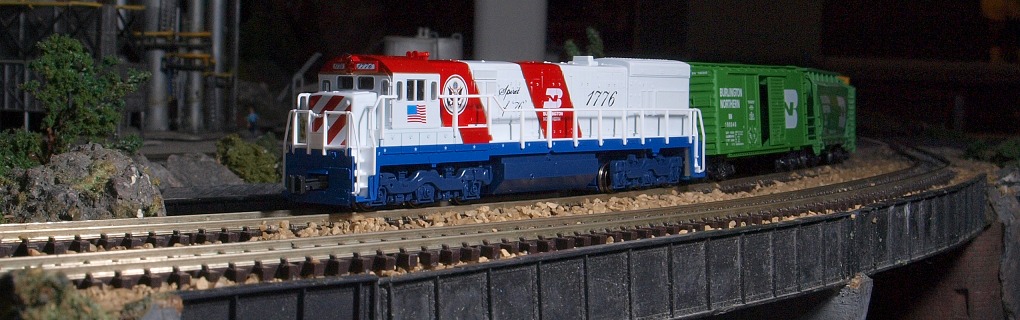
(Photographs Courtesy of LSRC)The LSRC SD70M 1776 (pictured below) also took part in the event. The unit was rolled out earlier this year. Its special red, white, and blue paint scheme celebrating American independence was designed by second-generation LSRC railroader Travis Vongrey, a former conductor, engineer, and yardmaster and now a supervisor of yard operations. Vongrey also designed a locomotive in a heritage scheme inspired by the Pere Marquette Railway, one of LSRC’s antecedents.
(Photograph Courtesy of LSRC)Separately, LSRC is purchasing four SD70ACeT4 locomotives from Progress Rail, a Caterpillar Company. Delivery is expected by the end of this year.
(Photograph Courtesy of OmniTRAX) GWRGreat Western Railway (GWR) recently delivered Santa to Boardwalk Park in Downtown Windsor, Colo., in a fully refurbished 1898 Yellowstone Pullman Car. According to the OmniTRAX affiliate, an audience of thousands eagerly awaited his arrival, which was followed by a “Holiday Proclamation” from Mayor Julie Cline and a tree lighting ceremony, plus festive activities, live music, and photos with the guest of honor.
GWR and OmniTRAX employees and their families accompanied Santa on the train and passed out train whistles and candy canes to the children in attendance.
“It’s an honor to bring Santa to Northern Colorado,” said Dallas Ramos, Vice President of OmniTRAX, which has been performing Santa’s last-mile sleigh service for more than a decade. “Windsor Wonderland brings neighbors, family, and friends together and we are proud to partner with such a beloved community event.”
(Photographs Courtesy of OmniTRAX) Further Reading:“Nearly 1,000 Moore County residents gathered in Sunray in the northern Texas Panhandle on Dec. 6 as their hometown railway, TXNW, transformed an ordinary evening into an extraordinary celebration of community spirit and holiday joy,” the short line reported Dec. 10. “The highlight of the evening came when a festively decorated TXNW locomotive pulled into town carrying Santa Claus and special guest of honor Damian Maldonado, whose attendance was made possible through the Make A Wish Foundation. With Sunray Mayor Bruce Broxson serving as Grand Marshal, the Christmas Train’s arrival marked the beginning of an evening that brought together families, local businesses, and community organizations in a celebration of what makes small-town Texas special.”
(Photograph Courtesy of TNW Corporatation)The event, co-organized by the railroad and the Sunray Volunteer Fire Department, featured complimentary hot cocoa, Christmas music, and an opportunity for children to share their holiday wishes with Santa. But the highlight, TXNW said, was the outpouring of community support that made the evening possible. “Local businesses and organizations rallied to ensure every child went home with a gift and every family felt the warmth of their community,” it noted. Among the contributors: JBS, DevCon, Moore County Hospital District, Trinity Repair, The Plaza, Jack Oldham, Dumas EDC, Dumas Rodeo, Dumas Lions Club, United Supermarket, Walmart, Toot n Totum, Civil Xcavation Contractors, Dumas ISD, Moore County Sheriff’s Department, Emergency Management Services, and Boy Scouts.
(Photograph Courtesy of TNW Corporatation)“This event represents everything we love about Moore County—neighbors coming together to create something meaningful for our children and families,” said TXNW Superintendent Amber Farley, whose team spent days decorating the train’s locomotive. “Seeing 1,000 smiling faces as that train rolled in, especially knowing Damian was aboard with Santa, reminded us why we’re proud to call Sunray home.”
“There’s a magical connection between Christmas and railroads for children, and we wanted to honor that tradition in a way that brings our entire community together,” said Paul Treangen, CEO of TNW Corporation, which is the privately held operator of TXNW and two other short lines, plus four logistics centers in Texas. “We’re grateful to work alongside so many generous neighbors who share our commitment to making Moore County a special place to raise families.”
Further Reading: CPKC (Screen Grab from CPKC video)“We’re proud to continue our annual Tren Navideño tradition, celebrating the season with our railroader families in Mexico,” CPKC reported via social media on Dec. 9. “This private event features festive lights, holiday activities, a visit from Santa, and the joy of tradition—a special thank you to our dedicated team and their families. Wishing everyone a wonderful and memorable holiday season!”
(Screen Grab from CPKC video)Meanwhile, the annual CPKC Holiday Train is touring Canada and the U.S. through Dec. 21, presenting musical performances and raising money, food, and awareness to support food banks across its network, and CSX hosted the 83rd running of its Santa Train on Nov. 22, delivering toys, gifts, and winter essentials to 13 communities in Appalachia.
For more “Holiday Briefs,” featuring Union Pacific, Norfolk Southern, Genesee & Wyoming events, click here.
The post ‘Holiday Briefs’: LSRC, GWR, TXNW, CPKC appeared first on Railway Age.