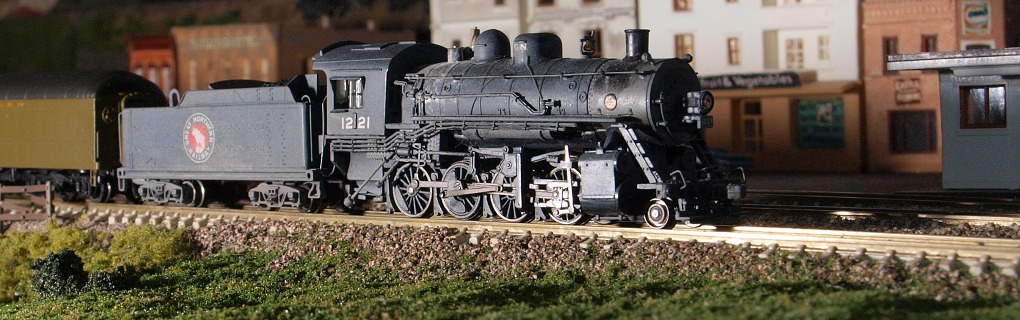
Société du chemin de fer de la Gaspésie, or the Gaspésie Railway Society, ran its first train from New Richmond to Port Daniel, Que., in more than a decade on January 7.
The Province of Quebec has been spending millions of dollars to reopen the 200-mile-long former Canadian National line along the Gaspé Peninsula. In December, track work was completed on the section of rail line between Caplan and Port-Daniel, a distance of 45 miles. With the line to Port-Daniel now open, the short line can now serve a cement plant.
Originally built in the early 20th century, the 202-mile line from Matapedia to Gaspé, Que., is arguably one of the most scenic in eastern Canada. CN operated the line until the 1990s, when it was spun off to a short line. Passenger service, provided by VIA Rail, continued into the 2010s but was suspended after track issues arose.
—Justin Franz
The post Gaspé Line Reopens to Port Daniel appeared first on Railfan & Railroad Magazine.
Mangione joined HNTB four years ago and most recently served as Regional Sales Officer for the firm’s East Region, where he provided “strategic guidance and leadership” across client programs and pursuits in key market sectors, including departments of transportation, transit and rail, aviation and tolling. “His expertise includes a focus on strengthening partnerships, driving business development and supporting major infrastructure programs,” HNTB noted.
“Mike is known for his strategic leadership and ability to build strong relationships with our clients and foster high-performing groups capable of delivering complex programs,” said HNTB Northeast Division President Gary Bua. “He has a national reputation for leadership in market strategy, growth and talent development. This, paired with his deep familiarity with our clients, strategy and people, has prepared him to step seamlessly into the office leader role.”
Mangione’s portfolio includes supporting major initiatives such as the New York City Department of Design and Construction (NYC DDC) East Side Coastal Resiliency Project; statewide programs for the New York State Department of Transportation (NYSDOT); and key New York Metropolitan Transportation Authority (MTA) projects, including the Second Avenue Subway Phase 2, Systemwide Open Road Tolling Conversion and the Bronx Whitestone and Henry Hudson Bridge Approaches Replacements.
“I’m honored to lead HNTB’s New York office and continue building on our strong foundation of delivering innovative solutions for our clients,” Mangione said. “Our team is committed to advancing critical infrastructure that improves mobility and resilience for communities across the region.”
The post HNTB Names Mangione New York Office Leader appeared first on Railway Age.
The proposed merger of Class I’s Union Pacific and Norfolk Southern is unlikely to significantly improve the fortunes of North America’s rail freight market, writes Railway Age Contributing Editor Jim Blaze in his assessment for International Railway Journal of recent trends and the outlook for 2026.
The fundamental drivers of the U.S. rail freight business have not changed. It is a private-sector environment, moving products because there is demonstrable market demand. Laying new tracks and ordering more rolling stock creates additional market capacity. That’s the supply function of the business.
So, what has been happening with market side demand? It has not been growing, except in selected geographic locations. Over much of the past decade, market volume and rail’s market share against other modes, including road and pipelines, has been stagnant at best and deteriorating at worst.
Comparing the rail sector with the broader picture of North American industrial productivity shows that volumes are still large, but growth rates are not high.
It is clear that carload traffic has been hit by the long-term decline in the volume of freight offered to railroads. The more-flexible intermodal freight market still allows shippers a 15% cost saving on longer hauls, but volumes have been in decline since around 2018. What it might take to re-energize the high growth rates seen in the mid-1990s and early-2000s is an open question.
What is disappointing is that despite some surges in 2020-21, 2024, and the first half of 2025, the healthy sustainable growth forecast by some has so far failed to materialize.
To obtain market insight, many of my previous clients preferred to examine four-weekly, quarter-to-date, and year-to-date traffic reports. The weekly numbers often change too much to provide much strategic insight.
The data and analysis from other experts suggest that the numbers for 2025 will pan out as follows: Total U.S. rail freight traffic will be less than national GDP growth, caroad traffic will end up slightly down or flat for most types of freight, while intermodal volumes will rise by between 1% and 2% over those seen in 2024.
If these predictions turn out to be true, and I am 90% confident they will, the market will be back to volume levels recorded seven years ago. That is well and good, as no one back in 2018 could have reasonably expected the disruption to markets caused by the COVID-19 pandemic and the more recent imposition of global tariffs on goods entering the United States by the POTUS 47 Administration.
The market outlook for 2026 looks to be rough in terms of lower intermodal and carload volumes into the first and second quarters, unless the overall economic outlook picks up in the U.S.
The Journal of Commerce and others (Railway Age among them) continue to report and comment on overall economic indicators that are flashing warnings. The manufacturing purchasing managers’ index (PMI) has fallen to a four-month low of 51.9, a disappointing number, when anything below 50 suggests the economy is contracting. Other economic indicators are similarly gloomy.
Railcar FleetSince around 2020, the combined North American railcar fleet has seen some new purchases to increase capacity and continued long-term maintenance. But annual railcar orders and deliveries appear to be trailing the figure calculated to maintain a steady-state fleet size. That could lead to shortages if a growth surge should develop, something that appears to have not been fully factored in.
Anyone thinking that railway mergers might help matters over the next couple of years should think again. The proposed UP-NS transcontinental merger is unlikely to result in traffic growth. Any positive impact will not emerge until between 2027 and 2030, assuming the merger is approved. But there is little to no evidence to suggest why shippers will change to moving more by rail simply because a large merger might take place. The filing that UP and NS will now have to resubmit to the Surface Transportation Board (STB) following its rejection due to incompleteness should give the market a better understanding of possible changes as the merged business seeks out new opportunities toward 2030.
Yet, there are some positives ahead. U.S. freight railways are still among the best-performing in the world for general carload productivity costs and pricing. They require no taxpayer funding as they work in an unsubsidized private-sector business model. That model is not failing. Based on data published in 2025 by the Class I railways, none are likely to experience the financial and physical asset collapse that saw the Penn Central file for bankruptcy in 1970, the largest corporate insolvency in U.S. history until the collapse of Enron in 2001.
However, over the next two decades, there might be major loss of market share to highways. That has been a possible long-term outcome, as foreseen by Oliver Wyman and discussed openly at North American rail industry events since about 2017. But it is not yet a certainty. And, importantly, not a complete collapse. Trucking will continue to compete, so if rail wants to succeed it will, somehow, need to up its game.
The post U.S. Rail Freight Struggles to Compete appeared first on Railway Age.
Sierra Northern Railway (SNR) is officially celebrating the 250th anniversary of the United States of America with a specially painted locomotive. Locomotive No. 250 is adorned in the railroad’s latest blue, white, and gold scheme with a unique flag motif on its flanks.
The 250 was originally built as an EMD GP7 for the Santa Fe Railway in the early 1950s and later served the Burlington Northern Railroad as its 1324. Purchased by the Yolo Short Line, the unit eventually became Sierra Northern 135. It was rebuilt by SN shop forces into a Railpower RP20BD genset in 2014 as the railroad’s 52.
“Railroads and railroading are part of our country’s fabric, and we are proud to celebrate its enduring legacy,” said Ken Beard, CEO of Sierra Northern, which currently operates approximately 75 miles of track in northern California and 30 miles of track in southern California, including through several prime industrial areas, and serves a wide variety of customers while interchanging with BNSF and Union Pacific (UP).
The post SNR Celebrates USA’s 250th Anniversary With Specially Painted Locomotive appeared first on Railway Age.
Even though the Congestion Pricing toll now being collected when vehicles enter the CRZ (Congestion Relief Zone) south of 60th Street in Manhattan is a local initiative, few topics on the transportation scene have resulted in more attention or controversy. Through 2024 and into 2025, this writer contributed 25 articles on the subject, more than the beginning-to-end coverage of the four-year fight over Amtrak’s new Mardi Gras Service trains between New Orleans and Mobile, which I dubbed the “Second Battle of Mobile.”
The toll has two purposes: to reduce congestion due to the number of vehicles on the streets in the busiest part of the City, and to use the revenue from the toll to help finance the capital programs for the City’s subway/elevated and bus systems (80%) and the Long Island Rail Road and Metro-North (10% each). The controversy over the toll spawned no fewer than twelve litigations in both Federal and State courts on both sides of the Hudson River, some of which are still ongoing. Just the same, the legal efforts to prevent the toll have failed (so far, at least), and it went into effect on January 5, 2025. Current accounts show that it has succeeded in reducing street traffic, and it has raised money for transit.
The tolling zone is all of Manhattan south of 60th Street, except for the highway along the perimeter of that part of the island. That includes the business center in Midtown, the historic business center around Wall Street, and everything in-between. The base toll is $9.00 for vehicles entering the zone between 5:00 AM and 9:00 PM on weekdays and starting at 9:00 AM on weekends. The night rate is $2.25. Most buses, vehicles that transport persons with disabilities (including paratransit vehicles), and other City-owned vehicles are exempt, and tolls are capped for low-income New Yorkers. Rates for trucks and other buses are higher, and there is a credit for motorists coming into the City from New Jersey.
Successful ResultsOn Jan. 8, Railway Age Senior Editor Carolina Worrell reported on the first year of the toll: “The New York MTA on Jan. 5 announced that on its one-year anniversary, New York City’s first-in-the-nation congestion pricing program has been ‘a transformational success, reducing traffic, improving quality of life and supporting billions in transit upgrades.’” The Metropolitan Transportation Authority (MTA) is a state agency whose purview includes New York City Transit and the local railroads operating in the state. She also reported: “In its first year, congestion pricing resulted in 27 million fewer vehicles entering the Congestion Relief Zone (CRZ) of Manhattan south of 60th Street, an 11% reduction in traffic, according to the MTA. Reduced gridlock has improved commute times across the region, especially at crossings into the CRZ, with some drivers saving as much as 15 minutes each way. Congestion pricing, the agency says, has reduced emissions, made streets safer, improved quality of life and has generated more than $550 million in net revenue in its first year, allowing the MTA to proceed with $15 billion in transit improvement projects. Governor Hochul said she has also stood strong to defend congestion pricing from unlawful federal efforts to terminate the program. One year in, congestion pricing is working and it is legal.”
The original plan called for a $15.00 base toll but, after cancelling the toll, New York Gov. Kathy Hochul instead implemented the $9.00 rate, which will rise to $12.00 two years from now and to the originally planned $15.00 in five years. The original revenue target had been to raise $1 billion annually for the Capital Program (none of the toll revenue will be spent on transit or railroad operations), but the reduced toll seems to be meeting its current target of $500 million per year. Worrell reported that it realized $518 million as of November, and projections at that time called for a total of $550 million.
Projects that are slated to benefit from the toll revenue include accessibility improvements, signal upgrades to CBTC (communications-based train control), new railcars and buses, state-of-good-repair projects, and Phase 2 of the Second Avenue Subway, which now only includes four stops on the Upper East Side that opened for service eight years ago. The upgrade now planned will extend the line three more stops to 125th Street and Lexington Avenue, to connect with the Metro-North station there. In her State of the State address, Hochul proposed extending the line along 125th Street in Harlem and then northward on the West Side and shelving the century-old plan to extend the Second Avenue Subway to Lower Manhattan.
Other Positive ReportsThe MTA website is promoting the toll and its benefits elsewhere. An MTA-sponsored companion site sports a section headlined “Congeston Relief is Unlocking a Better New York”: “It’s time for a city that moves faster, breathes easier, and works better. The program is reducing traffic in the Congestion Relief Zone, transforming the area from gridlocked to unlocked. Less traffic means cleaner air, safer streets, and better transit.” A link marked “Learn more” goes into greater detail, with the headline “New York Needs the Congestion Relief Zone”, and subheads”: “Excess traffic is bad for businesses, residents, and visitors, Congestion is only getting worse, New York’s extensive transit network needs investment, and everyone benefits from congestion relief.” Among the benefits that the MTA is touting are 60,000 fewer vehicles entering the congestion relief zone every day, 4% more pedestrians walking, a 70% drop in excessive honking of vehicle horns, and $48 million generated during the first month of collection. The site contains a link to the 100-page “First Evaluation Report,” issued earlier in January (download below). That report, along with other reports and applicable statutory provisions can be found on the “Metrics” section of the site.
CBDTP_evaluationreport_FIN_v1-1_123125DownloadEthan Stark-Miller reported for AM New York, a free daily paper that concentrates its coverage on events in the City, on Jan. 5: “Gov. Kathy Hochul … celebrated its success … alongside MTA Chair and CEO Janno Lieber and newly-minted Mayor Zohran Mamdani. ‘The results are extraordinary, beyond what we could have expected,’ Hochul said. ‘And to any naysayers out there, tell me who they are, and we’ll have a conversation. I’ll meet you at my local diner,’ she added, referencing the restaurants she said drove her decision to pause the program’s start in 2024.” Regarding benefits from the program, Stark-Miller reported: “Those include a 4% increase in car speeds on weekdays, a 2.3% increase in bus speeds, a 22% drop in air pollution, and 17% less noise complaints to the city’s 311 hotline within the CBD. Furthermore, the program has yielded 23% faster vehicle speeds on crossings into Manhattan, a 6.3% increase in sales tax revenue, and two times more private sector job growth vs. the national average. Subway ridership, in particular, also grew during congestion pricing’s first year. The MTA reported 1.3 billion trips in the system in 2025, up roughly 7% from 2024, representing about 85% of the pre-pandemic ridership high.”
A motorists’ website praised the toll, calling it “a quiet success. When New York City flipped the switch on congestion pricing in early 2025, the backlash was immediate and loud. Critics warned it would punish drivers, hurt businesses, and simply push traffic into surrounding neighborhoods. One year later, the data tells a very different story. By most measurable standards, New York City’s congestion toll is working—and working better than many expected.”
Samantha Liebman quoted Hochel saying something else in her report on NY1, a local cable news outlet, striking what she described as a “defiant tone”: “Everybody who told me, from the President on down, ‘You’re killing New York City. Nobody’s going to come, you know, traffic’s down because the place is empty.’ I was like, ‘Seriously, have you been here lately?’” Liebman’s report also quoted the City’s new mayor: “‘What this program has done is commit funding to the very needs that have been put off for years, if not decades,’ Mayor Zohran Mamdani said. ‘And that is funding—those are investments that can transform the day-to-day realities of a New Yorker.’” But a newly implemented fare hike, although modest (from $2.90 to $3.00 for the base fare), dampened some of the preference for transit that the toll was designed to promote, as Liebman reported: “‘I was driving, and they were killing me with the congestion pricing,’ said one straphanger who switched to mass transit because of the toll. ‘So, they forced you to go do this. And now they increase this. It’s too much.’”
There are also reactions from related industries. A Jan. 9 editorial in Crain’s New York Business bore the headline “Congestion pricing at a year makes the case for staying the course.”
Another came from Alpha Moving & Storage, a moving company, which posted tips for people who are planning to move on how to minimize their toll payments, since tolls for trucks are higher than for conventional automobiles): “NYC congestion pricing starts affecting moves below 60th Street in Manhattan come 2026, and it’s set to shake up how moving trucks roll through the city. One extra trip or a missed timing window can add unexpected costs and headaches on your big day. This guide breaks down what changes to expect, which fees could pop up beyond your mover’s quote, and smart ways to keep your move smooth without breaking the bank. For more background on the program’s impact, check out the NYC government’s initiatives to manage truck traffic.” One of its subheads was “How Congestion Pricing Changes Moving Day Logistics.”
John Connolly reported in the Bergen Record on Jan. 12 about changes on the New Jersey side: “An analysis done by Stanford, Yale and Google researchers found that congestion pricing has resulted in less traffic across the Hudson[River] in Bergen and Hudson counties, too. Average speeds increased by 4.7% on roads connecting to New York City, and trips into the city were 10.5% faster. Trips out were 9.7% faster, according to the study, which was based on traffic data from January 2024 through June 2025.” Connolly also mentioned this comment from Gov. Hochul: “The governor, while taking a ‘No Kings’ jab at [POTUS 47], said that ‘the results are extraordinary, beyond what we could have expected.’”
Detractor-in-Chief, SECDOT Duffy Won’t Keep QuietPOTUS 47 has been one of the toll’s most-vocal detractors since he returned to office last year, and he is still complaining about it, according to a Jan. 12 report by Emily Goodin in the New York Post: “His latest broadside at the controversial program comes as a federal court prepares to hear arguments on whether his Administration can kill it off once and for all.” She also reported that he had called the program a “disaster” and called on the City to end it “immediately.” She added: “His Administration has tried—and failed—to end the toll program, even threatening to withhold federal funding and approvals for New York projects if it doesn’t die a quick death. Transportation Secretary Sean Duffy is leading the charge against it, setting multiple deadlines for the city to nix it.”
Duffy visited Penn Station New York on Aug. 28 after a ride from Washington, D.C. on the inaugural run of the Next Gen Acela equipment now running on Amtrak’s Northeast Corridor (NEC). It was a dual-event day, with the ceremonial train ride and a press conference announcing the return of Andy Byford, who many New Yorkers call “Train Daddy,” for his efforts to improve the city’s transit until he resigned after he had had enough of former Gov. Andrew Cuomo’s meddling. Byford is now supervising the redevelopment of Penn Station for Amtrak. During the event, Duffy departed from the subject of the day to complain about Congestion Pricing. In our story from August 29, headlined Byford Pushes PSNY as Duffy Trashes Congestion Toll, I reported: “Duffy also addressed one of his political pet peeves: the Congestion Pricing program that is still in operation in the southern portion of Manhattan—despite his nonsensical objections. While he acknowledged that litigation is ongoing, he said, ‘To drive a car, you shouldn’t have to be elite. You shouldn’t have to be wealthy. We don’t think that elites are the only ones who can afford to drive in the City. I think the streets should be open to everybody, not just those who can afford to pay the congestion pricing. Roads should be free.’ He did not call for transit to be free, nor did he mention that motorists could take transit for one-third of the cost of the congestion toll, which is currently $9.00 during the day and early evening and $2.25 at night.”
Litigation Winding DownFor much of 2024 and into 2025, I have reported extensively on the many court cases, mostly filed against the Congestion Pricing toll, along with a few that called for it to be implemented, despite the opposition. Many of the named plaintiffs were elected officials or other public figures who represented various constituencies outside Manhattan, the only place where there was strong political support for the toll. Opposition came from the “outer boroughs” of the City, Long Island, Westchester and other suburban areas north of the City, and New Jersey. Former New Jersey Gov. Phil Murphy and many elected officials (both Democrats and Republicans, exhibiting a rare moment of unity) brought their case in Federal Court for the District of New Jersey. Many of the New York cases were consolidated and heard in the Southern District of New York, which includes Manhattan. We reported on those cases extensively, including a last-ditch attempt by New Jersey to appeal Judge Leo M. Gordon’s ruling that allowed the toll to proceed, and the opinions from judges on the New York side, most notably Lewis J. Limon.
While none of the decisions that were rendered in 2024 or at the very beginning of last year stopped the toll, not all the cases have been closed. On May 7, 2025, the New York State Bar Association (NYSBA) published a report by land use and environmental law scholar Christine Billy that bore the headline Congestion Pricing in the Courts, which updated the status of the Congestion Pricing cases as of April 30: “The case of congestion pricing is generative of many complex legal and policy questions, and there is a continuing need for lawyers, legal commentators, and voices from multiple disciplines and perspectives to weigh in. Taking a narrower focus, this article will discuss the role of the National Environmental Policy Act in the latest case brought by the MTA, and then explore what is at stake in the present moment. Over the next year, New York will demonstrate whether the first congestion pricing program in the country can be successful or learn what happens when the federal government forces state promises to be broken.” In her article, Billy summarized the litigation history and issues in the cases for the legal community, similarly to my reporting for the rail transportation community.
The Regional Plan Association (RPA) posted a follow-up report on 12 cases that had been filed on the Congestion Pricing toll and issues surrounding it, current to Sept. 11, 2025 and reported by Sam Bowden Akbari: “Significantly, while a number of these cases are still pending, not a single court has ordered the MTA to halt implementation of the congestion pricing program, which has now been in effect for more than nine months.”
Most of the cases have been decided in favor of the decisions by federal highway officials in the Biden Administration to approve the tolls, despite the opposition from elected officials and other plaintiffs to the tolling plan, or against the efforts of Duffy’s USDOT under POTUS 47 to discontinue the tolls.
RPA reported that in MTA v. Duffy, filed on Feb. 19, 2025, Judge Liman had issued a preliminary injunction as requested by the MTA, preventing USDOT from withholding federal transportation funds from New York, but Summary Judgement motions were still pending. To obtain an injunction, a plaintiff must demonstrate irreparable harm if the requested relief is not granted, the likelihood of success on the merits, that the balance of equities favors the relief, and that it would advance public policy. Parties request Summary Judgment when they claim that all the facts that a judge needs to decide the case are already on the record, and that there is no need for a trial to prove any additional facts.
On the anniversary date of the toll, Jan. 5, Dave Colon of NYC Streetsblog reported what’s left of the cases that had not yet been closed. There appear to be only a few loose ends remaining. Judge Liman presided over many of the cases, which were heard in the Federal Court for the Southern District of New York in Manhattan. The biggest is Metropolitan Transportation Authority v. Duffy, 1.25-cv-01413. On Dec. 23, Liman scheduled two hours of oral argument for Jan. 28 on motions for summary judgment. Liman had granted a preliminary injunction against USDOT’s efforts to stop the tolling program, and in favor of the MTA on May 28, 2025.
In Trucking Association of New York v. Metropolitan Transportation Association et al., No. 2024-cv-04111, filed May 30, 2024, the trucking association (TANY) complained, in essence, that the tolls set for trucks were excessive, and that federal law pre-empted state authority. Assemblyman Jake Blumenkrantz, a Republican from Oyster Bay (the LIRR has a branch that ends there) filed his case on March 3, 2025. He alleged: “The TMA [Traffic Mobility Act] was nothing more than a legislative mandate to fleece drivers, disguised as a solution to a problem exacerbated by the State’s own incompetence” (Complaint, at ¶2). He also alleged: “On the very day that Plaintiff Assemblyman Jake Blumenkrantz traveled to Central Park to commemorate the 500th day since the Oct. 7t Hamas attacks [in Isreal]—an event honoring victims—he was forced to pay an illegal toll. This was not merely a routine drive, but a journey of solemn remembrance, support, and community solidarity, tainted by an unjustified financial burden” (Id. at ¶96). Blumenkrantz’s counts and arguments appear similar to those made by Duffy and other opponents of the tolling program, in Town of Hempstead et al. v. Triborough Bridge & Tunnel Authority, et al., with similar arguments to a case dismissed by Judge Cathy Seibel in White Plains, according to Colon. He also reports that the case is now in the Eastern District of New York, but that State authorities are asking for a change of venue.
Finally, on the New Jersey side, State of New Jersey v. USDOT, 2:23-cv-08335, before Judge Leo M. Gordon in the District of New Jersey, is not over yet. That case presented a cliffhanger one year ago, including a last-minute appeal to the Third Circuit in Philadelphia, after Gordon ruled in favor of implementing the toll. There are still issues concerning spillover traffic caused by the toll and the effectiveness of the toll itself, now that it has been reduced from the $15.00 base toll that was originally proposed to $9.00. Those issues have yet to be resolved.
In essence, the flurry of litigation has slowed down to a trickle. It is understandable that any major change in policy, like imposing the Congestion Pricing toll, would be met with strong opposition, which includes litigations filed by a variety of plaintiffs who feel aggrieved by the change in policy. Still, the toll has been collected for more than a year now, and the court cases might soon be coming to an end. While it does not appear likely that a judge will stop the tolling program, anything can happen in litigation. It also does not seem that any of these cases would be likely to end up at the U.S. Supreme Court, but anything can happen there, too. Maybe the injunctions from last year will become permanent and other issues resolve, so the toll will keep reducing congestion on the streets and helping transit.
The FutureOn Jan. 2, the RPA summarized the results that the program had brought to the lower half of Manhattan, and to the City generally. Several people, including longtime profession engineer, traffic official and consultant Sam Schwartz (“Gridlock Sam”, pictured) contributed to the RPA’s article. The results are presented as a list, and most are positive, although some are more positive than others.
Andrew Albert, Chair of the Transit Riders’ Council in the City, a rider-representative at the MTA Board, and Vice-Chair of the Rail Users’ Network (RUN), recited a lengthy litany of the benefits that the toll has brought to the City. He told Railway Age: “It’s a success in just about every way you can imagine. One year later, traffic is down 11%, which is 27 million fewer vehicles entering the congestion zone, crossing speeds to get across town are up by as much as 51%, transit ridership is up 7%, pollution is down 22%, crashes are down 7%, traffic injuries are down 8%, and the Manhattan economy is thriving. It has been the best year for office leasing in 23 years, foot traffic is up by 6%, sales tax receipts are up by more 6%, and it was the best Broadway theater season in years, the second-highest in Broadway history. All the predictions of doom, that nobody would come into the City any more, were reversed. It’s brought in even more than the predicted money for the MTA’s capital program.” Regarding New Jersey, Albert said: “When did you ever remember listening to traffic reports say that wait times for the Holland and Lincoln Tunnels are 15 minutes, but that’s what you hear these days.”
I visited the tolling zone on several occasions during the past year, often taking the #20 and other buses between Penn Station (after arriving on an NJ Transit train) and destinations such as the Upper West Side, the Village, the Lower East Side, Chinatown, and the Financial District. Sometimes the buses got stuck in traffic much as they had before the toll was implemented, but those instances were relatively rare. More often, there were fewer vehicles on the streets, so the buses moved faster and were more likely to stay on schedule. Buses on Manhattan’s streets are often slow, but they’re not as slow when fewer other vehicles of all types clog the streets and get in their way. That’s a good result for riders, for drivers (for buses and private vehicles) and, apparently, for everybody else, too.
After 25 articles a year or two ago and this long update, it will be good to put this topic in the rear-view mirror, so to speak. It has been an interesting year riding buses in Manhattan and feeling them move faster than they had before, most of the time, anyway. Still, the subways are faster, and it will be good to ride all over the City on them again.
The post An Unequivocal Success! appeared first on Railway Age.
Downers Grove, Ill.-based AllTranstek LLC has acquired the assets of Darien, Ill.-based RAS Data Services (RAS), following its identification last month as the prevailing auction bidder.
AllTranstek, in a Jan. 16 announcement, said the acquisition strengthens its position as a non-leasing railcar management and consulting company.
RAS, founded in 2002, provided railcar management services for shippers, operating lessors, utilities, and short line railroads; the largest percentages of cars were covered hoppers and tank cars.
AlTranstek now manages more than 500,000 railcars across North America and provides comprehensive technical and operational support to the rail equipment supply chain, it said. The company’s services include railcar fleet management, field inspections, engineering, regulatory compliance support through StencilWatch® and ShopWatch®, non-destructive testing (NDT), and professional training programs.
In December, AllTranstek reported that its proximity to the RAS office, overlapping service offerings, and familiarity with RAS software will “allow for a smooth integration.” It noted that it “intends to retain key RAS personnel and work closely with clients and suppliers throughout the transition.”
“Our priority is a smooth, professional transition with minimal disruptions to our customer’s operations,” AllTranstek President Jeff Wilson said Jan. 16. “We are uniquely positioned to not only stabilize but enhance RAS operations while preserving the experienced personnel and service continuity on which our customers rely.”
“AllTranstek is committed to delivering a professional, predictable, and transparent transition,” said Steve Bourque, CEO of RAILTRAC Holdings Inc., parent company of AllTranstek, Bourque Logistics LLC, and TRANSPay Services LLC. “Our customers can expect enhanced resources, long-term stability, and a higher standard of operational support moving forward.”
AllTranstek’s asset-management suite, combined with the rail logistics capabilities and shipment, yard, and freight execution of Bourque, is said to “allow real-time asset visibility and maintenance controls, driving higher railcar utilization, fewer billing disputes and faster, more accurate settlement.”
The post AllTranstek Completes RAS Assets Acquisition appeared first on Railway Age.
The Yakima City Council voted Tuesday night to extend a five-year operating agreement with Yakima Valley Trolleys, the Washington non-profit that runs the community’s historic interurban railroad. However, what the railroad will look like when that agreement ends in 2030 remains an unanswered question.
Late last year, the city council decided not to automatically renew its operating agreement with the non-profit that manages what remains of the Yakima Valley Transportation Company, an interurban railroad once part of the Union Pacific and now owned by the city. At that time, the council wanted to better assess its financial situation. A week earlier, it approved a 2026 budget that included cutting $9 million from its current budget, including from police and fire services.
The actual operation of the trolley is fairly minimal for the city. The previous agreement specified that the city would cover basic costs, such as heating and maintaining the city-owned trolley barn, and set aside about $10,000 for any maintenance issues with the track or other city-owned property. However, the larger issue—and expense—is a major road construction project along the trolley route connecting the trolley barn with the rest of the line to the town of Selah. That street, Sixth Avenue, needs to be rebuilt, and for a time, the city considered paying the approximately $7 million it would take to reinstall the rails and the catenary above. But with a budget crisis on the horizon, some city council members are questioning whether that’s a wise financial choice. As a result, the city council decided to delay approving or denying an operating agreement until a decision is made on the road project.
Presently, the trolley operation is mostly confined to Pine Street. In 2024, a diamond crossing with the Central Washington Railroad at the north end of Sixth Avenue was removed for maintenance, and a bridge further north was taken out of service. The bridge is currently being repaired, and volunteers are hopeful the diamond will be put back in place, allowing trolleys to reach Selah again.
Tuesday’s meeting started with public comment. Nearly 20 people spoke to the council, either in person or via Zoom, supporting the trolley, including one person who was in England. Only one person opposed extending the operating agreement. After public comment and other city business, the council began discussing the Sixth Avenue project and the costs of rebuilding it with the track. Mayor Matt Brown asked if it was possible to turn Sixth Avenue into a one-way street, allowing the trolley line to stay in its current place but no longer be part of the roadway. Community Development Director Bill Preston said the city’s engineering staff would need to look at what’s possible. Brown and others also inquired if there are other street projects that could be addressed first, giving Yakima Valley Trolleys more time to potentially secure their own funding to help keep the tracks. Preston said it would ultimately be up to the city council to decide which roads to fix first, but stated that Sixth Avenue is “structurally toast” and the longer the city waits to fix it, the more expensive it will be. Ultimately, the city council decided to hold another hearing, scheduled for February 17, to gather public input on what should happen along Sixth Avenue and how to pay for it.
Yakima Valley Transportation Company 298 made a rare appearance during what could have been the railroad’s final day of operation on December 31. It was followed by line car A. Photo by David Honan.
With that item out of the way, the council then moved on to the operating agreement with Yakima Valley Trolleys. The pared-down agreement outlines that the city will spend about $5,000 annually to heat buildings and power the overhead, and keep around $10,000 available for emergency street repairs. The non-profit will help cover the cost of insurance, about $4,800 annually, according to city staff.
One city council member, Rick Glenn, expressed concern about the cost of the trolley to the city; “I’d rather have more cops and firemen and keep the pool open,” he said at one point. However, other city council members pointed out that the city would have to pay for maintaining the buildings whether the trolleys were running or not. The city council then voted six to one to extend the operating agreement. The new agreement will run through 2030.
Late Tuesday evening, Yakima Valley Trolleys thanked their supporters and announced they were getting to work planning various events and excursions, including some on Valentine’s Day weekend.
The main question now — and one that will be debated during the next city council meeting — is what that railroad will look like in 2030. If the city proceeds with the Sixth Avenue project but doesn’t pay to reinstall the rails, Yakima Valley Trolleys will no longer be able to reach the community of Selah to the north. Without that connection, the railroad would no longer qualify as a true interurban, and volunteers have said that could threaten an effort to get it designated as a National Historic Landmark as the country’s last interurban railroad.
Yakima Valley Transportation Company was established in 1907. Starting as a streetcar line serving downtown Yakima, the company was acquired by Union Pacific predecessor Oregon-Washington Railroad & Navigation Company in 1909 with the aim of tapping into the region’s fertile agricultural resources. Eventually, the system grew to include over 40 route-miles radiating into surrounding communities, providing interurban passenger service and feeding freight traffic to the national rail network. Regular passenger service ended in 1947, and the remaining streetcars were scrapped or sold. Freight service continued until Union Pacific filed for abandonment in 1985 due to a decline in traffic. The railroad was later purchased by the city and has operated as a museum ever since.
—Justin Franz, with additional reporting by David Honan.
The post Yakima Trolley Gets Operating Agreement, But Future Remains Unclear appeared first on Railfan & Railroad Magazine.
The Ontario Southland Railway, a short line based out of Salford, Ontario, operates about 50 miles of track. Long known to roster vintage locomotives, President and CEO David Warne recently announced that the ALCO/MLW era of the Ontario Southland is over, and is selling some units to the Sartigan Railway, which is undergoing a major rebuilding and expansion.
Five locomotives and spare parts have been sold to the Sartigan Railway (French: Chemin de fer Sartigan), which had previously purchased locomotives from the Ontario Southland in 2020. The five locomotives sold to the Sartigan Railway in 2026 are RS-18s 181 and 182, and RS-23s 503, 504, 505 and 506, all built by Montreal Locomotive Works between 1958 and 1960. Powered by American Locomotive Company (ALCO) 251 prime-movers, once the pride of many fleets across North America, the MLW/ALCO locomotives are favored by some railways for lower fuel consumption and naturally lower acquisition costs as MLW/ALCO stopped making locomotives in the early 1980s in Canada and 1969 in the US.
The Ontario Southland will be working on disposition/sale of their remaining five MLW/ALCO locomotives and parts over the coming months, but will retain 16 EMD locomotives of various types, among them their famous F units used in freight service.
The Sartigan Railway, based out of Scott, Quebec, operates former Quebec Central Railway right-of-way between Lévis and Vallée-Jonction on Quebec Ministry of Transportation-owned property. With service five days a week, traffic has grown to more than 3,000 cars per year. In 2023, the Quebec Government announced plans to rehabilitate and extend the entire railway in an unprecedented return of rail service. The project, to cost C$499 million, will extend the Sartigan Railway to Thetford Mines Quebec and will be completed in segments.
OpenRailwayMap.orgThe first segment reopened the line to Vallée-Jonction in 2025 with clearing, repairing and replacing of infrastructure on an unused 11.2-mile segment of the line south of Scott, Quebec. Rehabilitation was budgeted at C$59.2 million. The second segment is the more substantial, and includes full replacement of rail, replacement of 17 railway bridges with all new structures, 102 new culverts, and replacement of 40 grade crossings on 36 miles of line that has not seen traffic in more than 20 years. This C$440 million project is expected to open in 2026 following three years of construction.
With more track coming on line, the Sartigan Railway is purchasing additional motive power as it and Quebec Ministry of Transportation work to convert truck traffic back to rail service. The Sartigan and its mechanical staff prefer MLW locomotives as there is a strong history of MLW in Quebec.
The re-opening of the railway to Thedford Mines will create opportunities for magnesium and nickel recovery from the tailings of historic asbestos mines, and the railway will be completed right into the mining sites. More than 66 million tons of reserves are noted on site, including 21 million tons of magnesium oxide and 135,000 tons of nickel, along with other critical minerals planned to be recovered by joint ventures located next to the railway.
Sartigan Railway 8033 at the intermodal center in Scott, Quebec, in 2020. Félix Mathieu-Bégin/Wikimedia CommonsThe post Change and Growth at Quebec’s Sartigan Railway appeared first on Railway Age.
Mariia Zimmerman has been named Director of Virginia DRPT, leading the agency’s continued efforts to plan, fund, and deliver rail and public transportation initiatives.
With more than 30 years of experience across the public, private, and nonprofit sectors, she served most recently as Founder and Principal of MZ Strategies, a Richmond, Va.-based planning and policy firm that is described as working with with states, regions, and organizations nationwide “to advance transit-oriented development and implement transportation projects that improve mobility, access, and community outcomes.”
Zimmerman previously held senior leadership roles at the U.S. Department of Transportation, where she was a member of Secretary Pete Buttigieg’s executive leadership team. She served as Principal Deputy Assistant Secretary for Transportation Policy and as Co-Director of the Bipartisan Infrastructure Law Implementation Team, helping to guide the rollout of federal investments in rail and public transportation through major discretionary grant programs and policy initiatives led by the Federal Transit Administration (FTA), Federal Highway Administration, and Federal Railroad Administration.
Earlier in her career, Zimmerman’s work spanned housing, transportation, and community development at both the federal and national nonprofit levels. She served as Deputy Director of Sustainable Housing and Communities at the U.S. Department of Housing and Urban Development; Vice President for Policy at Reconnecting America and the Center for Transit-Oriented Development; and Co-Founder of the national nonprofit Transportation for America. She began her public service career at the FTA following early work in transportation planning and engineering.
Zimmerman has served on numerous boards and commissions, including the Virginia Passenger Rail Authority, Arlington Transportation Commission, and Shared Use Mobility Center. She earned advanced degrees from Pennsylvania State University and the University of Minnesota ,and has served as a Visiting Fellow with Virginia Tech’s Metropolitan Institute.
“I am excited to welcome Mariia Zimmerman to lead DRPT,” Virginia Secretary of Transportation Nick Donohue said. “Her leadership and vision for transportation will help the department deliver innovative, reliable, and accessible solutions for Virginians, ensuring the Commonwealth [of Virginia] remains at the forefront of public transit and rail development.”
“I am honored to lead such a talented team and excited to head an agency that connects Virginians to opportunity through affordable transportation options,” Zimmerman said. “I look forward to collaborating across the Commonwealth to strengthen rail and public transportation systems that support vibrant communities and long-term economic growth.”
DRPT Executive Director Jennifer DeBruhl retired in 2023.
Further Reading:“Dianne Barnett has spent her career proving that strong leadership in rail is built on credibility in the field, disciplined execution, and a genuine investment in people,” NS reported Jan. 19 in the Story Yard section of its website. That leadership, the railroad said, is now being recognized across the industry: Barnett is LRW’s 2025 Railway Woman of the Year. She is the first NS recipient of the annual award, which “honors a woman who establishes a strong vision and a culture of continuous improvement and creativity, bringing excellence to her organization and community, all while supporting the personal and professional growth of others in the rail industry.”
A second-generation railroader, Barnett began her career at NS more than 27 years ago as a stenographer clerk in Birmingham, Ala. She later moved into operations, managing craft employees and gaining firsthand field experience that the railroad said continues to shape her leadership approach today. Now, as Assistant Vice President Mechanical, “she leads with a focus on safety, accountability, and transparency, emphasizing that leadership is defined as much by example as by results,” according to NS. “Under Dianne’s leadership, the Mechanical team has adopted a rigorous, data-driven, and collaborative approach to problem-solving, including the use of ‘war rooms’ that focus on root-cause analysis and continuous improvement. These efforts have delivered meaningful results across the network, including:
NS reported that Barnett has led modernization efforts at legacy facilities such as Sandusky Yard in Ohio and Lamberts Point Coal Terminal in Norfolk, Va., “helping teams replace manual, paper-based processes with real-time digital tools that improve coordination and reduce delays.”
Beyond operational performance, NS said, Barnett is “widely respected for her commitment to developing people, particularly women entering and advancing within the rail industry,” as she “actively encourages women to pursue field experience, new roles, and leadership opportunities.” Additionally, she remains connected to those she has mentored; many of her mentees now serve in supervisory and management positions across rail.
“Dianne’s leadership reflects the best of Norfolk Southern,” said Brian Barr, Vice President and Chief Mechanical Officer at the Class I. “She combines operational discipline with a people-first mindset, and her impact is felt across our Mechanical organization. We are proud that she received this very deserving honor.”
In 2024, LRW named Amtrak Corporate Secretary and Ethics Officer Eleanor “Eldie” D. Acheson as Railway Woman of the Year.
Separately, late last year Sarah Yurasko was named LRW’s 2025 Member of the Year.
MTA (Courtesy of MTA)MTA has appointed Sergio Penque as Chief Procurement Officer. With decades of experience leading procurement operations for some of the largest public-sector organizations in the country, he has held the Chief Procurement Officer role on separate occasions at the New York City Housing Authority and the State of New York. For the State, he managed more than 1,400 contracts valued at $16 billion-plus. He has also held senior procurement leadership roles with New York City and the State of Michigan, “where he drove initiatives that reduced procurement cycle times, strengthened compliance, improved transparency, and delivered measurable cost savings across complex public portfolios,” according to MTA.
Paneque will report to MTA Chief Administrative Officer Lisette Camilo.
MTA is North America’s largest transportation network, serving 15.3 million people across a 5,000-square-mile travel area surrounding New York City, Long Island, southeastern New York State, and Connecticut. The MTA network comprises the nation’s largest bus fleet and more subway and commuter railcars than all other U.S. transit systems combined.
Further Reading: Trinity Metro (Courtesy of Trinity Metro)Mike Brennan is the new Vice President of Economic Development for Trinity Metro, the operator of TEXRail between Fort Worth and Dallas Fort Worth International Airport’s Terminal B; Trinity Metro Bus; Trinity Metro Bikes; and Trinity Metro On-Demand; and the co-operator with Dallas Area Rapid Transit of Trinity Railway Express, which runs between Fort Worth and Dallas. He will plan, direct, and manage the agency’s economic development activities, including advancing economic growth and maximizing the value of real estate assets. Additionally, he will work with the business community, developers, property owners, and other stakeholders to implement the agency’s economic development goals and objectives.
Brennan served most recently as President of Near Southside, Inc., a nonprofit organization dedicated to revitalizing Fort Worth’s Near Southside neighborhood, following six years with the City of Fort Worth’s Planning Department. He holds a bachelor’s degree from Vanderbilt University and a Master in Urban Planning from Harvard University Graduate School of Design, and is a member of the American Institute of Certified Planners.
“We are pleased to welcome Mike to Trinity Metro,” said Richard Andreski, the agency’s President and CEO. “He brings pioneering leadership in economic development and is widely respected by our Fort Worth community. Mike will be a key strategic leader as we unlock the full potential of transit-oriented development to drive regional growth, strengthen communities, and maximize the long-term value of our transit investments.”
“I feel great about the next era of leadership at Near Southside, Inc., and I am extremely excited about this opportunity with Trinity Metro,” Brennan said. “We have such great potential around Trinity Metro’s stations. So many people wish to live or work in close proximity to convenient transit. Meeting that demand always requires collaboration among private- and public-sector partners, and I look forward to that work. I’m honored to join this wonderful Trinity Metro team and excited to collaborate with communities in station areas to pursue great projects.”
Separately, Trinity Metro last summer named Reed Lanham as Chief Operating Officer.
Further Reading: Ports of Indiana (Courtesy of Ports of Indiana)Brady Jacoba has been selected as the first Chief Commercial Officer at Ports of Indiana, a statewide port authority that operates three ports—Jeffersonville, Burns Harbor, and Mount Vernon—on the Ohio River and Lake Michigan. He brings three decades of experience in real estate, sales, marketing, and economic development to the port authority, which manages 2,800 acres of multimodal property across Indiana and generates $8.7 billion annually for the State economy.
Burns Harbor Railroad, Mount Vernon Railroad, Evansville Western Railway, CSX, Louisville & Indiana Railroad, and NS are among the railroads serving the Ports.
Jacoba worked previously at Volumod Indy as Vice President of Sales and Marketing; Lauth Group as Senior Vice President of Business Development; Indy Chamber in leadership positions; and Keller Williams as a real estate broker. He is a Certified Commercial Investment Member and received an MBA from Ball State University and a bachelor’s degree from Indiana University.
“Brady’s extensive experience in business, real estate, and economic development is a tremendous asset for our organization as we assemble a growth-oriented team,” said Jody Peacock, CEO at Ports of Indiana. “Our ports offer unique competitive advantages for companies, from multimodal real estate and foreign-trade zones to barge shipping and ocean containers. Brady will help us expand our programs to grow business and increase our contributions to Indiana’s economy.”
“I am truly excited to join Ports of Indiana at this critical junction in its strategic growth planning,” Jacoba said. “The organization’s forward-thinking approach and commitment to both expanding existing business and pursuing new initiatives drew me to this role.”
Separately, Ports of Indiana last summer appointed Dexter Salenda to the newly created role of Foreign Trade and Economic Development Director.
Further Reading:Peter Zuk has joined HNTB as Senior Project Advisor and Vice President in the firm’s Oakland, Calif., office. He will focus initially on supporting the BART Silicon Valley Phase 2 project, “leveraging his experience with single bore tunnel approaches and stakeholder engagement to advance the project into the execution phase and prepare for the Full Funding Grant Agreement,” according to HNTB.
Throughout his more than three-decade-long career, Zuk has led London Underground’s “Transforming the Tube” capital program; Toronto’s Metrolinx capital delivery program; and the Boston Central Artery/Tunnel Project. His expertise spans all phases of project delivery, from feasibility and stakeholder engagement to execution and asset management, HNTB reported.
Zuk served previously as Chief Capital Officer for Metrolinx, overseeing a $100 billion capital program that included the Eglinton-Crosstown Light Rail Transit Project and the GO Expansion P3 Project. He also held senior leadership roles with London Underground Limited, where he directed a £30 billion capital upgrade and initiated the organization’s ISO 55000 asset management certification. In the U.S., Zuk’s tenure as Project Director for the Boston Central Artery/Tunnel Project saw the completion of the Ted Williams Tunnel and the Leonard Zakim Bunker Hill Bridge, both honored by the American Society of Civil Engineers for outstanding engineering achievement.
Zuk holds a Juris Doctor from Boston College Law School and a Bachelor of Arts from Colgate University. He is a member of the National Academy of Construction and has served as a lecturer at MIT’s Department of Environmental and Civil Engineering.
“Peter’s unparalleled technical expertise and proven leadership in delivering complex infrastructure projects make him an invaluable addition to our team,” said Shannon Gaffney, Oakland Office Leader and Vice President at HNTB. “Equally significant is his experience in advising programs with complex management and governance structures. His commitment to innovation and stakeholder collaboration aligns perfectly with HNTB’s mission to advance mobility and improve communities.”
Separately, HNTB earlier this month named Mike Inabinet as President, Markets and Services; Chris Gale as Chief Operating Officer; and Michelle Dippel as Region President of HNTB’s newly expanded West Region.
The post People News: Virginia DRPT, LRW/NS, NYMTA, Trinity Metro, Ports of Indiana, HNTB appeared first on Railway Age.
SEPTA system-wide ridership for December 2025 decreased 1% or 8,611 unlinked trips per day from December 2024, the agency recently reported.
Average daily ridership was 693,261 unlinked passenger trips across all modes.
Metro ridership declined by approximately 2% or 4,508 trips per day relative to this time last year. The trolley tunnel closure and bus substitution resulted in a 31% decline or 15,990 less unlinked passenger trips on the T and D—the lowest level since 2022 but a 19% increase on the G. Average daily ridership on the B, M, and L combined grew 6% or 11,482 average weekday trips since this time last year.
Regional Rail ridership declined by 6% or 4,597 trips per day relative to this time last year due to the SLIV car shortage and the SLIV FRA safety inspection mandate.
Brightline WestBrightline West Executive Director Michael Reininger said work is under way on the company’s planned Las Vegas station on Las Vegas Boulevard between Warm Springs and Blue Diamond roads, according to a Las Vegas Review-Journal report.
With the magnitude of the project, Reininger said “it takes time to get to heavy construction,” according to the report. He said it was “a long, drawn-out process to get to the first portion of the Las Vegas building going up, a parking garage for the project.”
“They take an enormous amount of work, most of which is not visible to the naked eye,” Reininger said. “There’s nothing like seeing to start believing, so we’ve now reached that point where you can actually see the stuff happening before your eyes. We expect that will continue to reinforce peoples’ anticipation of the finished product.”
According to the Las Vegas Review-Journal report, Brightline West trains are being built at a Siemens factory in Germany. The remaining eight train sets will be built at Siemens’ New York facility, which is currently under construction.
According to the report, the project budget jumped by about $9 billion last year, going from a projected $12 billion to $20.1 billion. “The price jump can be attributed to cost escalations in the construction market,” said Reininger, who added, that, despite the large increase, “Brightline is good to go on getting the project rolling.”
Brightline, the Las Vegas Review-Journal reports, “applied for a $6 billion loan from the federal government late last year; it already received a $3 billion grant from the FRA and sold a total of $2.5 billion in private activity bonds from Nevada and California.”
Heavy construction on the 218-mile Brightline West rail line is expected to kick off this year, according to the report.
Early last year, Brightline had hoped to have the project up and running ahead of the 2028 Olympic Games in Los Angeles. That goal post, the Las Vegas Review-Journal reports, “has been shifted to late 2029, but there are milestones along the way that the company plans to hit before service begins.”
“In 2028, a little less than 36 months from now, we will have the station in Las Vegas, the vehicle maintenance facility (in Sloan) and a portion of the system in Nevada complete; and a fairly sizeable amount of our total fleet of trains also complete and here in Nevada so that we can begin testing, training and certification processes on the track and in the station here in Nevada, while the remaining infrastructure and stations are completed, so that we can actually start carrying passengers and revenue service in 2029,” Reininger said.
Brightline West has five of the 10 construction contracts signed and ready to go for the start of construction along the route, according to the report.
Those include the Las Vegas station work and early infrastructure work within the median of I-15 in Nevada, “including the construction of a temporary water line to feed the construction of the line in the Nevada corridor,” Reininger said.
“With the conclusion of some of the big structural elements, the design work has reached its completion point and is going through approval from the Department of Transportation,” Reininger said. “All of this is setting the stage for the soon-to-come heavy construction.” He said site work for the vehicle maintenance facility in Sloan has begun, detailed design documents have been completed, and items are being ordered.
Brightline owns 110 acres where the Las Vegas station is being built, with the station only set to take up a small portion of that property, with larger goals for the rest, according to the Las Vegas Review-Journal report. Plans include building out a large mixed-use project on the site to accompany the station.
“We don’t yet have any specific project components, timing or plans associated with that, other than to say that it’s an incredibly well-positioned and entitled piece of land that’s going to benefit significantly from the introduction of this portal in the transportation network that Brightline will bring. We foresee a number of uses. Hospitality uses, residential uses, retail and commercial uses, all will be highly attractive potential for the use of that land,” said Reininger, who called his shifting title and focus to Brightline West’s project and away from Brightline’s Florida passenger rail system “a natural progression within the larger Brightline Holdings company.”
“The Florida business is now a fully mature operating business that is entering the stage of its life where it’s going to be focused on internal growth and operations,” Reininger said. “At the same moment, Brightline West is a very large-scale construction and development program in of itself. Both of the projects, both the companies are of such scale… that they will benefit from fully focused and dedicated leadership.”
TTCTTC’s new Ontario Line will include protective barriers at all stations to separate platforms from the tracks, according to a CBC News report.
According to the report, “platform edge doors” will be part of all 15 stations on the 15.6-kilometer (9.7-mile) downtown subway line, slated to open in 2031, city staff said at a budget meeting Wednesday. “The doors are transparent barriers that open to allow riders inside when trains roll in, but otherwise keep people, animals and debris off the tracks.”
According to the CBC News report, the TTC “has been studying the possibility of retrofitting existing subway stations for more than 15 years,” something the Toronto Public Health recommended in 2014 as part of a larger report on suicide. Advocates, CBC News reports, have also been asking for them for years to protect commuters.
A TTC report last year found installing barriers at all platforms “would save the agency $16 million annually by reducing delays, and $92 million in the social cost of injuries and deaths.”
“On average, one to two people go onto transit tracks each day,” TTC spokesperson Stuart Green said in an email.
The transit agency announced in 2023 that platform edge doors would be installed at Bloor-Yonge as part of a major overhaul, “but there’s currently no funding to add them,” according to the CBC News report. “The TTC also recently backed away from a pilot project for platform edge doors at TMU Station, formerly Dundas Station.”
“Adding platform barriers to Lines 1, 2 and 4 would cost an estimated $4.1 billion, according to a report that went to the TTC board last year. The report said the average costs of the doors for two platforms at one station would be $44 million to $55 million.”
TTC board chair and City Councilor Jamaal Myers said the TTC “is reviewing that estimate as some councilors and people in the industry have questioned it, and the city may look at gradually retrofitting stations one at a time to spread out the cost over time,” according to the CBC News report.
“There’s definitely momentum to start that work just because it’s so important in terms of improving reliability and also to protecting the public and protecting the drivers, said Myers.
Myers said the TTC “is looking at how retrofits elsewhere were done and whether Toronto could learn from those projects.”
According to the CBC News report, Paris, Hong Kong, Singapore, Copenhagen, and Seoul “have all successfully retrofitted subway systems with platform edge doors.”
The post Transit Briefs: SEPTA, Brightline West, TTC appeared first on Railway Age.
Improving the general public’s perception of freight and passenger rail is going to require a complex balancing act: Not only does the public need to understand and appreciate the economic and environmental benefits of rail, but rail stakeholders also must be convincing of rail’s relevance at all levels, from the hyper-local level and rail’s impact to local businesses, to the national level where rail is an indispensable contributor to freight and passenger transportation networks.
That was the overarching theme expressed at a Jan. 11 workshop at the annual Transportation Research Board meeting. The workshop, which attracted a mix of rail representatives, consultants, municipal planners and students, served as the basis for a lecture session later in the week on breaking down barriers to efficient rail transportation.
In addition to presentations from representatives of the rail and port industries and the Department of Transportation, workshop participants brainstormed on two scenarios. The first scenario was how an imaginary town can convince a large shipper—and the railroad—that their site, located next to railroad tracks, was a prime spot for the development of the shipper’s facility. The second scenario was to convince a passenger rail line to include a stop by their imaginary town.
Serving as a backdrop to discussions at the workshop were statistics presented by the Association of American Railroads, the American Short Line and Regional Railroad Association, and Amtrak showcasing the economic benefits of freight and passenger rail to the U.S. economy.
“It’s one thing, and wonderful, to talk about the economic impact of the rail industry itself, in terms of the number of people that are employed and the jobs relating to the movement of goods,” said Paul Baumer, deputy director for infrastructure development for DOT’s Office of Multimodal Freight Infrastructure and Policy. However, “our overall strategic plan is, how does rail benefit the economy writ large, and how do the industries that rely on rail transportation benefit from a safe and efficient system? And how can we invest? How can we support private sector players as they look at investments? How can we partner with them at the federal level to help make sure everyone’s rowing in the same direction in terms of the economic strength of the United States?”
Baumer’s office at DOT is charged with publishing a federal freight transportation plan, as well as working with state DOTs as they develop their own freight transportation plans. As such, Baumer sees his role as encouraging local and state jurisdictions to think about how their goals align with national goals for freight transportation. However, he also sees his office as helping the private sector align with the federal goal of making the freight transportation network more efficient.
Fellow panelist and consultant Sharon Greene also stressed the importance of trying to develop a multimodal framework for a freight or passenger rail project, especially as it comes to grant funding. She discussed how even a local or state project may have a great impact on the regional or even national rail network. “A lot of the grant programs are looking at the micro level, and they don’t get at the kind of impacts that are being discussed by the speakers at this table. We’re getting an incremental development of a system based on the tiniest piece,” Greene said. However, “the benefits that we want to achieve are the global benefits [related to] making a system decision or making a corridor decision. And it’s difficult to reflect that at the project scale. We look at a range of impacts: local, regional, wide area or broad area impacts.” And while the broad area impacts may not be reflected in a funding application, they may still contribute greatly to the economic competitiveness of a region, she said.
To illustrate how local rail movements can impact on a regional and national scale, fellow panelist Tyson Moeller with the Port of Texas City discussed how the port had to realize the importance of how it manages its land use, particularly as it relates to the port’s access to the freight rail network. “I think if you’re working with agencies, cities and counties, you have to help them be more diligent about the land use around railroads, because a truck facility, a warehouse can be located anywhere within a community. [But] you only have a few connections to a railroad, and so that’s what you look to preserve. And there really is economic value there,” said Moeller, who worked for Class I Union Pacific for 30 years prior to working with the Port of Texas City.
The challenge for ports is that they must show that the economic benefits of having access to freight rail greatly outweigh any potential risks. The ports and the railroads must also show how they can promptly address safety concerns or issues that may arise. “When the general public thinks about the railroads, they think about blocked crossings. They think about nasty disasters like Ohio, right?” Moeller said, referring to the February 2023 derailment of a Norfolk Southern train in East Palestine, Ohio. “And so, we need to figure out how to convince them that railroads are an economic driver … What we hear in the general media is not about the good-paying jobs and industries. And so, we’ve got to change that narrative a little bit.”
As an example of where a port and a city greatly benefit from rail, Moeller pointed to Houston, where industries take advantage of their proximity to the railroads, pipelines and the port. In Houston, “every railcar represents about three to four trucks, so while blocked crossings have been a complaint raised in Houston, the alternative would be 40,000 to 60,000 additional trucks on the roads every day,” Moeller said. Trucks also can degrade the roads more quickly, while railroads are “set up to handle heavy freight insulation.”
While the public raises concerns about explosions because the railroads handle hazardous materials from the agriculture and chemical industries, railroads are still ultimately safer than trucks, Moeller continued. “When railroads develop properties next to or in a community, all you hear about are big explosions, things of that nature. But in reality, there’s millions of tons of freight being moved every day safely that you never hear about 24/7, and so that’s part of the narrative that we’ve got to go through and change.”
As local and state officials develop rail plans, Moeller suggested, in response to a question to the workshop panel, that metropolitan planning organizations (MPOs) have people on staff who understand freight rail. In Texas, “I knew to go to the MPO because we’re looking for potential grade separations around [a] short line … I know that I’m going to increase volumes, and that can impact the general public. And so, I know that the MPO can help kick off an initial study,” Moeller said. Short lines and rail-served industries can also educate MPOs on the benefits of rail, he added.
MPOs are also eligible entities for many of the discretionary grants, with many MPOs being early sponsors of freight rail-related grant applications, according to Allan Rutter, former Federal Railroad Administrator and a freight transportation practice leader affiliated with the Texas A&M Transportation Institute. In addition to applying to grants, “the final thing I’d encourage you and your folks to consider is the possibility of MPO-level freight committees engaging your freight stakeholders in your MPO region: truck, rail, waterway—everybody who’s involved in that so that your freight stakeholders understand what it is that you do and how the kinds of projects that you fund can affect them,” Rutter said.
The post TRB Workshop: Getting the General Public On Board With Rail appeared first on Railway Age.
Think of a North American passenger train during the final decades of the 20th century, and more often than not, the blunt-nosed General Motors Electro-Motive Division F40PH will come to mind. Beginning in the late 1970s and continuing into the 1990s, the four-axle locomotive based on EMD’s popular GP40-2 series was synonymous with passenger railroads of all types, from long-distance operators like Amtrak to commuter agencies such as Metra and NJ Transit.
While huge numbers of the nearly 500 F40-type locomotives EMD built between 1975 and 1992 have been retired or are reaching the end of their serviceable life, many railroaders are still familiar with the iconic units. This is why the F40PH is the ideal locomotive to build a lease fleet for power-hungry commuter agencies, says Phil Puccia, CEO of Rolling Stock Solutions, founded in 2022.
“The F40PH was probably one of the most widely used locomotives in the country, and so we wanted to be able to provide a locomotive that the mechanical and operations people already knew,” Puccia said. “The F40PH is basically the Toyota Camry of locomotives.”
Rolling Stock Solutions has purchased 12 former Amtrak F40PH locomotives and is working with Metro East Industries in East St. Louis, Ill., to rebuild 10 of them. The first one was completed last year and entered service this month on the MBTA (Massachusetts Bay Transportation Authority) Commuter Rail system. Five more units are expected to join it in the months ahead.
Puccia notes that the average age of a commuter rail locomotive in the U.S. is 28 years. But procuring new locomotives or rebuilding old ones can take upwards of a decade and cost millions of dollars, and that doesn’t often resolve an agency’s more immediate motive power needs. That’s why Puccia’s company is putting together a lease fleet to specifically serve commuter rail. “We are helping these agencies by filling the gaps,” he said.
Rolling Stock SolutionsWhile the F40PH units that Rolling Stock Solutions owns are decades old, they have been completely rebuilt from the frame up to modern standards and are considerably more efficient than before. Utilizing a Tier 0+ prime mover and an independent Tier 4 head-end power (HEP) engine, these rebuilt locomotives achieve a 45% reduction in NOx emissions; a 37% reduction in hydrocarbon and PM (particulate matter) emissions; and a 10% increase in fuel efficiency through the use of electronic fuel injection and AESS (automatic engine start/stop) systems. Chief Mechanical Officer Sean Kehoe said the locomotives are also quieter than un-rebuilt versions, as some F40PHs got a reputation for being “screamers” because the turbocharged prime-movers had to keep running at full RPM (typically 900) even when stopped at a station to maintain HEP. To accommodate the Tier 4 HEP, the locomotive carbody was extended, eliminating its rear platform while keeping the frame parameters the same.
The locomotives have also been upgraded with a crashworthy cab that follows current FRA standards. They’re outfitted with in-cab cameras, upgraded electronics and microprocessor control systems. Rolling Stock Solutions has also traded out the traditional control stand for a desktop control panel common on modern units. Depending on where the locomotives are being put into service, they can easily be outfitted with Positive Train Control or the Advanced Civil Speed Enforcement System version of PTC used in the Northeast. Perhaps most notably, the locomotives are 100% “Buy America” compliant.
When it is all said and done, Rolling Stock Solutions’ F40PHs are more than just a refurbished locomotive, but an almost-new one ready for another two decades of service. “This is not a standard overhaul; this is a complete remanufacture,” said Artura Subowo, Rolling Stock Solutions technical officer. “In essence, what we’re making is a like-new locomotive with a 20-year lifecycle.”
Puccia said now that the first locomotive has entered service, the company is focused on completing the other rebuilds and getting them into service. He’s optimistic that even more units will be needed in the future, especially in an era of tight budgets and increasing motive power needs. “Whenever I talk to a commuter agency, they always say, ‘How come someone didn’t think of this years ago?” he said.
The post Teaching an Old Locomotive New Tricks appeared first on Railway Age.
“BNSF operating teams are focused on maintaining positive performance momentum across the network,” the Class I wrote in an online customer notification, dated Jan. 16 (see chart, top). “Average car velocity is steady week-over-week and is more than 2% higher than the average for December. Terminal dwell improved by 7% compared to the prior week, and approximately 4% from the previous month. Our local service compliance measure, which reflects our timeliness in handling carload freight, exceeds 91% and has also improved week-over-week and versus the prior month.” (This follows the railroad’s recent report that 2025 marked the safest year in its history.)
BNSF also told customers that the proposed Union Pacific-Norfolk Southern (UP-NS) merger “continues to face growing scrutiny and opposition from a wide range of stakeholders across the freight transportation industry, including ports, labor groups and elected officials at all levels of government.” It provided a website address for them “to read about BNSF’s position on the merger and preserving rail competition, and how and where to lend your voice to the issue.”
According to a Dec. 31 Railway Age report, BNSF, CN, Canadian Pacific Kansas City, CSX, and the National Grain and Feed Association told the Surface Transportation Board (STB) in separate filings that the UP-NS merger application was incomplete. On Jan. 16, the Board rejected, “without prejudice,” the application as incomplete “because it does not contain certain information required by the Board’s regulations,” according to Railway Age Editor-in-Chief William C. Vantuono. The joint UP-NS merger website on Jan. 16, he reported, had a brief statement saying the application would be refiled with the STB, but as of Jan. 19, there was no information (press release, brief statement, etc.) on either website about the rejection or what could happen next and when. According to Vantuono, UP is required to submit a letter of refiling intent to the STB by no later than Feb. 17.
NS (Courtesy of NS)“At Norfolk Southern we’re transforming how we view the lifecycles of our assets,” NS Chief Sustainability Officer Josh Raglin said in a recent LinkedIn post. “Led by our Asset Disposition team, we’re turning unused materials and machines, like a backhoe in Williamson, W.Va. [pictured above], into fresh revenue streams.”
The railroad is reporting a record $78.6 million in scrap metal revenue in 2025—$18 million more than in 2024. The company also said it diverted 88% of operational waste from landfills in 2024, another record. (2025 waste diversion figures, it noted, will come in later this year.)
Previously, because field teams relied on manual processes, word-of-mouth, and inconsistent data entry, valuable materials sat idle or were scrapped without capturing value, according to NS. Now, it said, “by leveraging technology, collaboration and an increased sustainability mindset, NS is maximizing recovery, reducing waste, and improving operational efficiency.”
NS recently launched The Thoroughbred Trading Post, which is described as a mobile app “to streamline asset disposition.” Employees now photograph assets, upload details, and initiate disposition requests instantly, eliminating multiple steps, emails, and office visits, according to the railroad. “This automation ensures faster response times and consistent data, making the process more accessible and efficient. Through one click, NS sells larger assets to auction houses, which will increase revenue.”
“Think of it like an online marketplace,” NS Agile Business Solutions Senior Manager Jonathan Anthony said. “You don’t have to jump through all the hoops you had to before.”
The railroad pointed out that selling railcars outright, for example, instead of scrapping them, often achieves two to three times higher returns. Also, through more Engineering, Mechanical, Transportation, Safety, Environmental, and Sustainability team partnerships, “assets are reused, resold, or recycled more than ever,” and “better workflows and tracking have allowed NS to support heritage projects by donating retired assets for museums and educational initiatives.”
Separately, NS surpassed its locomotive “Fly Rate” goal and its charitable giving in 2025.
Further Reading:“1,000+ days injury-free doesn’t happen by luck. It happens by design!” CN reported recently via social media. “Behind that incredible milestone, CN’s Material Planning team leads with a simple but powerful formula: when a good idea works, it doesn’t stay local—it becomes a shared standard across the system, so everyone benefits. Add in speaking up about hazards, following best practices and looking out for one another, and you get a team that keeps each other safe every day. Here’s to the next 1,000 days and aiming even higher!”
Separately, CN recently sent a “Supply Chain Salute” to the Port of Prince Rupert in British Columba, which it serves exclusively and which handled 26.3 million tons of cargo in 2025, up 14% from 2024, and reported its December and November grain movements.
Further Reading:The post Class I Briefs: BNSF, NS, CN appeared first on Railway Age.
Railway Age is pleased to announce the 25 “Fast Trackers” selected for this year’s 25 Under 40 awards program.
This year’s honorees were selected from freight and passenger railroads; government entities; and the supplier, contractor and consultant communities. They were required to be under 40 as of Jan. 1, 2026.
“Our eleventh-annual awards program honorees not only represent the strength and growth of our industry, but also the ‘best of the best,’” Railway Age Publisher Jonathan Chalon said. “Railway Age will feature their accomplishments in the February 2026 issue.”
“It was an honor to be invited to judge the ‘Fast Trackers’ awards again this year. The breadth and depth of achievement and experience demonstrated by the younger contingent in our industry workforce is a good sign for the future. Technology adoption was noticeable but a major component in many submissions was the balancing of job tasks with people-skills. Leadership qualities were evident whatever the position or type of company in the industry, and can take many different forms,” said former Michigan State Center for Railway & Education Nick Little, who was program judge.
“Submissions covered job content and brought it to life by describing impacts, results and, wherever possible, describing examples applying leadership skills and dynamic thinking. Most importantly, it was not just about ‘getting the job done’ but making sure safety was foremost. One take-away I noted this year was that change was not feared but embraced. It was recognized as an opportunity to develop oneself in order to achieve business success.”
Honorees (in alphabetical order):Railway Age’s 2025 “Fast Trackers” 25 Under 40 Honorees
Railway Age’s 2024 “Fast Trackers” 25 Under 40 Honorees
Railway Age’s 2023 “Fast Trackers” 25 Under 40 Honorees
Railway Age’s 2022 “Fast Trackers” 25 Under 40 Honorees
Railway Age’s 2021 “Fast Trackers” 20 Under 40 Honorees
Railway Age’s 2020 “Fast Trackers” 10 Under 40 Honorees
Railway Age’s 2019 “Fast Trackers” 10 Under 40 Honorees
Railway Age’s 2018 “Fast Trackers” 10 Under 40 Honorees
Railway Age’s 2017 “Fast Trackers” 10 Under 40 Honorees
The post Railway Age’s 2026 ‘Fast Trackers’ 25 Under 40 Honorees appeared first on Railway Age.
by Andrew S. Nelson/photos by the author
On February 28, 1987, I got a call from my brother, Jeff, who was then a student at the University of Wisconsin at Stevens Point. He had just come back from Soo Line’s Stevens Point engine terminal and had news — the terminal was chock-full of GP9s, GP30s, and GP35s. There wasn’t a single SD40 or SD40-2 to be found. Something was brewing.
And brewing it was. Soo Line was going to make a stronger go of its Lake States Transportation Division (LSTD) that had been created in 1986 after it had acquired The Milwaukee Road. Basically, the “Lake States” as it became known, was the original Soo Line trackage in Wisconsin (with two small tails into eastern Minnesota) and Upper Michigan prior to The Milwaukee Road merger. Also included were the former Milwaukee Road Wisconsin Valley Line between New Lisbon and Tomahawk, Wis., and the former Milwaukee Road line between Green Bay and Milwaukee. In the months prior to the official January 1, 1986, merger, Soo had shifted almost all through traffic between the Twin Cities and the Chicago-area terminal at Bensenville/Schiller Park to the former Milwaukee Road main line. This left the original Soo main through Wisconsin with little traffic. Stevens Point, a busy division point on the original Soo, went from eight to 12 through trains per day to fewer than half as many.
ABOVE: Train 17 crosses Little Hay Meadow Creek north of Otis on July 3, 1987. GP30 707 and GP9 4233 are in charge.
What followed after that phone call from my brother was akin to traveling in a Soo Line time machine that lasted all of a little over seven months.
Now, I need to point out here that I was someone who cut his teeth watching The Milwaukee Road on its Wisconsin Valley Line in hometown Wausau. I was used to the ever-predictable Bensenville–Wausau Train 247 arriving in Wausau in the early morning behind three GP38-2s. A few hours later, the “North End,” the moniker for the Milwaukee’s Wausau–Tomahawk turn, would leave Wausau with one or two GP38-2s. A little later in the morning, one GP38-2 would take the “Rapids Patrol” (“patrol” was the Milwaukee’s term for most way freights) south to as far as Wisconsin Rapids.
Later in the afternoon, both the North End and Rapids Patrol would arrive back in Wausau. By early evening, the three GP38-2s that had brought Train 247 to Wausau that morning were leading Train 246 to Bensenville. The whole operation ran like clockwork, Mondays through Saturdays, orange and black locomotives up front, and an orange bay window caboose in the back. From mid-1985 through early 1987, the former Milwaukee Road in central and northern Wisconsin became much less Milwaukee and much more Soo, and I did not like that one bit.
But, March 1987 changed all of that.
ABOVE: The Stevens Point Dispatcher West set up the meet between Stevens Point–Superior Train 3 and its counterpart Train 4 at Spencer, Wis., on April 17, 1987. Spencer was where the Soo’s route to Ashland split from the Chicago–Twin Cities main line.
This Is 1987?
The transformation in the Stevens Point area happened pretty much overnight. Soo Line transferred 37 GP9s, 19 GP30s, six GP35s, nine SW1200s, and two SD39s (ex-Minneapolis, Northfield & Southern) along with a few “Bandit” ex-MILW GP20s (rebuilt GP9s with chopped noses) and SD10s (rebuilt ex-MILW SD7s and SD9s with chopped noses) to the Lake States. The “Bandit” nickname came from the way former MILW units had their roadnames hastily masked out with black paint and placed back into service. Some units remained this way until the last few were retired in 2019.
This power transfer put Soo’s oldest power on its lightest density lines. The Lake States would not be the land of SD40-2s and SD60/SD60Ms that dominated the former Milwaukee Road main line between the Twin Cities and Chicago. In fact, except for the rust on several of the older Soo locomotives, the look of the Lake States in spring, summer, and fall 1987 was more like a railroad in 1967. The LSTD presented a rare opportunity on a Class I to recreate scenes common two decades earlier.
ABOVE: GP30 715, replete with rust, leads three GP9s and Train 3 past the depot at Stevens Point on March 20, 1987.
Suddenly, a drive from Wausau to Stevens Point to “check on the Soo” became a worthwhile venture. My first chance to get to “Point” at the start of the LSTD era was on March 20, and it didn’t take long for me to get hooked. Train 4 was ready to head east to Shops Yard in North Fond du Lac behind GP30s 719 and 703. Skies were bright and sunny, and the two units put on a good audio show as those old turbocharged 567s slugged it up Stockton Hill east of Stevens Point. After the train crested the hill, it was a cross-country chase east to Waupaca.
That afternoon Stevens Point–Shoreham Train 1 left Stevens Point with three GP9s, including two 4200-series “torpedo Geeps” that were originally acquired for Soo passenger train service. After the 1 departed Stevens Point, Train 3 for Stinson Yard in Superior left Point Yard behind a GP30 and three GP9s.
Yep, I was hooked…
Read the rest of this article in the February 2026 issue of Railfan & Railroad. Subscribe Today!The post Lake States Remembered appeared first on Railfan & Railroad Magazine.
by Adam Horgan/photos by the author
On a summer morning along the banks of Powell’s Creek, a distant horn echoes off the flat water. A northbound parade of trains is marching up CSX Transportation’s Richmond, Fredericksburg, and Potomac (RF&P) Subdivision. The scanner crackles alive with Amtrak P052, the northbound Auto Train to Lorton, Va., calling its last few signals before arriving at the end of its journey from Sanford, Fla. It flies across the bridge, and right on its heels is CSX I032 with priority intermodal traffic from Jacksonville, Fla. Both trains are some of the hottest on the railroad, and the BD dispatcher desk is working hard to keep traffic moving on time. Behind them, an Amtrak regional and another intermodal are on their way north from Richmond, Va. This is just business as usual on one of the most important stretches of main line railroad in America.
RF&P in 2025 is a critical rail corridor for both freight and passenger traffic. As the road’s original slogan says, this subdivision links north and south, connecting the northern portions of CSX’s system in the Northeast, Mid-Atlantic, and Midwest with the southern portions. For more than 190 years, this vital steel rail highway has carried commerce and passengers to and from the nation’s capital. From the Civil War through modern times, RF&P continues to play an important role in the story of America. With changes on the horizon to improve the line and expand capacity, the storied history of RF&P is about to begin a new and important chapter.
ABOVE: A southbound CSX freight enters Virginia with the Washington Monument in the background. The crew has just called the clear signal at “RO,” the northernmost point in Virginia on RF&P. Due to recent security measures, this spot is no longer accessible.
From Richmond to D.C.
In February 1834, the General Assembly of the Commonwealth of Virginia incorporated Richmond, Fredericksburg & Potomac Railroad. You have to wonder if the lawmakers at the time had any premonitions that Virginia’s sixth chartered railroad would become arguably its most important. Connecting Virginia’s capital city of Richmond to Washington, D.C., it would become a strategically important asset during the Civil War. This is also possibly where the other moniker for RF&P, “Rich Folks and Politicians,” began.
Due to the number of waterways along the route and the bridges required to cross them, the line was not fully connected by rail until 1872. Instead, travelers relied on steamboat connections to Washington for part of the journey. Despite the limitations, the line was burned many times by both armies during the Civil War because it traveled through and near several major battle sites and, like many railroads, later required significant investment.
ABOVE: Train I034, a holiday service extra train, crosses under the signals at Slaters Lane in Alexandria on November 23, 2024. In the background is the dome of the U.S Capitol building.
After the war, the railroad grew to meet growing demand. RF&P was a distinctive bridge line connecting northern and southern railroads. The company retained a shared ownership structure, which allowed for the free flow of traffic up and down the I-95 corridor. The railroad served as a not-quite-short line, not-quite-terminal railroad, and not-quite-traditional main line either, moving freight from the massive interchange at Potomac Yard in Alexandria, Va., to Acca Yard in Richmond. The commonwealth of Virginia retained partial ownership of the railroad as well, and the fascinating history of RF&P’s ownership structure could be its own article and has been well-documented by several authors. Over the years, through the evolution of mergers and consolidations, RF&P was a notable missing link in the CSX system. In 1991, CSX officially purchased the line and by the end of the year fully assumed operations.
Today’s RF&P
Since that transition, RF&P has risen to be an increasingly busy and important piece of the CSX system. Running from M Street in Washington to Acca Yard in Richmond, the roughly 114 miles of the RF&P Subdivision are some of the busiest in the eastern U.S. They are also some of the most diverse in terms of traffic, locations, scenery, and options available to railfans.
ABOVE: Two Virginia Railway Express commuter trains meet at the Alexandria station during rush hour in March 2022. Launched in 1992, the operation serves 16 stations on two lines serving Manassas and Fredericksburg.
The railroad now has more trains than it has track and capacity to handle them, with the south side by Richmond averaging 40 Amtrak and CSX trains in a 24-hour period. Between 15 and 20 of those trains are CSX freights and the remaining are Amtrak passenger trains. The northern end sees those 40, plus scheduled weekday Virginia Railway Express commuter train movements. Freight traffic is diverse, ranging from hotshot intermodals with containers on flatcars to manifests, coal trains, rock trains, and anything else the railroad needs moved, including military equipment for Uncle Sam. Often featured on priority trains are the iconic Tropicana orange juice cars that travel between Florida and New Jersey. While “the juice” used to be a separate hotshot unit train, it is now generally switched and carried as a block.
RF&P crews traditionally run through to Richmond from their departure terminals, and vice versa, with most freight trains getting new crews before departing Richmond’s Acca Yard. Traditional routing for trains running to northern cities through Baltimore and Philadelphia is to connect with the Capital Subdivision in Washington, D.C., and trains bound for West Virginia and beyond connect with the Metropolitan Subdivision just north of Washington. With the amount of traffic on the railroad, there are plenty of opportunities to see freight in daylight. This line is also home to Auto Train’s northern terminal at Lorton. Auto Train is a unique operation, taking both passengers and their vehicles to Sanford with a scheduled arrival window of early in the morning and a late afternoon departure once the train is loaded and built…
Read the rest of this article in the February 2026 issue of Railfan & Railroad. Subscribe Today!The post Today’s RF&P: Still Linking North and South appeared first on Railfan & Railroad Magazine.
Maine’s Wiscasset, Waterville & Farmington is making steady progress with its effort to build a brand new 2-foot gauge 2-4-4T locomotive, and the project is getting a major boost thanks to an anonymous donor.
Since 1989, the museum has rebuilt 3.5 miles of track on the original right-of-way of one of Maine’s five original narrow gauge railroads. Along with that, the museum has built multiple stations, a shop, a roundhouse, and a water tower, as well as rebuilt two steam locomotives. The third locomotive, presently under construction, is a 2-4-4T based on the original WW&F’s No. 7, a 28-ton 2-4-4T Forney built by Baldwin in 1907. The locomotive will wear the number 11, one higher than the museum’s current steam roster (locomotive 9, a 0-4-4T, was the last engine owned by the original railroad, and locomotive 10 was purchased from Edaville in Massachusetts in the early 2000s. Locomotive 10 was originally built for a Louisiana plantation).
In 2025, this anonymous donor made a generous matching donation toward the “Build 11” project, and they have decided to do it again in 2026. For every dollars raised this year, the donor will match it up to $60,000. The donor has said they hope to offer similar support over the next few years, which will help the museum get even closer to an operating locomotive. As of early 2026, a number of major components have been completed, including the frame and wheelsets. The museum hopes to have the locomotive complete by the end of the decade. For more information and to learn how to donate, visit https://wwfry.org/build-11/.
—Justin Franz
The post WW&F Makes Progress on New-Build 2-4-4T appeared first on Railfan & Railroad Magazine.
Steamtown National Historic Site is currently restoring a two-truck Shay locomotive, and officials say they expect to have it operating before the end of 2027.
Steamtown Superintendent Jeremy Komasz tells Railfan & Railroad that restoring Meadow River Lumber Company 1 is critical to ensure the park has an operating steam locomotive at the end of next year, when Baldwin Locomotive Works 0-6-0 26 is scheduled for a federally-mandated overhaul.
“Getting Shay 1 back under steam while planning for Baldwin 26’s 1,472-day inspection is exactly where Steamtown needs to be focused right now,” Komasz told Railfan & Railroad. “These projects are cornerstones of our five-year Strategic Action Plan and our long-term Investment Concept development, and they allow us to keep engaging visitors with live steam during an extraordinary series of national milestones in 2026 and beyond.”
Meadow River Lumber Company 1 inside the Steamtown shop in Scranton, Pa. Photo Courtesy of Steamtown.
Shay 1 was built by Lima for the Sewell Valley Railroad and the Meadow River Lumber Company in May 1910, and it operated in West Virginia throughout its entire career. The locomotive was later sold to F. Nelson Blount, who was establishing his Steamtown U.S.A. museum, first in New Hampshire and then in Vermont. In Vermont, the locomotive was badly damaged when the roof of the building where it was stored collapsed under heavy snow. The collapse destroyed the locomotive’s cab. In the 1980s, it and the rest of the Steamtown collection were moved to Scranton, Pa., where it eventually became the property of the National Park Service.
A 1991 study commissioned by the National Park Service stated that Shay 1 was a “tired, worn-out engine” best suited for static display. But subsequent inspections have led the Steamtown shop staff to believe that the engine can operate again. The restoration quietly began in 2024, and since then, shop crews have disassembled the locomotive, conducted a full ultrasound on the boiler, started rebuilding the trucks, and begun fabricating a new smoke stack. Shop crews say they are on track to have the engine under steam by the end of 2027.
—Justin Franz
The post Steamtown to Restore Shay Locomotive to Operation appeared first on Railfan & Railroad Magazine.
Hours after the U.S. Surface Transportation Board rejected Union Pacific’s application to acquire Norfolk Southern as “incomplete,” the Western Class I vowed to press on in its effort to create the first single transcontinental railroad.
In a brief statement to Railfan & Railroad late Friday night, a spokesperson for UP simply wrote, “Union Pacific will provide the additional information requested by the Surface Transportation Board.”
On Friday afternoon, the STB announced it was rejecting UP’s initial application due to insufficient information. Among the issues the STB identified in the initial application was an incomplete market analysis. For example, UP and NS stated that it would take three years for the benefits of increased traffic from the merger to be realized. However, the application did not provide an analysis of what those traffic levels would be; it only showed what they would be on the first day of the combination.
The STB’s decision will undoubtedly delay UP’s efforts to acquire NS. It will also be seen as a win for the four other Class Is, which have all spoken against the proposed merger. On Friday evening, Canadian National praised the STB’s decision.
“A stronger record will allow the Board to determine whether the proposed transaction is in the public-interest and whether the time and scope limited measures offered by the applicants satisfy the requirement to enhance competition,” CN officials wrote in a statement. “As noted earlier, applicants had refused information critical to understand their perspective on anticipated competitive harms and inform the Board’s public-interest and competition analyses. The Board rightly found that applicants needed to provide that information. CN looks forward to participating robustly once UP-NS has submitted a complete application and encourages customers to file their notices of intent to participate so they can stay informed and continue to participate in the STB’s process.”
—Justin Franz
The post UP Vows to Press On In Effort to Acquire NS appeared first on Railfan & Railroad Magazine.
The U.S. Surface Transportation Board has rejected Union Pacific and Norfolk Southern’s initial merger application as “incomplete,” telling the two Class I railroads that if they want to become North America’s largest railroad, they’ll need to try again.
The unanimous bombshell decision was announced late Friday and is likely to delay UP’s effort to acquire NS. Although the board rejected the initial application, it provided no insight into the final decision on the merger — if UP and NS opt to try again.
“Today’s decision is based solely on the incompleteness of the December 19 application and should not be read as an indication of how the Board might ultimately assess any future revised application,” STB officials said in a press release.
Among the issues the STB identified in the initial application was an incomplete market analysis. For example, UP and NS stated that it would take three years for the benefits of increased traffic from the merger to be realized. However, the application did not provide an analysis of what those traffic levels would be; it only showed what they would be on the first day of the combination.
Additionally, applicants are legally required to provide copies of “Any contract or other written instrument entered into, or proposed to be entered into, pertaining to the proposed transaction.” However, UP and NS only included an “Agreement and Plan of Merger,” not the full contract.
The STB’s decision will likely be seen as a win for BNSF Railway, Canadian National, CPKC, and CSX Transportation, which have all been speaking out against the UP-NS combination for weeks. One of their chief complaints was that the merger application was incomplete, meaning they couldn’t fully evaluate it.
—Justin Franz
The post UPDATED: STB: UP-NS Merger Application is ‘Incomplete’ appeared first on Railfan & Railroad Magazine.